Retroconversion
What is retroconversion?
Retroconversion is the digitisation of paper catalogues.
An important task of archives and archivists is creating good catalogues for their collections. A catalogued collection is transparent to both archive staff and visitors, and you can only use a document if you know it exists. Worcestershire Archives has been cataloguing its collections since it came into being in 1947. Initially, we catalogued on paper, but we now use a digital cataloguing database called Axiell CALM.
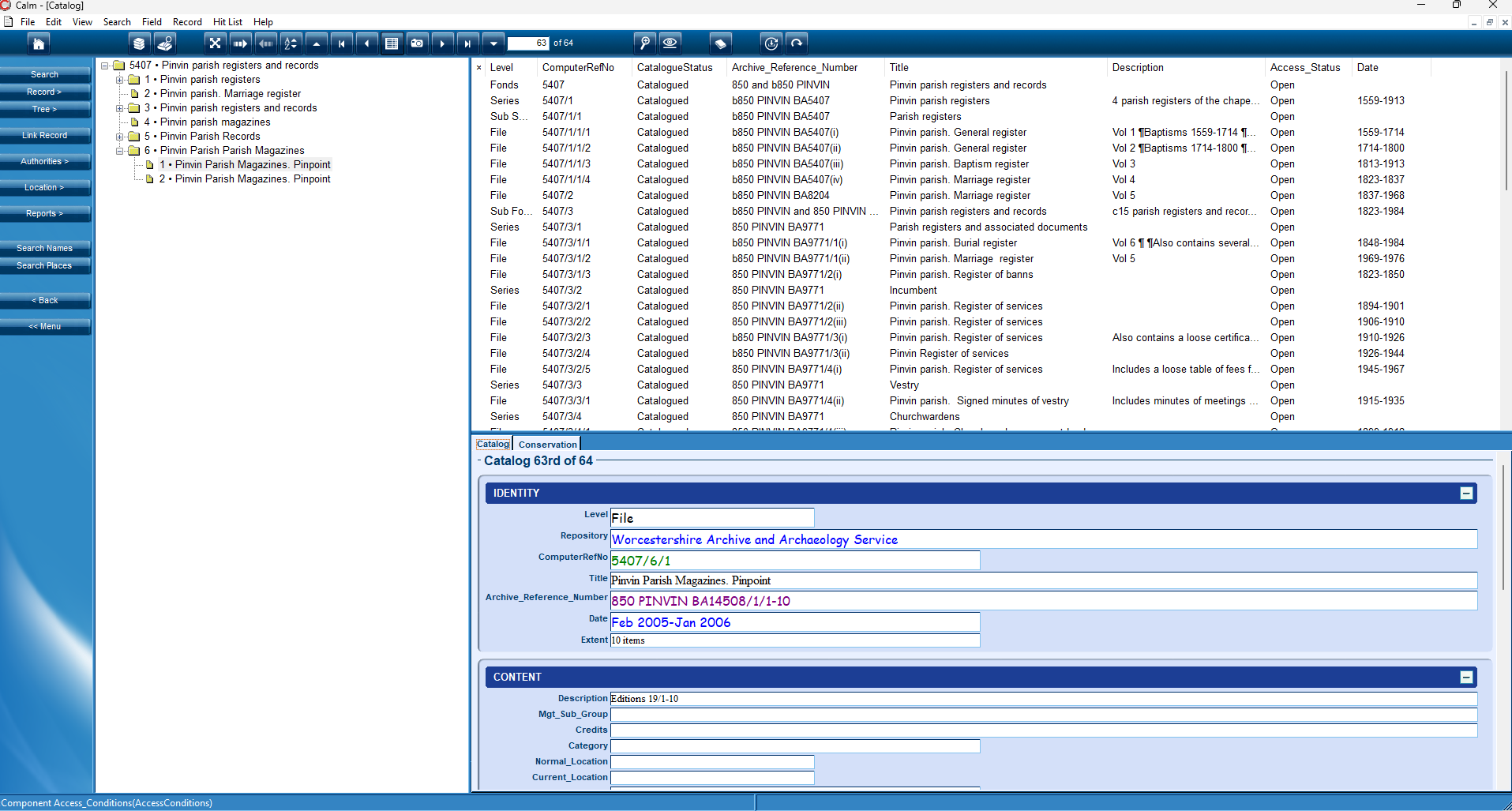
A catalogue viewed in CALM, our digital catalogue. This catalogue, BA5407, is currently available online!
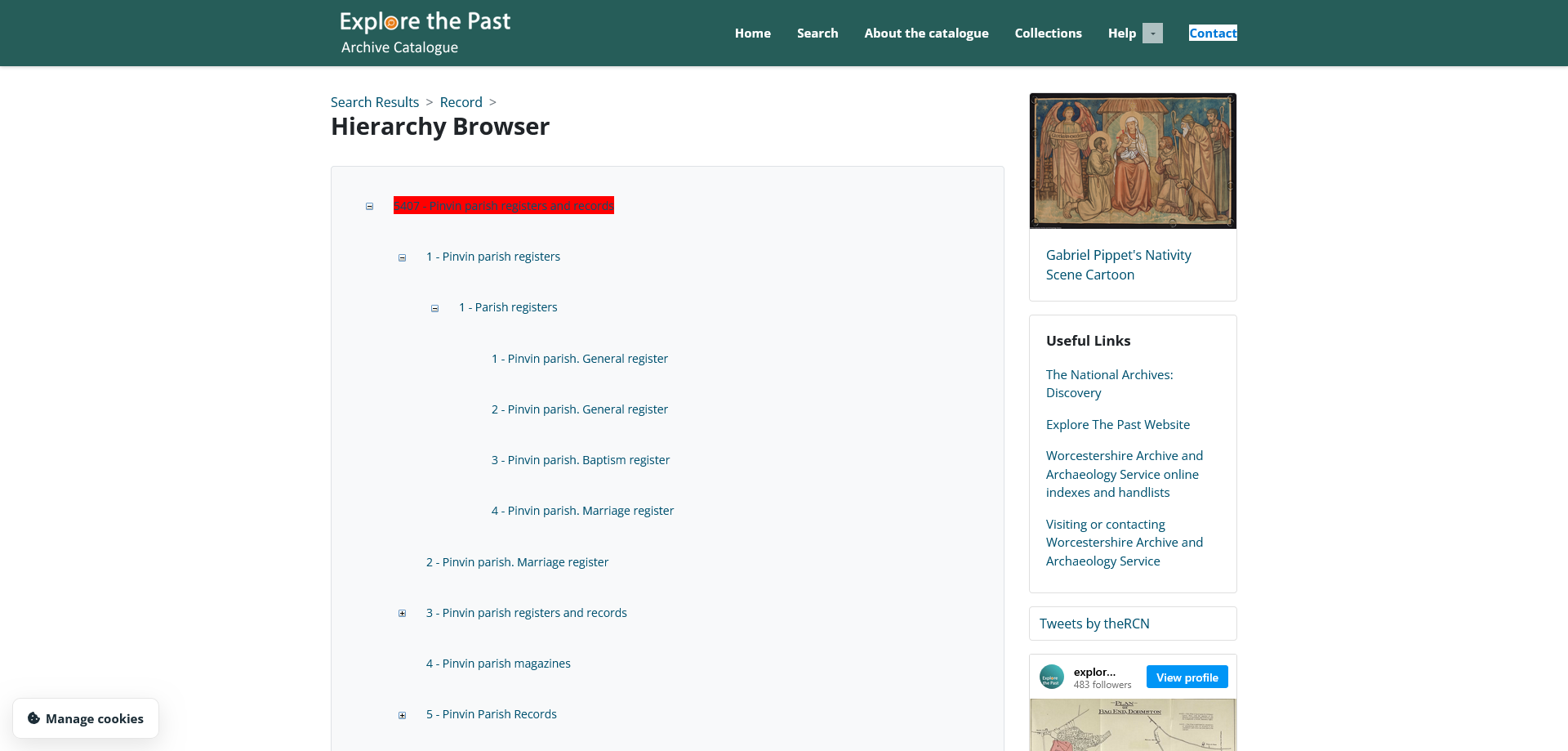
The same catalogue, BA5407, in CALMview, our online catalogue!
Digital cataloguing is part of archives best practice today. Digital catalogues are easily searchable, by reference number and keyword, and are more accessible, as they can be accessed remotely through an online portal. At the beginning of 2025, when we began this project, around 15% of our collections were available through CALM. The remainder of our collections are only catalogued on paper.
Anyone who wants to look through one of our paper catalogues would have to either travel to the Hive in person or pay a team member to carry out a search, and that supposes that a user would realise we hold a collection in the first place. Imagine if you saw we had an online catalogue view, and couldn’t find what you were looking for. You might conclude we didn’t hold relevant records, when we did, and the information simply hadn’t been added to CALM.
We catalogue newly acquired collections straight onto CALM, and have already done some retroconversion. We’ve never really been able to focus on it, though, and so haven’t made the progress we want, and which other county archives have. Therefore, we’ve identified retroconversion as a top priority for 2025-2027. We hope to meet a target of having around 70% of our catalogues available digitally and online during 2027.
What are we doing?
As of November, we have all of our catalogues scanned! We’ve also been able to scan many of our finding aids, so we have backup copies of these as well.
At present, we have several overlapping workflows. First, we’re manually entering accession entries into CALM. These are basic outlines of a collection, and for this project, we’re entering the first page of each catalogue.
Once we’ve done that, we’re copying these entries across to the catalogue database. At this stage, we can add more details to flesh out the catalogue. For small and simple catalogues, we’re just using manual entry. For larger catalogues, we’re running our scanned catalogue pages through ABBYY FineReader OCR software. We can then take the text this produces, and put it into a spreadsheet that CALM can ingest. To speed this up, we’re making use of the Council’s CoPilot AI license. This can perform simple but time-consuming formatting tasks for us. Because it’s a special institutional license, our data remains on UK servers and isn’t used for training AI.
Finally, we’re giving everything one last check for accuracy, and then we’re marking our catalogues as live, meaning they’re accessible through CALMview!
At the beginning of this project, we had 15% of our catalogues available digitally via CALMview, and our goal is 70%. As of November 2026, we’re up to 49%, which is great progress.
We’ve scanned more than 13,500 catalogues and made around 3500 accessions entries and over 6000 catalogue entries since this project began!
What will be posted under this project?
Going back over our catalogues means that we’ve rediscovered some interesting collections. We’ll be posting blogs about some of those here. Additionally, we hope to keep you updated about our progress more generally.
For further updates, find us on Facebook and Instagram.
If you have any questions, please get in touch at Contact Us.
Blogs
Victoria Woodhull Martin in Worcestershire
W.P. Harper, famous football referee of Stourbridge
The Silver Screen at the Scala
Worcestershire cricket memorabilia
‘Dunkirk Joe’ – the remarkable life of Admiral William Tennant
Handel, Espionage and Gardens – Royal Accounts in the archive