Explore Your Archive: No. 2 Dandy Row
- 14th November 2014
At No. 2 Dandy Row, lived Nathaniel Wale and his wife Ellen.
Nathaniel married Ellen Morgan in 1870 and the newlyweds moved into their home in Severn Street where in early 1871 their first child Ellen Maria was born. Sadly, their baby daughter died the following year, but they had five further children: Anne Marie (who also died in childhood), Frederick, Bertram (known as Bertie) Gertrude Ethel (known as Ethel) and Harold. Ellen Wale died in 1912 and Nathaniel in 1921. They were one of the longest inhabitants of Dandy Row.
In the 1911 census the three youngest children are still living with them in Dandy Row and working for local companies; Bertram is a labourer at McKenzies, Ethel is a gloveress (glove maker) for Dents and Harold is an organ builder for Nicholsons.
.jpg)
Picture of the Vulcan Works, Worcester taken from ‘Guide to the Great Western Railway’ by George Measom. 1860.
McKenzie and Holland Limited. Railway Signal and Interlocking Engineers.
The Vulcan Iron Works were established in Worcester in 1857. They manufactured railway signalling equipment as well as signal boxes, telegraph poles, towers for telephone lines, water tanks and bridges. The business was begun on a small scale, with a total workforce of less than 80. By the start of the 20th century the factory employed between 600 and 700 men and covered approximately 5 acres as well as having plants in Australia. The business had flourished with the huge expansion of the railways, both in Britain and around the world and particularly within the British Empire.
In the early 20th century the Managing Director was Walter Holland who had also been Mayor of the City.
.jpg)
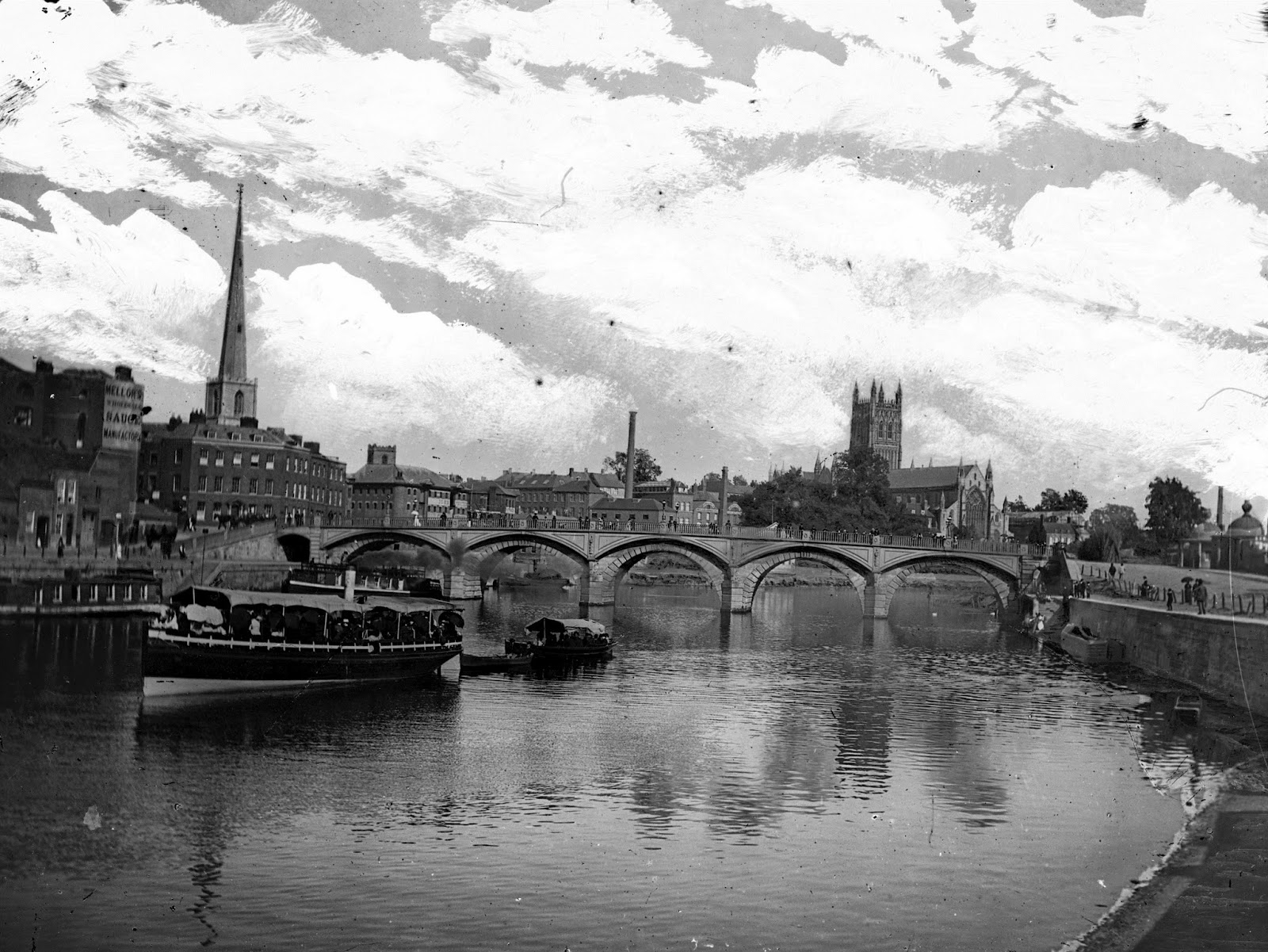
Photograph of the river front, Worcester c. 1900. This photograph is from a collection of glass negatives held by Worcestershire Archives. It shows the factory of Dent, Allcroft and Co.in the centre of the picture (behind the bridge). The photographer and copyright holder of the photograph are unknown, so if you know who they were please get in touch.
Dent, Allcroft and Co. Glove Manufacturers.
In 1772 John Dent received freedom to trade in Worcester and established a glove manufactory in Sidbury, Worcester. An advertisement for Dent, Allcroft and Co. from the early 1900s claimed around 1000 people worked in their factory and 1500 worked as outworkers. However, ‘The Leather Glove Industry in Worcester in the Nineteenth Century’, by D.C. Lyes puts the figure of outworkers nearer to 10,000. From the number of Worcester women who put their occupation on the census as ‘Gloveress’, the higher figure would seem more accurate. The book also gives the number of gloves produced by the company in 1884 as 12¼ million pairs – nearly half the UK’s total production. The company of Dents still manufactures gloves, but no longer in Worcester.
.jpg)
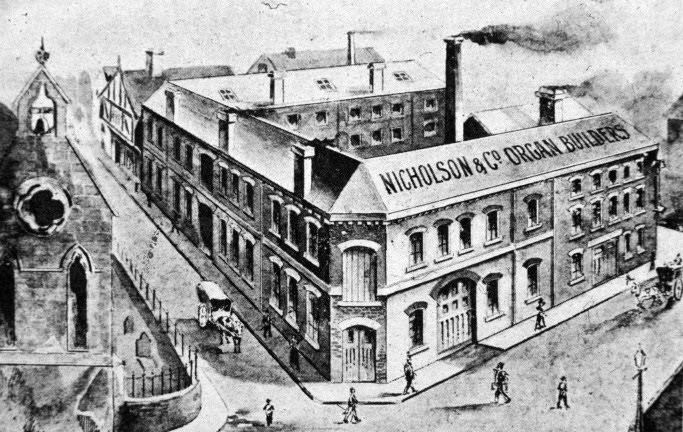
Picture of the Nicholson factory on Palace Yard, Worcester by kind permission of Nicholson and Co. More information of the company can be found on their website.
Nicholson and Co. Organ Builders.
Nicholson and Co. Organ Builders, was established in Worcester in 1841 and the company’s factory was in Palace Yard, not far from Dandy Row.
The company built (and still builds) organs for cathedrals, public halls and churches around Britain and across the world.
From 1903 to 1915 Nicholsons was owned by A.H. Whinfield. The Whinfields often gave musical evenings at their house and Edward Elgar was a frequent guest. In 1903 the company featured in The Worcester Daily Times Trade and Industry Edition ‘Worcester at Work’ where the quality of the organs manufactured at Nicholsons is extolled,
‘Every care is taken that the material used, the workmanship bestowed, the proportions of the organ will lead to a correct musical result.’
By Julia Pincott


