Enhancement of the Worcestershire Ceramics Online Database
- 22nd October 2017
Interested in pottery identification? Our recently updated reference resource is freely available online to help anyone trying to identify pottery that was made or used in Worcestershire.
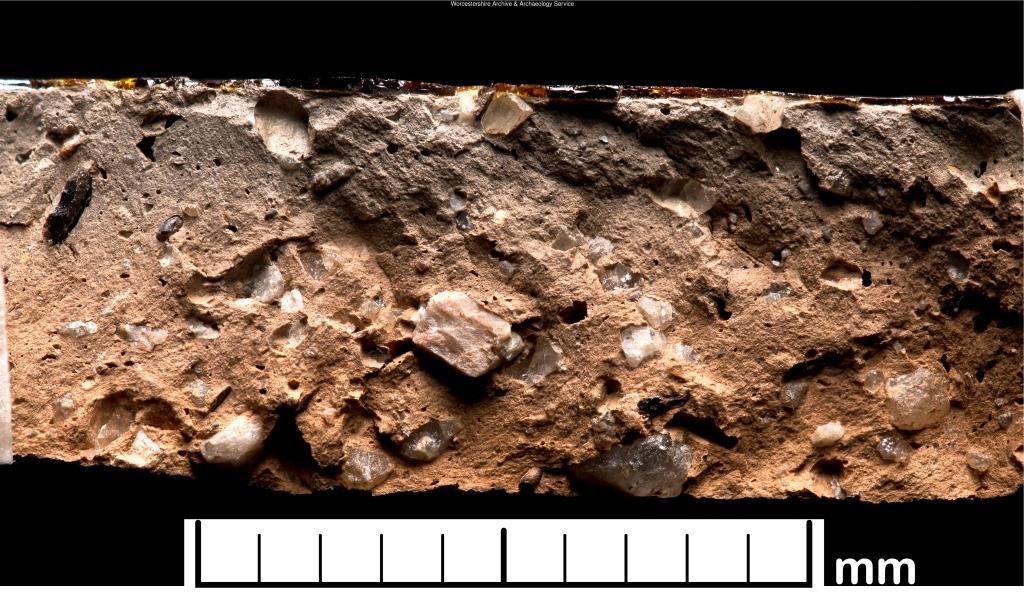
Section through Fabric 75 – North Devon gravel-tempered ware
Since 2003, the Worcestershire Ceramics Online Database has made the Worcestershire ceramic fabric type series accessible to all. The database holds information on all of the pottery fabrics found in Worcestershire from the Neolithic (c.4000 BC) to the early post-medieval period (c. AD 1650), including those made in the County.
For each type of pottery there is information on:
- the types of clay fabric used
- where and how the pottery was made
- when it was made
- where it has been found
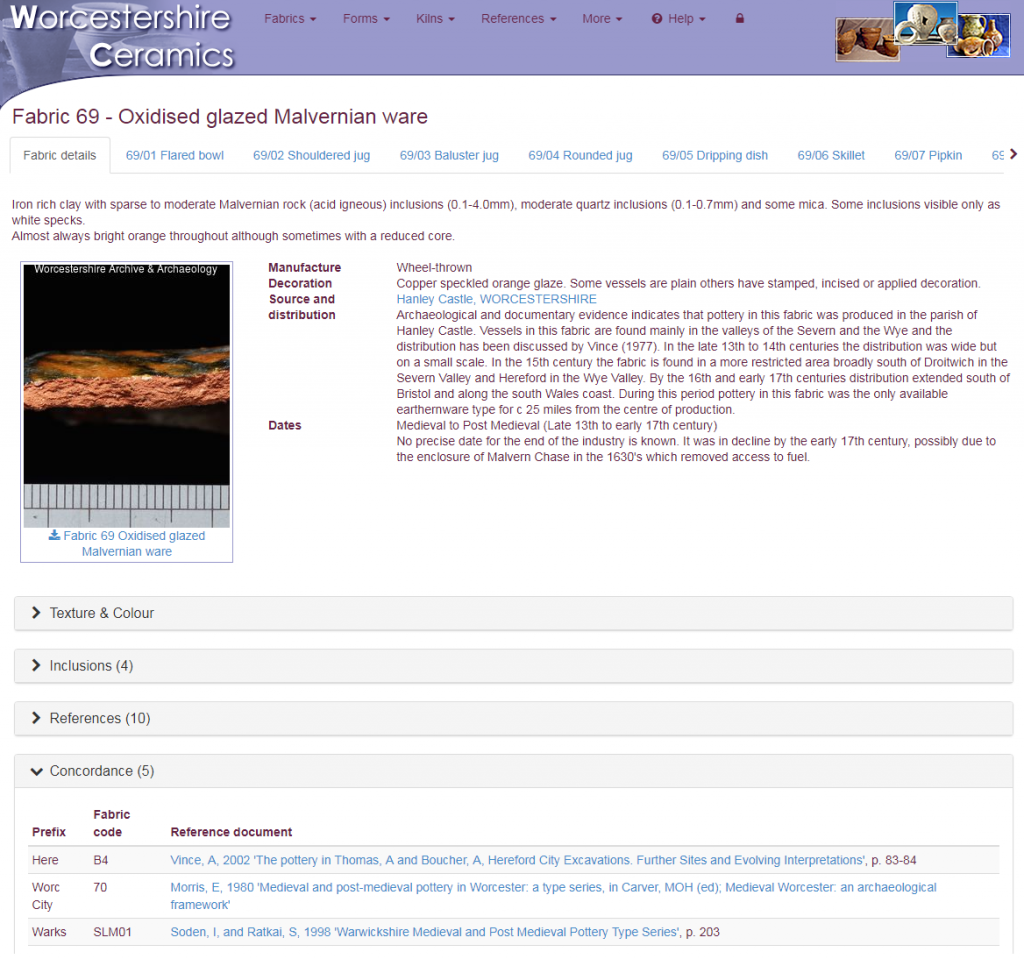
Fabric data includes high definition photographs of sherd sections, as well as detailed written fabric descriptions to aid identification. There are also bibliographic references for each fabric type so further information can easily be sought.
As of September 2017, an updated and enhanced version of this database is now available thanks to financial support from Historic England as part of the ‘Improving Sector Reference Resources’ initiative.
New features include the addition of detailed form information for locally produced medieval wares, as well as fabric and form information for the most commonly identified later post-medieval and modern fabrics.
Inclusion of concordance (reference) data for medieval and later fabrics allows cross-referencing to other fabric series in surrounding counties. Pottery type series, or catalogues, have traditionally been county-based with unique reference codes, meaning that geographically widespread pottery types have different codes in each county. Our updated ceramic database has now taken the first step towards creating a regional online series rather than being purely county-based.
In addition, a software upgrade means that information is more accessible and the site is now optimised for use on mobile devices as well.
Although aimed primarily at ceramic specialists and students to aid consistent and high quality recording of pottery fabrics, the database is also easily accessible to anyone interested in the study of pottery, and is known to be used widely, indeed internationally, as a source of ceramic data.


I remember the old database when working at Worcester with Derek Hurst. I believe Derek is still with you. So I shall be very interested in this new database even though I now live in Crete and working on ancient Minoan pottery.
Thank you.
Rita Roberts
Yes, Derek is still with us and was overseeing this project!
Thank you so much for all your hard work and diligence in creating this database! The design is excellent and I believe that this sets the standard for searchable online data banks.
Very pleased to see the enhanced use of the images. It’s a great resource and reference for illustrators researching methods of form presentation.