The Charles Archive: An Animal Attraction at Abbey Park, Redditch
- 25th June 2018
This is the fifth in a series of blog posts celebrating the life and work of timber-frame building specialists F.W.B ‘Freddie’ and Mary Charles. Funded by Historic England, the ‘Charles Archive’ project aims to digitise and make more accessible the Charles Archive collection. In this piece we look at a rather unexpected report found in the Charles Archive!
The ‘Bordesley Abbey Park Scheme Incorporating Forge Mill as Industrial Archaeological Museum‘ (1963), by F.W.B Charles, is a landscape scheme which responds to proposals for the re-development of the Bordesley Abbey area, including the opening of Forge Mill as a museum.
Bordesley Abbey and Forge Mill are both scheduled as nationally important archaeological sites. Bordesley Abbey, on the south side of the River Arrow, south west of its confluence with Batchley Brook, encompasses the earthwork and buried remains of buildings and animal enclosures associated with a Cistercian Abbey, founded in 1138 by Waleran de Beaumon and demolished in 1538; a 13th century chapel, demolished in 1805; a watermill; a system of fish ponds and workshops (National Heritage List for England, List Entry 1005304).
Forge Mill is a forging mill that survives as iron mill workshops, a water wheel and engine house that were constructed from 1570 and extensively remodelled and extended in the 17th, 18th and 19th centuries. The waterwheel building is roofed and contains an iron Belgian overshot waterwheel of 1912. The buildings were converted into a needle scouring mill in 1729 that operated until 1958. Earthwork banks, a dam and mill ponds also survive (National Heritage List for England, List Entry 1005270).
The ‘Bordesley Abbey Park Scheme Incorporating Forge Mill as Industrial Archaeological Museum’ report recounts how, at a meeting of the Sub-Committee of Redditch Urban District Council on 16th October 1962, it was resolved that ‘the preservation of Forge Mill should be planned in conjunction with the development of the entire Bordesley Abbey area’ (F.W.B Charles, 1963, 2).
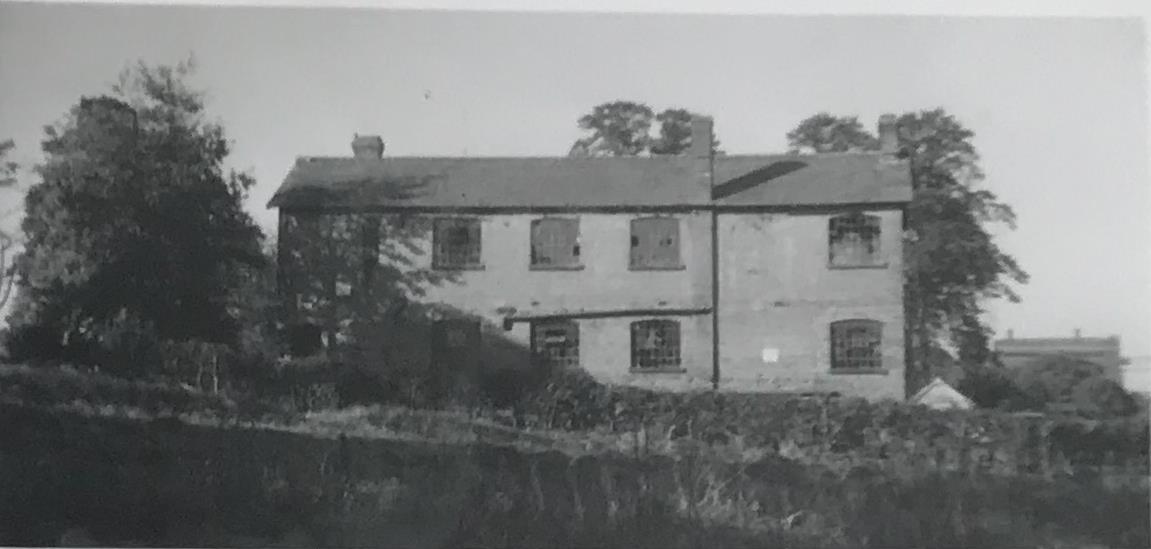
Digitised photograph of Forge Mill, circa 1962-1963. © Worcestershire Archive and Archaeology Service: Charles Archive Collection.
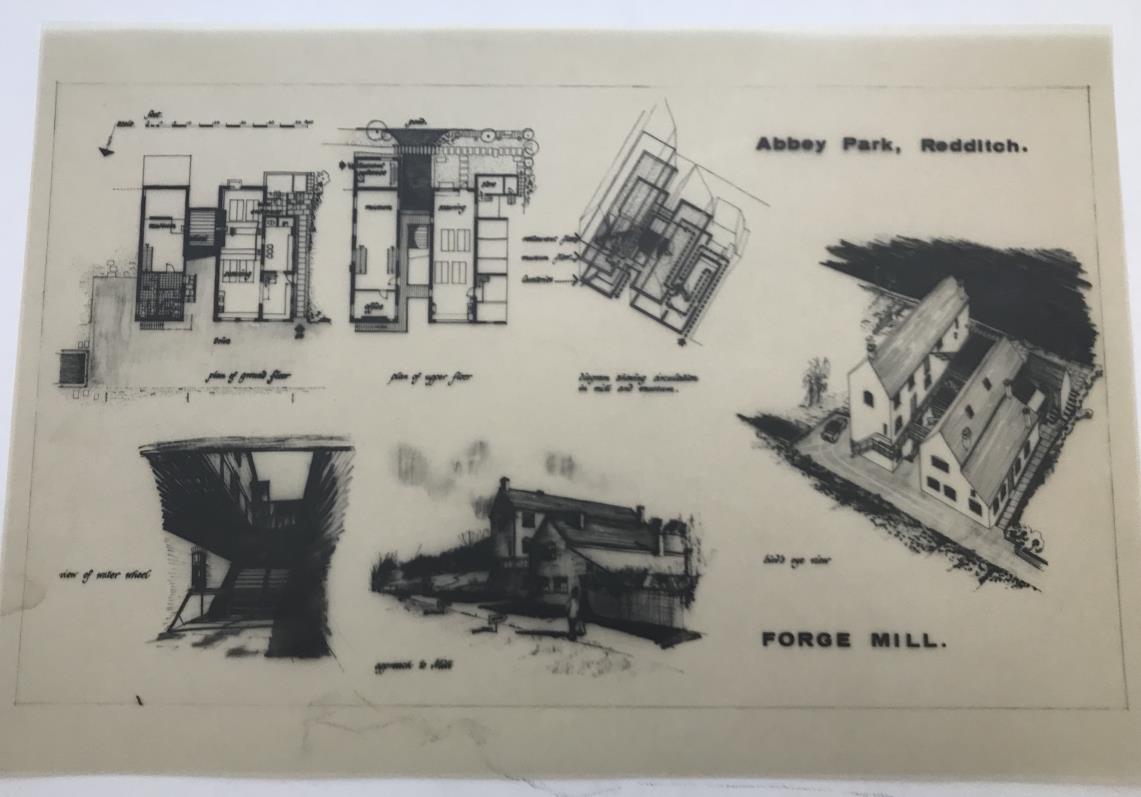
Digitised plan showing restoration proposals for Forge Mill. Restoration of the monument, as a museum, appears to have been the motivation for the re-development of the entire Bordesley Abbey area. In his report ‘Freddie’ endorses a scheme based on the need for public circulation. © Worcestershire Archive and Archaeology Service: Charles Archive Collection.
It then goes on to detail a proposal for a landscaped park with zoo, children’s playground, miniature golf course, car parks, running track, open air theatre, football pitches, cricket pitches, a fairground site and boating facilities. A series of drawings, which include a Master Plan, Landscape Proposal and Aerial Perspective show an area of approximately 100 acres, two thirds of which is characterised as pasture. ‘Freddie’ eloquently notes that ‘engineering rather than nature has formed the landscape’ and stresses the need for ‘visualising the area as in the nature of a “reserve” where the public may walk at will, where “roads” are simply enlarged footpaths or drives without pavements or kerbs. He argues that ‘there should be no attempt to create the trim and artificial scenery of a typical small town park’ (F.W.B Charles, 1963, 2).
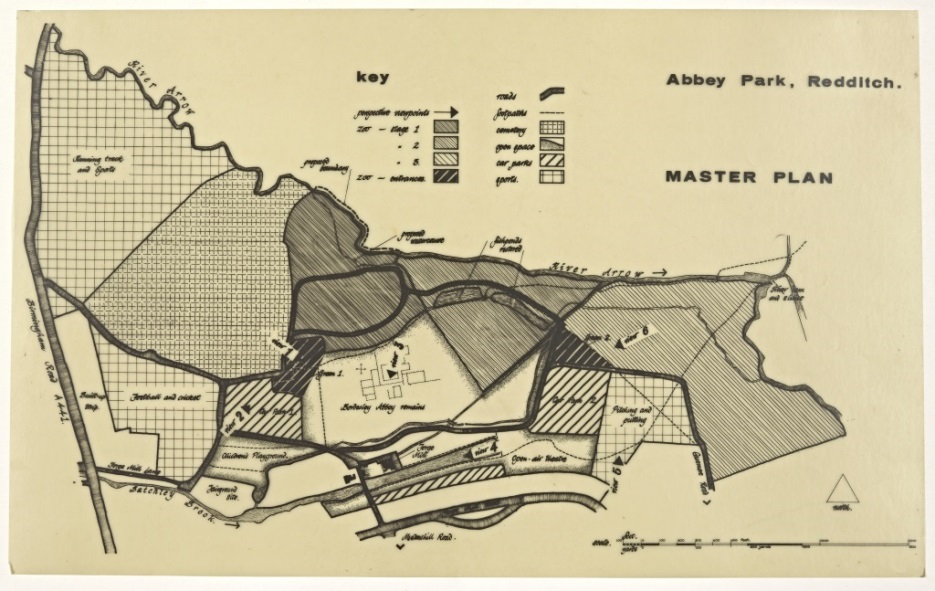
Digitised master plan showing proposed re-development plans for Abbey Park, Redditch. © Worcestershire Archive and Archaeology Service: Charles Archive Collection.
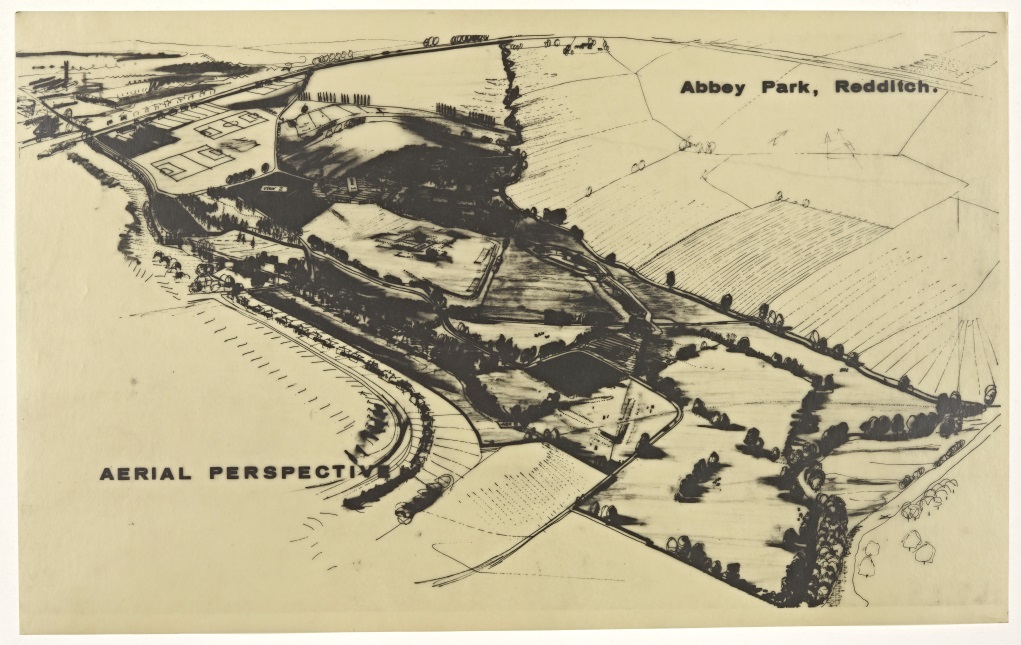
Digitised aerial perspective for Abbey Park, Redditch. © Worcestershire Archive and Archaeology Service: Charles Archive Collection.
One of the most intriguing proposals mentioned in the report is that relating to the establishment of a zoo. Wildlife Parks became increasingly popular from the 1950s, with more naturalistic suburban zoos and safari style parks at their peak in the 1960s. The first stage of the zoo’s development, described as imminent, was for a restaurant, aviary, monkey house and possibly lions and tigers and various free range animals and birds. The restoration of the old watercourse running parallel to the River Arrow, including repairs to the weir and dam in the north east corner of the site, was also anticipated, as was the restoration of the fish ponds, in Stage two, for sea lions and penguins. An area of land, isolated from road and pedestrian circulation by watercourses, was imagined as a deer park.
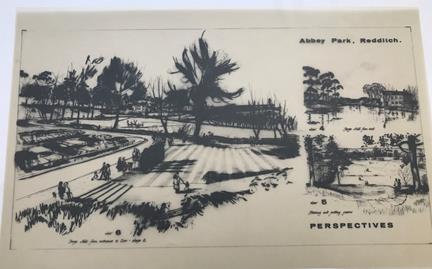
Digitised drawing showing proposed design for the landscaped park and zoo at Abbey Park, Redditch. © Worcestershire Archive and Archaeology Service: Charles Archive Collection.
The development of the zoo never progressed beyond an idea but fortunately the restoration of Forge Mill and the preservation of the ruins of Bordesley Abbey did. In 1983 Forge Mill was opened as the National Needle Museum, and visitors today continue to enjoy the remarkable stories of the needle and fishing tackle industries in Redditch and beyond. Both sites shed fascinating light on the rich history of Redditch and reveal the diversity of projects the Charles’ were involved in.
The images in this post were taken by our Digitisation team. For more information about their work, or to enquire about having your own material digitised, check our Collections Services page.
References
Charles, F.W.B. 1963. The Bordesley Abbey Park Scheme Incorporating Forge Mill as Industrial Archaeological Museum. Worcestershire Archive and Archaeology Service: b705:1246/BA12857-12-3
Forge Mill Needle Museum and Bordesley Abbey Visitor Centre http://www.forgemill.org.uk/index.htm
National Heritage List for England


Post a Comment