Run by Women for Women: Female Friendly Societies
- 8th March 2020
| How the Female Friendly Societies of the 18th and 19th centuries gave women support, friendship and financial security in the hardest of times.
|
Before the establishment of the welfare state, support for those unable to work was limited; you could turn to the workhouse, poor relief or charity, but for many the answer was to join one of the thousands of Friendly Societies that blossomed in the 18th and 19th centuries. The Friendly Societies were groups of individuals, sometimes linked through trade, religion or location, who formed mutual benefit societies, paying a regular subscription and being entitled to payment from the organisation in times of hardship. Most were held in local pubs, with members required to attend regular meetings when they would pay their subscription, have a drink and socialise. For many ordinary working people, they were a lifeline. We know from statistics gathered in 1803, that at least 214 Friendly Societies existed in Worcestershire at that time, with over 12,000 members and of those 11 were Female Friendly Societies run by, and for the benefit of, women.
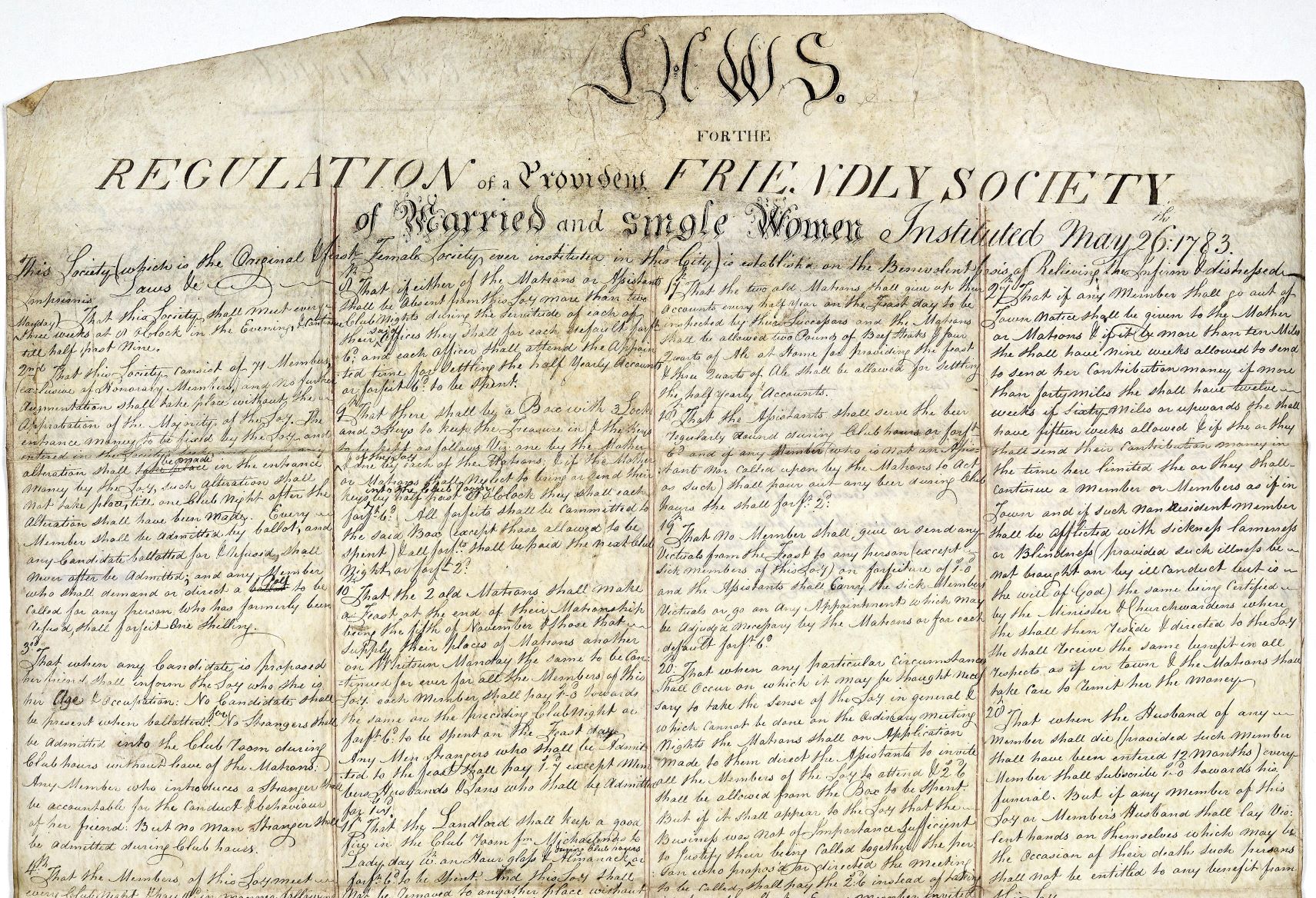 The earliest known record we have for a Femail Friendly Society in Worcester. The rules of the ‘Provident Friendly Society for Married and Single Women’ from 1783. WAAS 496.5 BA9360/A23/Box 1 The earliest known record we have for a Worcester female society is the ‘Provident Friendly Society for Married and Single Women’ from 1783. Unfortunately, we do not know which pub they met at, but they met every three weeks, when they paid their subscription and drank beer, the cost of which was included in the subscription. The rules of the society provide an insight into not only their financial and administrative structure, but also the social and supportive aspects of the group. The Society was run by a board of 6 women – 2 ‘Matrons’, 2 inspectors and 2 assistants. These positions were filled on a rotation basis, so all women in the group took their part, except for the oldest member, the ‘Mother’ of the Society. Twice a year the Matrons would make a feast for the members, which must have been a welcome break from the day to day hardship of their working lives. Tellingly, a rule forbade vilifying or using abusive language to a ‘sister member’, as the society was ‘established to help each other in Christian love, friendship and unity’. They were also required to attend the funerals of other members and pay a shilling towards the cost of the burial of another member’s husband. 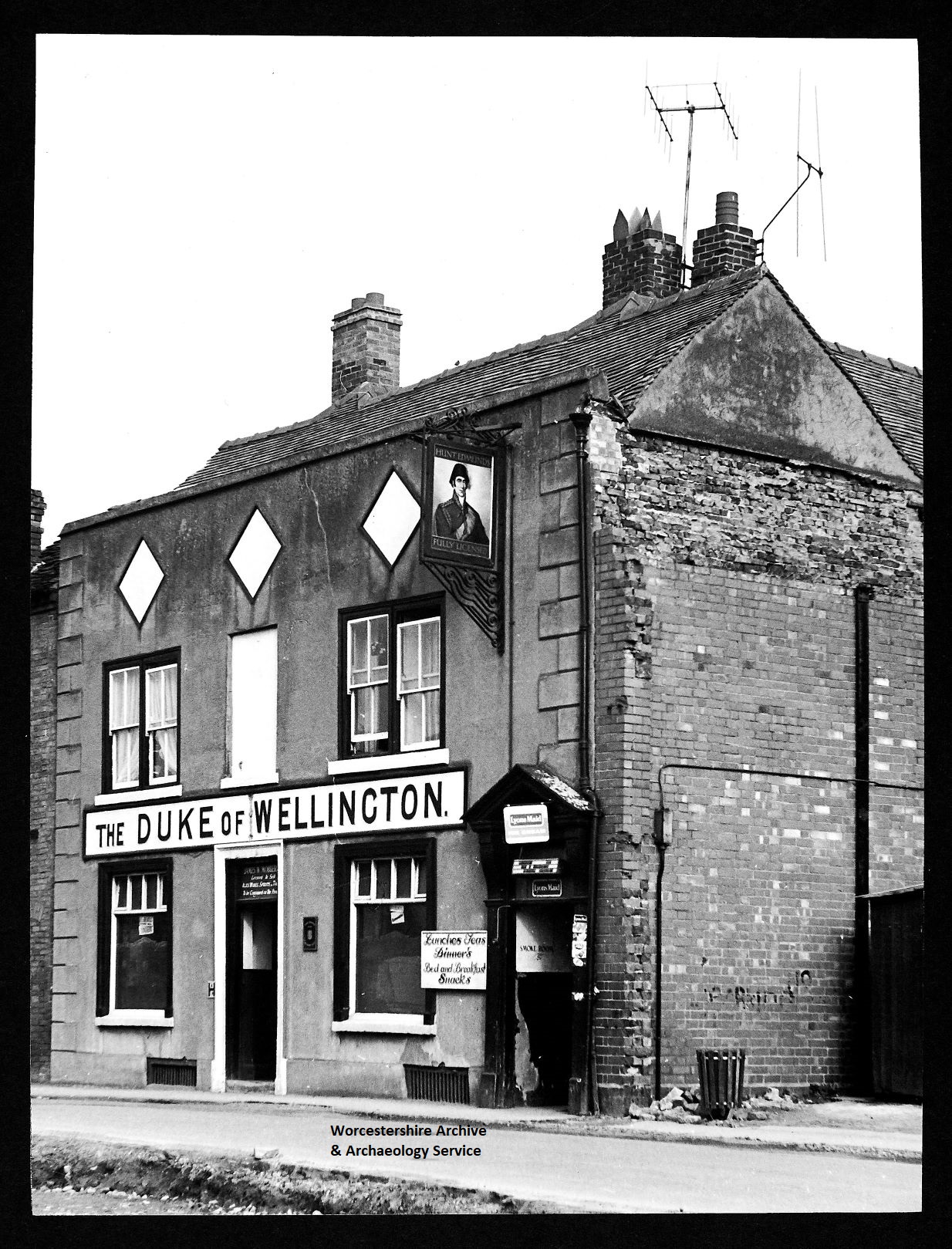 The now demolished Duke of Wellington Public House in Birdport (Deansway), Worcester, home of one of Worcester’s Female Friendly Societies. Photographer: H.D.Small WAAS WPS 24652
There were several female societies in Worcester, including one that met at the Duke of Wellington in Birdport. We know from the 1803 survey that societies were mainly established in the industrial areas of the county, such as Kidderminster, Bromsgrove (including one at The White Horse in 1821) and Dudley, probably reflecting the different social and economic realities for women in those districts. At the height of their popularity, Friendly Societies had millions of members, but with the establishment of the Welfare State their numbers declined. It is good to remember though, the very important contribution they made to the well-being of working people and the opportunities they gave women to take some control over their own lives.
Further reading and references
|


Post a Comment