Did Your Ancestors Skip the Banns?
- 15th March 2026
Did you know that Worcestershire Marriage Bonds and Allegations are now available to view on Ancestry.co.uk?
Covering the years c.1630–1949, these fascinating records offer a valuable window into the lives of past generations. For family historians and genealogists, marriage licence records can reveal details that may not appear in traditional parish registers
What Was a Marriage Licence?
In earlier centuries, most couples married after the banns, a public announcement of their intention to marry, had been read in church on three consecutive Sundays. However, couples could bypass this process by obtaining a marriage licence, provided they paid a fee.
A marriage licence typically involved three separate documents:
The licence itself was the official document issued to the groom. He would present it to the officiating minister as proof that the marriage could legally take place.
The allegation was a formal statement, usually made by the groom, declaring the couple’s intention to marry. It confirmed that, to their knowledge, there was no lawful reason or impediment preventing the marriage.
The bond provided an additional level of assurance. Two bondsmen, often the groom and a friend or relative, guaranteed that the details given in the allegation were true. If the marriage later proved to be contrary to Canon Law, a financial penalty would be imposed.
Importantly, bonds often state where the marriage was intended to take place, which can be extremely helpful for genealogical research.
The bond and allegation were retained by the diocesan registry, meaning they were preserved in church administrative records. Because of this, they are likely to survive today. The licence itself, however, was given to the groom to present to the minister conducting the ceremony. Since there was no requirement for the minister to keep it, these documents were rarely preserved.
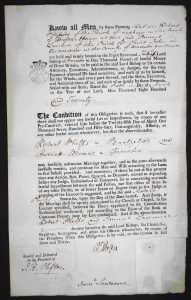
An example of the records now available
Why Did Couples Choose a Marriage Licence?
There were several reasons why a couple might opt for a marriage licence:
Marrying away from home: If the couple wanted to marry outside their usual parish of residence.
Speed and convenience: A licence avoided the need to wait three weeks while the banns were called.
Social status: Among the gentry, marriage by licence was often preferred because it allowed the ceremony to take place privately without public banns.
A Valuable Resource for Family History
With Worcestershire marriage bonds and allegations now available online, researchers have a new opportunity to uncover hidden details about ancestors, including relationships, places of residence, social customs and connections
If you are researching family from Worcestershire between 1630 and 1949, these records could provide crucial clues that bring your family story to life.


Post a Comment