Asparagus & the Vale of Evesham
- 10th June 2020
Asparagus is intrinsically linked to Worcestershire, especially the Vale of Evesham where it has protected food status. This luxury vegetable has had its ups and downs, with commercial growing dwindling from the 1970s until a revival in the 21st century. It was popular among market gardeners, with plants providing a good cash crop for over a decade, and many of the people we’ve spoken to during the Market Gardening Heritage Project have mentioned asparagus.
Asparagus is closely related to the lily family and has been grown for well over 2,000 years, with the earliest evidence of cultivation coming from the Egyptians and Romans. Due to its delicate flavour and diuretic properties, it has been used as both a vegetable and medicine.
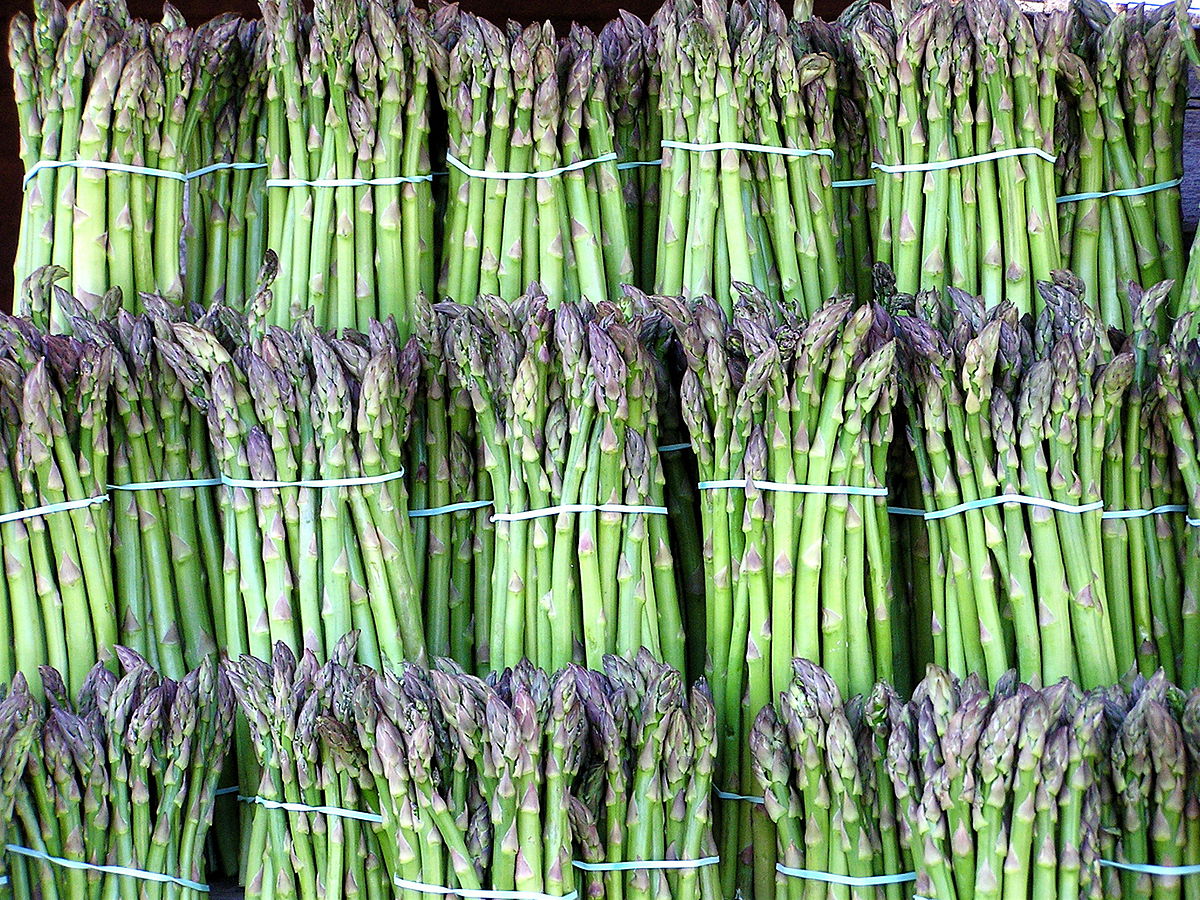
It is said that the best asparagus comes from Worcestershire, and most of the UK’s crop was historically grown here. Why? The Vale of Evesham’s microclimate is ideal for producing the distinctive flavour and texture. These conditions make the area prolific for many fruits and vegetables, and is in part why market gardening formed such a large part of the local economy. Asparagus traditionally grows best on sandy soils, but unexpectedly flourishes on the heavy Evesham clays around Badsey and the Littletons.
Knowledge and expertise was passed from one generation of market gardeners to another, and asparagus was a crop in which growers took a lot of pride. Traditionally cut just below the soil with an asparagus knife, spears were bundled into rounds of 15 then tied into ‘hundreds’ (nope, not of 100 but 120 spears!) with willow. Asparagus even had its own lidded, rectangular wicker baskets, known as ‘flats’, for sending it to market. See for yourself how this was done thanks to a film clip recorded in 1965.
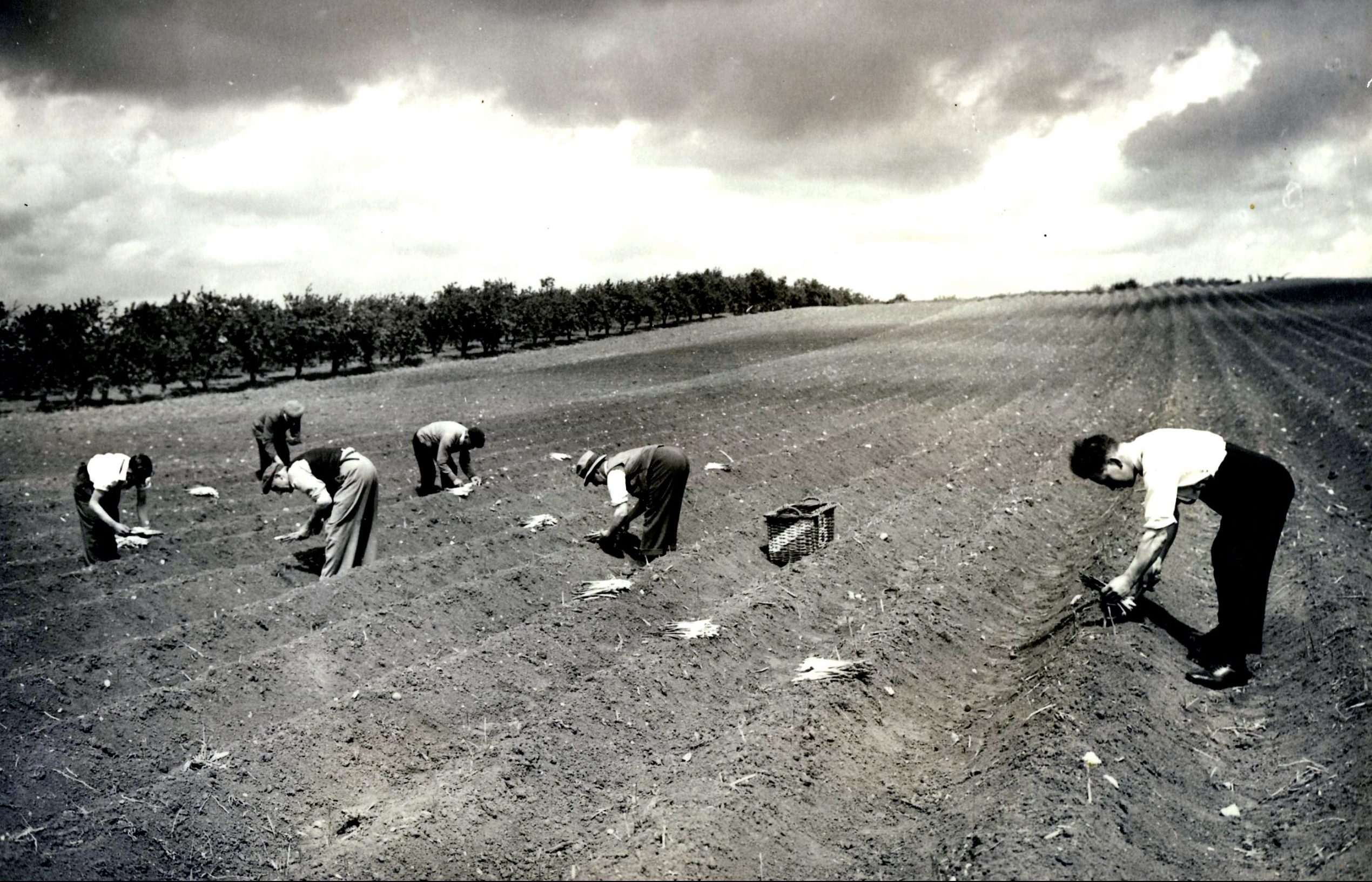
Vale of Evesham asparagus, as traditionally grown in raised beds and picked by hand © LBG
Local pride continues today in the annual Asparagus Festival (23rd April – 21st June), which includes asparagus auctions at The Fleece Inn, Bretforton. There is also a pub in Badsey called Round of Gras, which refers to the crop’s local name of Sparrow Gras, or ‘Gras for short.
The first reference to asparagus locally is 1768, when Arthur Young describes it being transported from Evesham to Bristol and Bath. In General View of the Agriculture of the County of Worcester (1813) W Pitt describes see fields of asparagus growing. As market gardening increased in the late 19th century, so did the acreage of asparagus.
From the mid-20th century there was a major decline in asparagus grown. In 1938, 1200 acres of asparagus were grown in the Vale of Evesham, but throughout the Second World War growers were forbidden from planting new beds. There was just 200 acres of ‘gras in the Vale by the early 1970s. Market gardening was in decline and tastes were changing. A previously steady and reliable cash crop, asparagus no longer made growers much money: it took three years from seed to first harvest and was labour intensive to pick. Younger growers stopped planting it and skills began to be lost. This suddenly changed in the early 21st century with celebrity chefs using it in recipes, leading to shortages in supermarkets. The Asparagus Festival was also established to promote the vegetable and Worcestershire growers.
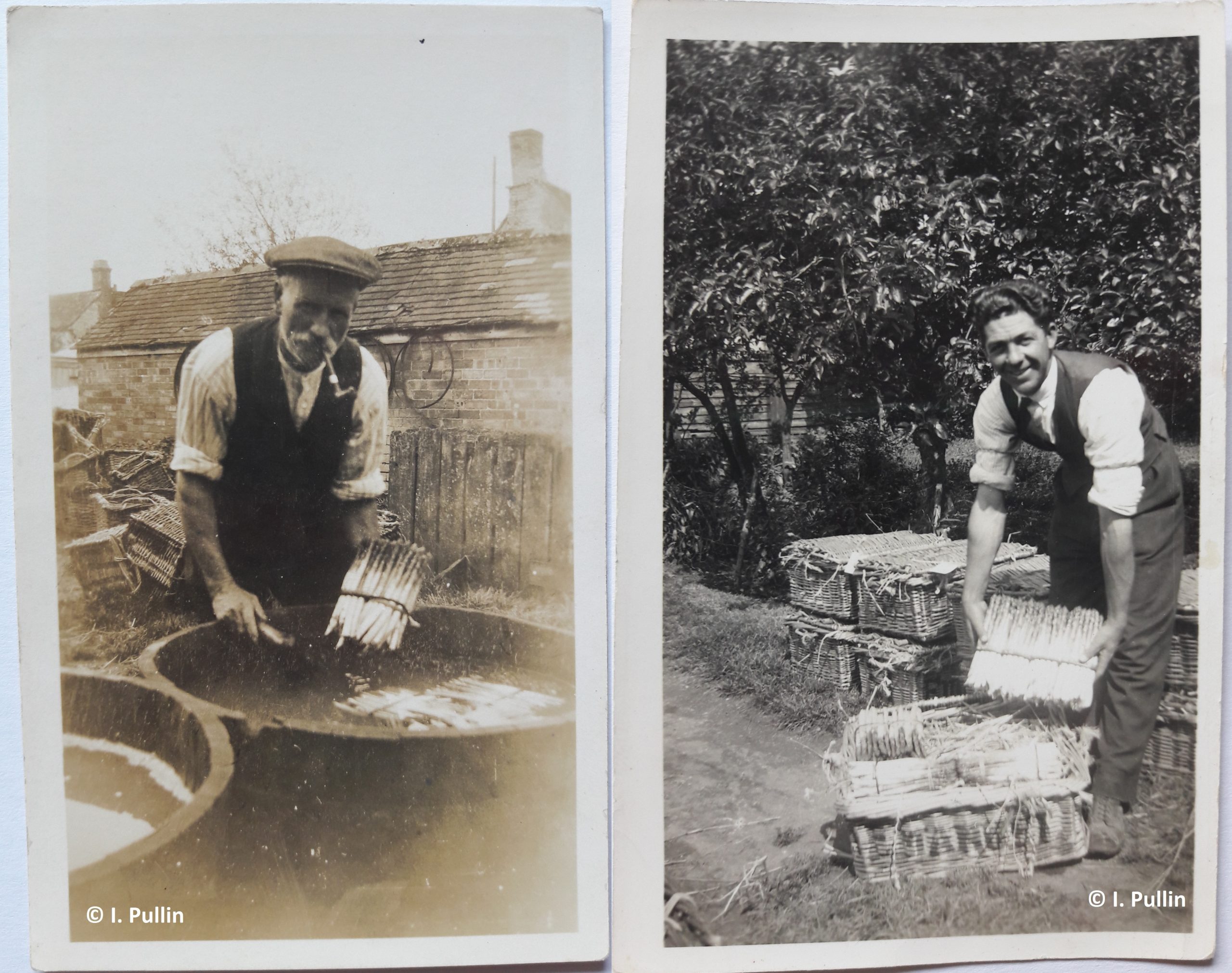
Asparagus bundles being washed in Bretforton (left) and Harold Smith packing hundreds into flats (right) – with kind permission from I. Pullin
During the Market Gardening Heritage project, funded by National Lottery Heritage Fund & Historic England, asparagus has regularly been discussed. One of the stories shared with the project came from Ivy, whose father was a market gardener in Bretforton. In 1968, after 30 years of entering the Vale of Evesham Asparagus Growers Association Show, his asparagus won – beating off 68 competitors. It was all the more impressive as he had just half an acre; a smaller ground that some of the others. His winning bundle of 120 spears was sold to a Birmingham market for £21 (around £390 in today’s money). Shows like these were an opportunity to celebrate local growers and for them to meet national market representatives, see demonstrations from agricultural companies with their new products, fly the flag for local produce, and for growers to socialise and compare experiences.
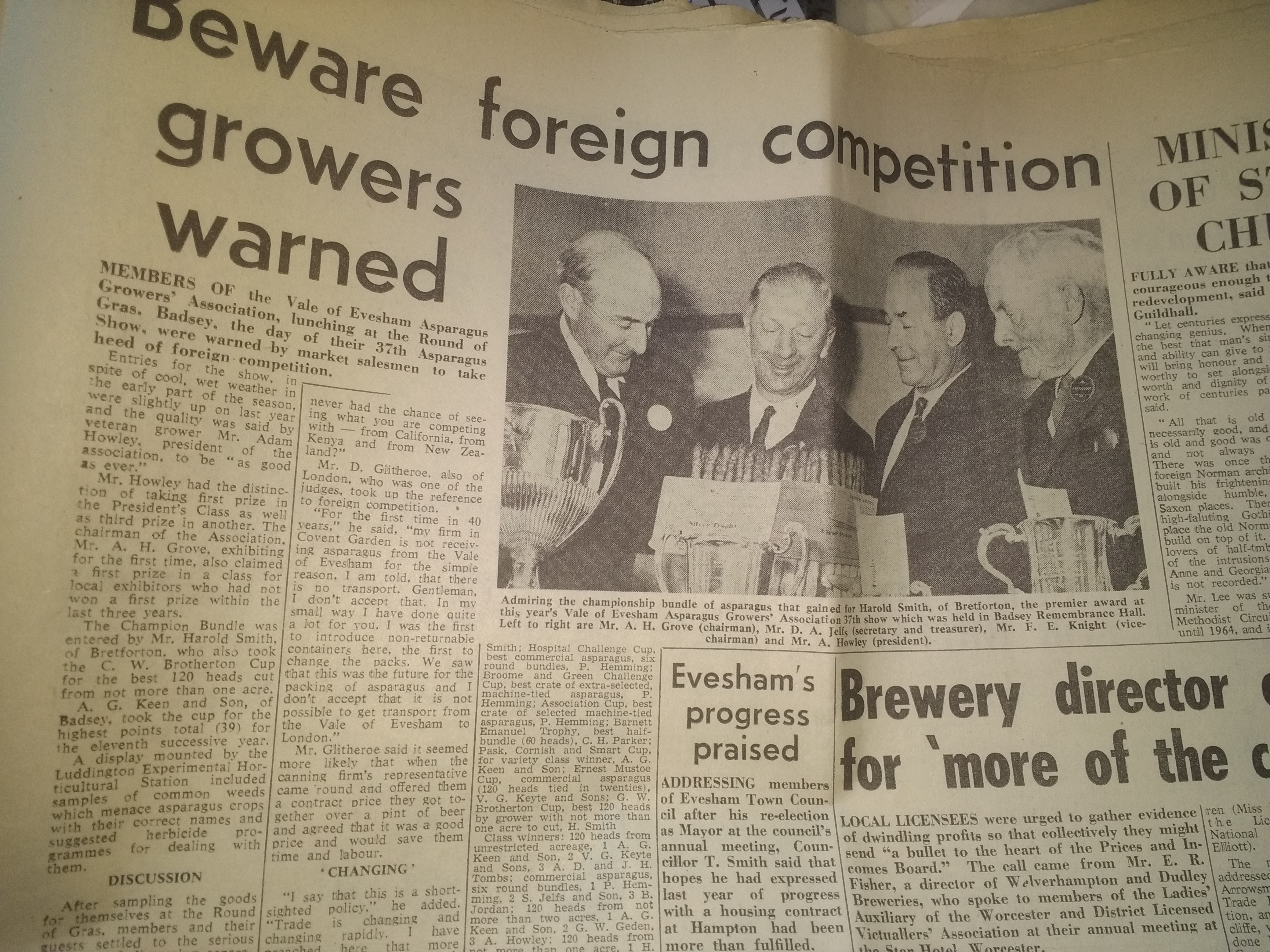
Report of Harold Smith’s win in 1968
Cutting, tying, packing and displaying asparagus was quite an art, as several oral history interviewees described during the project. Hear for yourself through the recollections of Betty, Andrew, Karen and Geoff below.
Asparagus has also been featured several times by ATV local news reports, especially during its decline in the early 1970s. Their films are held by the Media Archive for Central England, the regional film archive, and some are online. If you came to our film screenings 10-12 years ago (including one at the Asparagus Festival) you may recognise some. Click on the links to see them on the MACE website
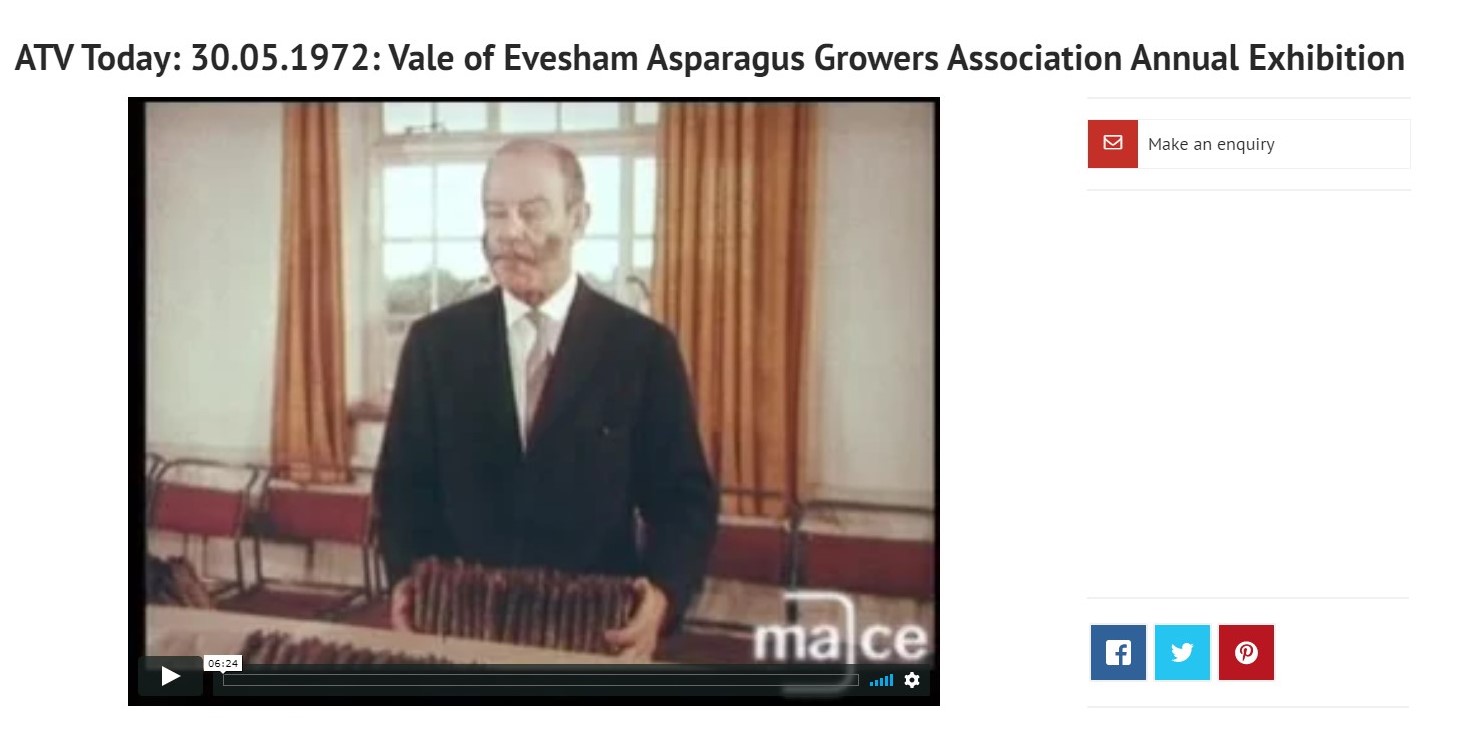
Evesham Asparagus Growers’ Association annual exhibition – 1972
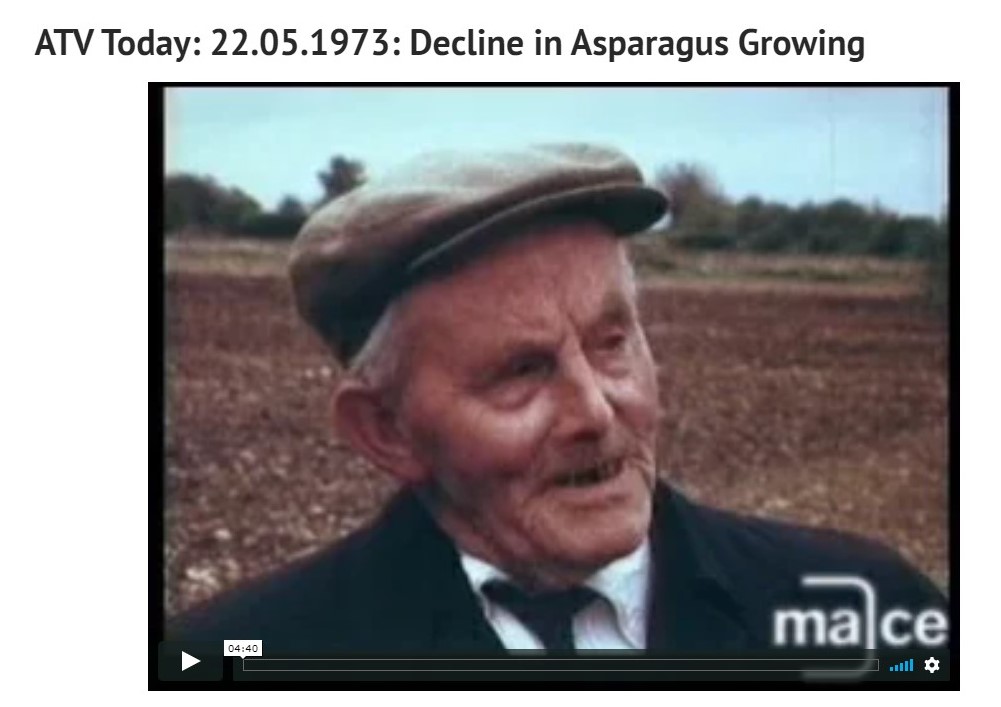
Decline of asparagus growing – 1973
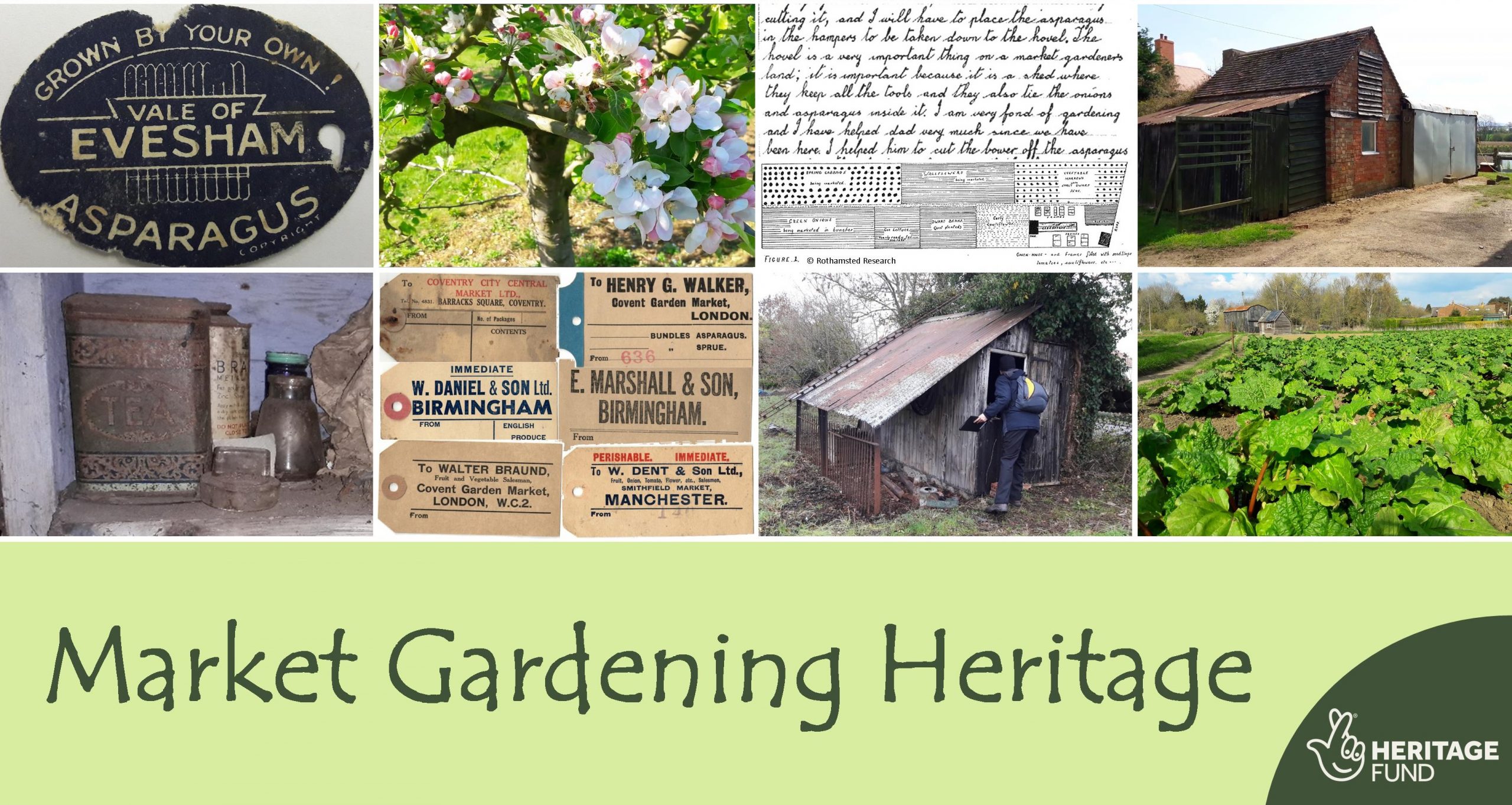
We are currently coming towards the end of the Market Gardening Heritage Project. With the help of our partners and volunteers we are bringing together the stories, interviews, images and research we’ve found to create an education resource, exhibition and information panels at three restored hovels. Asparagus is, of course, integral to this story.


Post a Comment