And on that farm, they had a…
- 26th February 2026
By January 1886, as reported in the Berrow’s Worcester Journal an extension of Powick Hospital was completed which allowed for a further 210 patients admitted to the hospital, with the capacity of the previous buildings at just over 700 patients. With such a large number of patients and staff to receive daily meals, it is unsurprising that it required a large community of working people to support its running. It is described in the Berrow’s Worcester Journal dated 23rd January 1886 as being a community as numerous as many country towns with:
‘…its own water works, its own gas works, its own system of sewage disposal. It feeds itself to a large extent from the land which is cultivated in connection with the institution; it has its own bakery, its own brewery, its own laundry, where the washing for a thousand persons is regularly accommodated, and its own workshops, where the current needs of the community are provided for, from the shoeing of agricultural horses to the renewal of the furniture and the repair of the buildings themselves.’
The newspaper article goes on to say how patients who were deemed fit were directly employed in the ‘manifold operations’ and it is argued, rightly or wrongly, of the medical opinion of the day that this skilled labour ‘has the best effect upon the health and spirits of the patients employed’ and the result also that Powick was cheaper to administer than other asylums in the country.
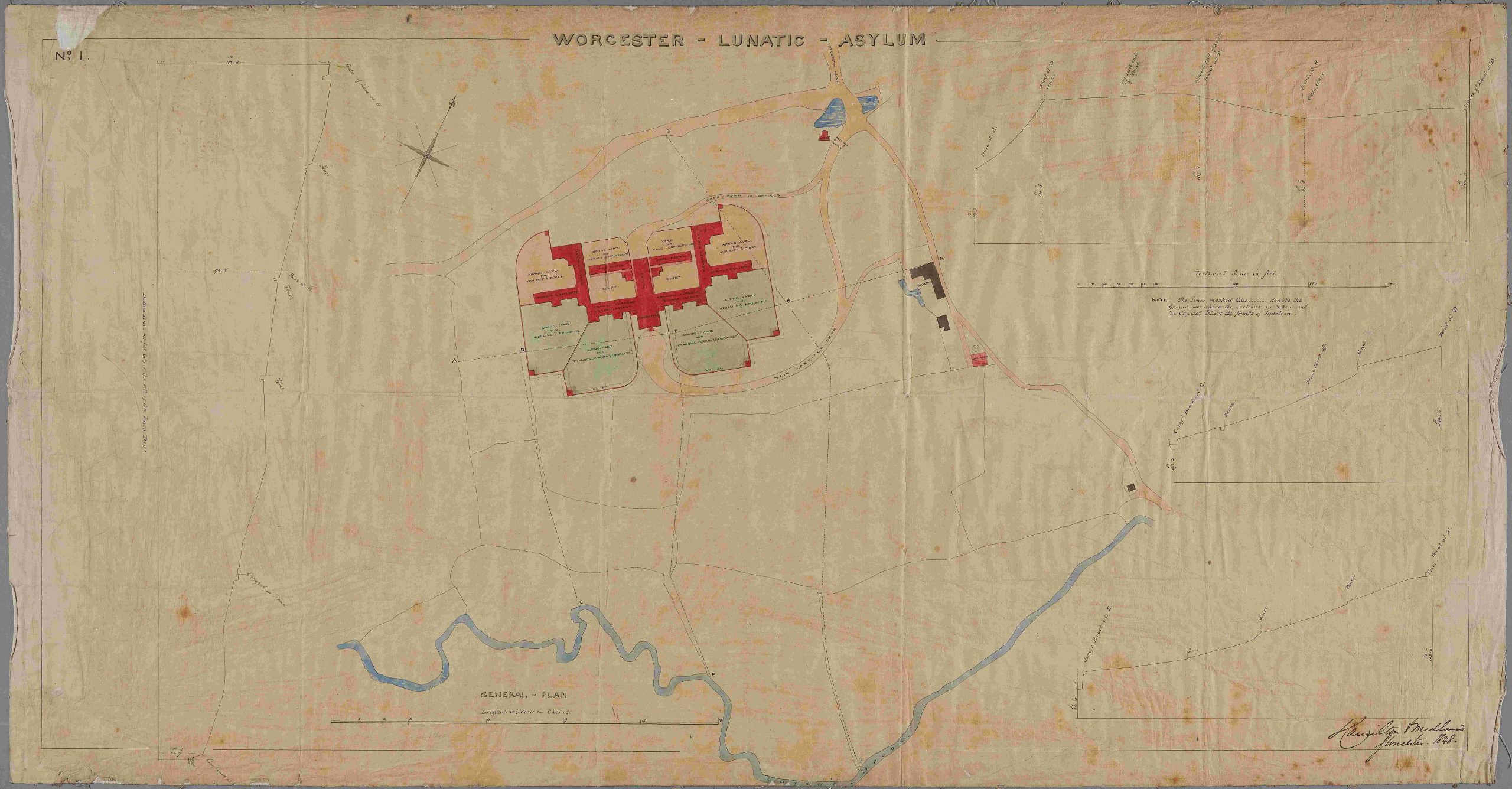 Plan of Powick Asylum showing the vicinity of the Farm and the Gas House (Works) c.1848 Ref: 125 BA806/1 © Herefordshire and Worcestershire NHS Trust
In terms of cooking and storage facilities for produce on site, the new building consisted of new wards with a pantry and storerooms of its own and a new kitchen and scullery, with many labour-saving appliances to ensure the ‘economical despatch of the cooking’. Three methods of cooking were used and included steam (for heating the kitchen boilers) and the potato steamers, where large quantities were cooked at once, joints were roasted in gas ovens and there was a large kitchen range, heated with coal for other purposes.
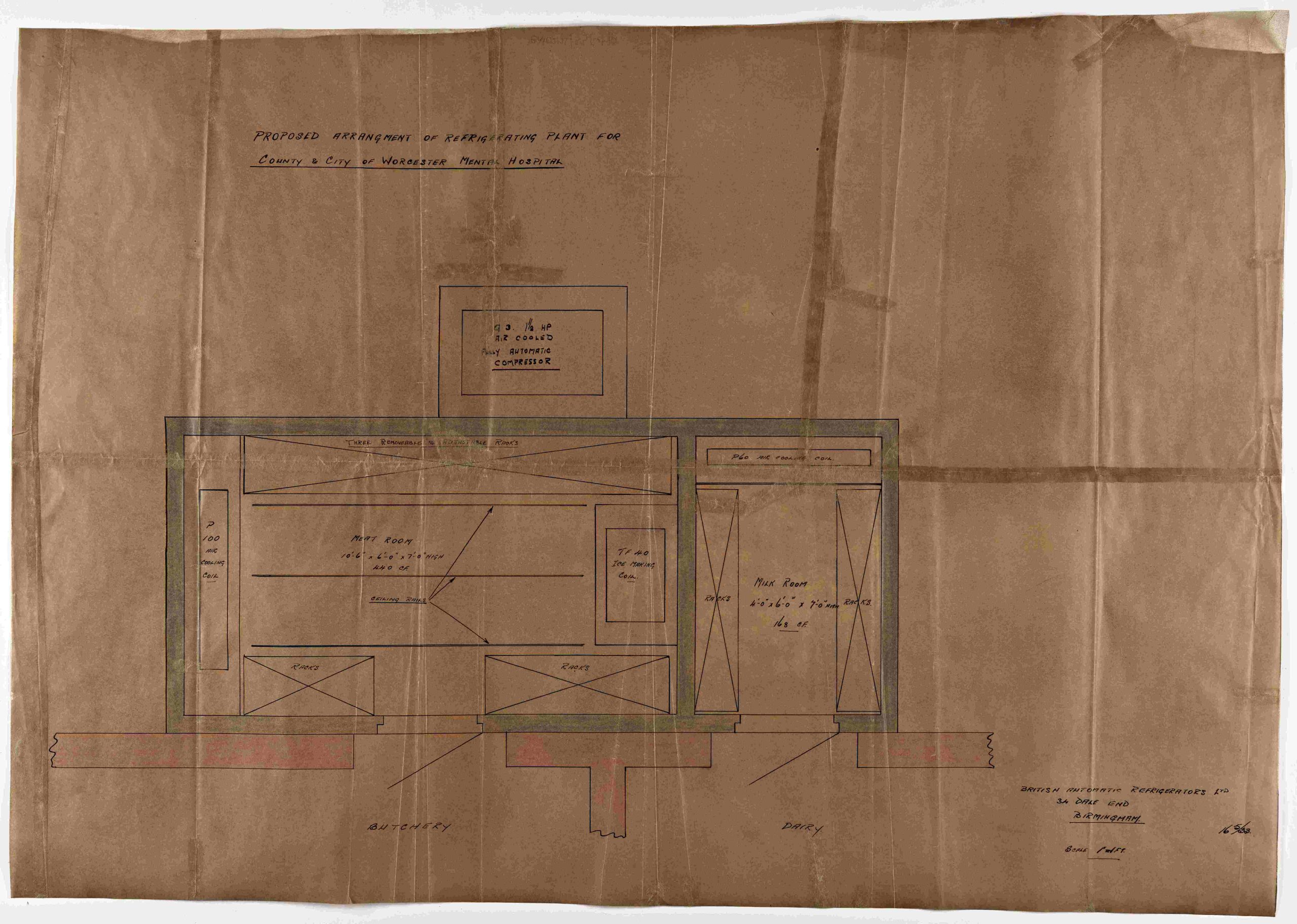
Plan for proposed refrigeration unit, British Automatic Refrigerators Ltd. 20th century Ref: 499:9 BA10271/33/10 © Herefordshire and Worcestershire NHS Trust
With a need to cook such large quantities of food, including dairy, widespread refrigeration was not available until the middle of the 20th century, but amongst the records are plans for a large refrigeration unit with areas for meat, milk and dairy foods commissioned by British Automatic Refrigerators Ltd. which was established in the late 1930’s and specialised in large-scale commercial cold rooms. With reference to the wider farm itself, the newspaper article stated that milk was a staple and made up a considerable proportion of patient diets.
Powick farm itself was not one single farm and as the 1886 article states:
‘There are in fact three farms of about 340 acres in all, the home farm, quite near the main buildings, and two others, some distance away’.
Thanks to a Farm Bailiff’s weekly report from 1925-1951 and a plan of farm buildings, we can get a sense of the scale of what was farmed and the activities that took place, alongside that mentioned in newspapers. The plan includes a cowshed, piggeries, stables for horses, a dairy and a fold-yard and fodder.
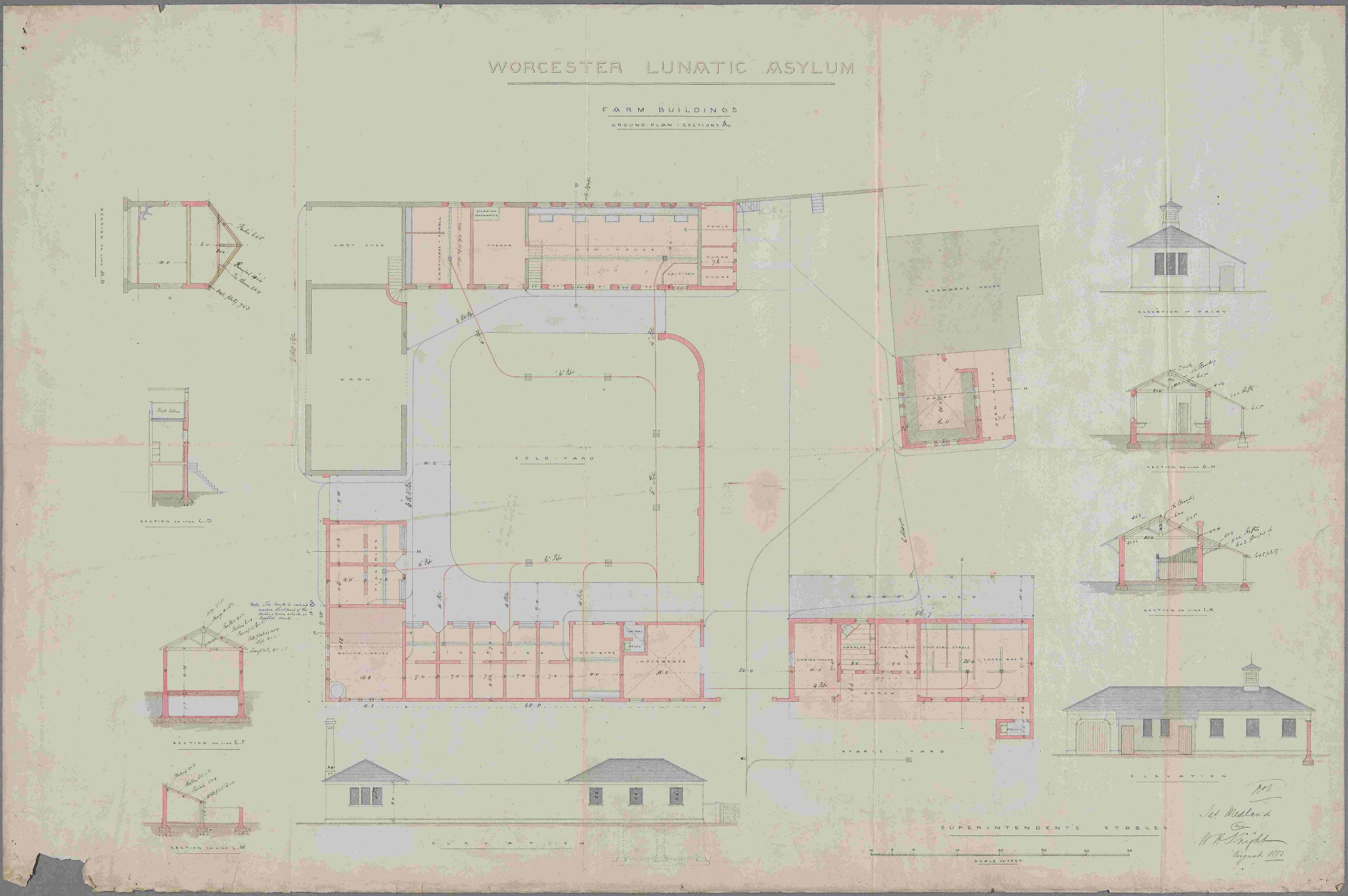
Plan of farm buildings at Powick Hospital c.1853 Ref: 125 BA806/3 © Herefordshire and Worcestershire NHS Trust
The newspaper reports that home farm was increased to accommodate twenty milch cows, and new piggeries to hold 50-70 pigs and includes three teams of horses and 50-60 head of cattle on the farm. It also seems that farm animals also featured in flower and agricultural shows during its operation, with a heavy horse called Princess Dagnum coming 1st in the category in the Great Alne Flower Show, Alcester as reported in the Berrow’s Worcester Journal on Saturday 7th August 1926.
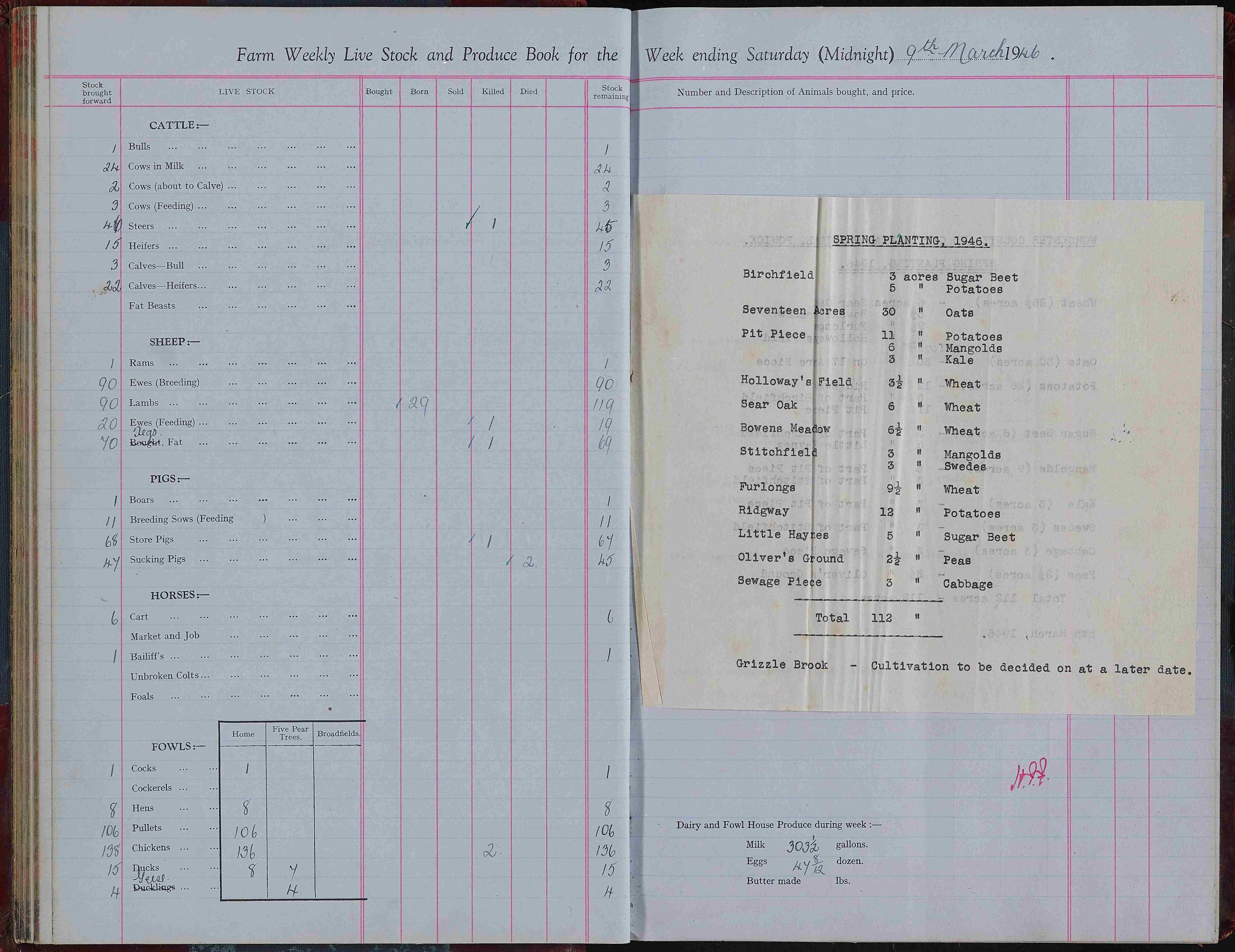
Powick Hospital Farm Bailiff’s Weekly Report ending Saturday 9th March 1925-1951 Ref: b499:9 BA10127/10
Animals listed in the Bailiff’s Weekly Report ending 9th March 1946 illustrate a similar picture to that described in the newspaper with large numbers of cattle, sheep, pigs and 6 horses as well as 138 chickens. Milk produced that week is listed as 303 half gallons and this would be enough to support upwards of 500 people or the equivalent of 150 households.
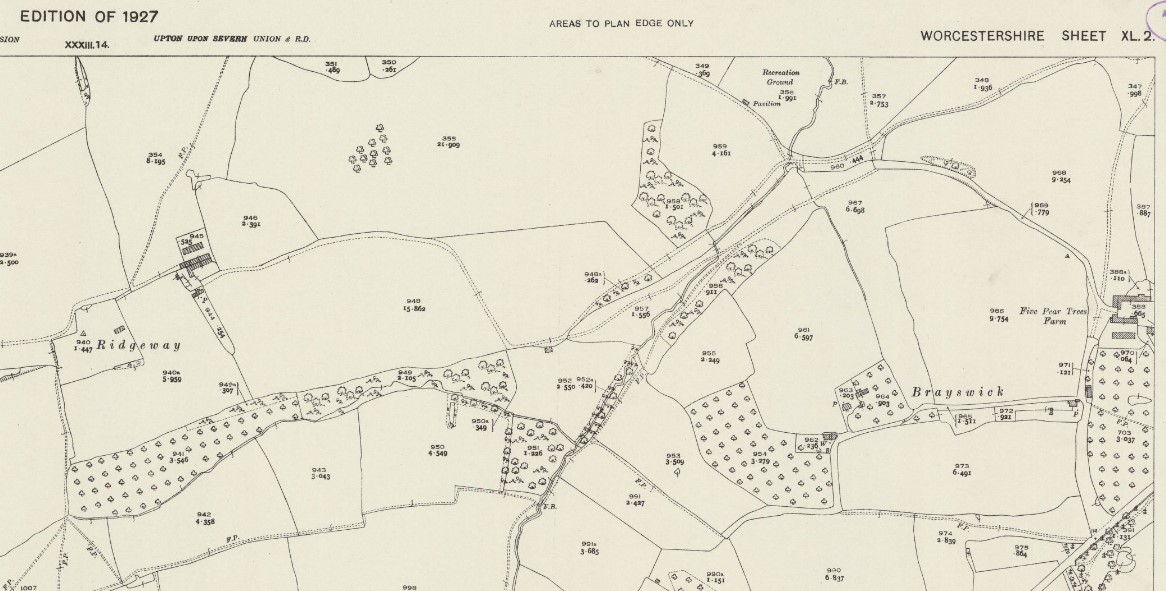
O.S. Map Worcs. XL.2.1927. showing Ridgeway Farm and Five Pear Trees © Crown Copyright
On the same page of the Bailiff’s account, pasted in, are crops to be grown across the different farms during Spring, 1946 and thanks to names of the acreage and use of O.S. maps, we can determine where these farms were surrounding Powick Hospital. The farm names are listed as Home Farm, as in the newspaper article, Five Pear Trees and Broadfields and with a reference to Ridgway and this is a nearby farm as shown on a 1927 O.S. map.
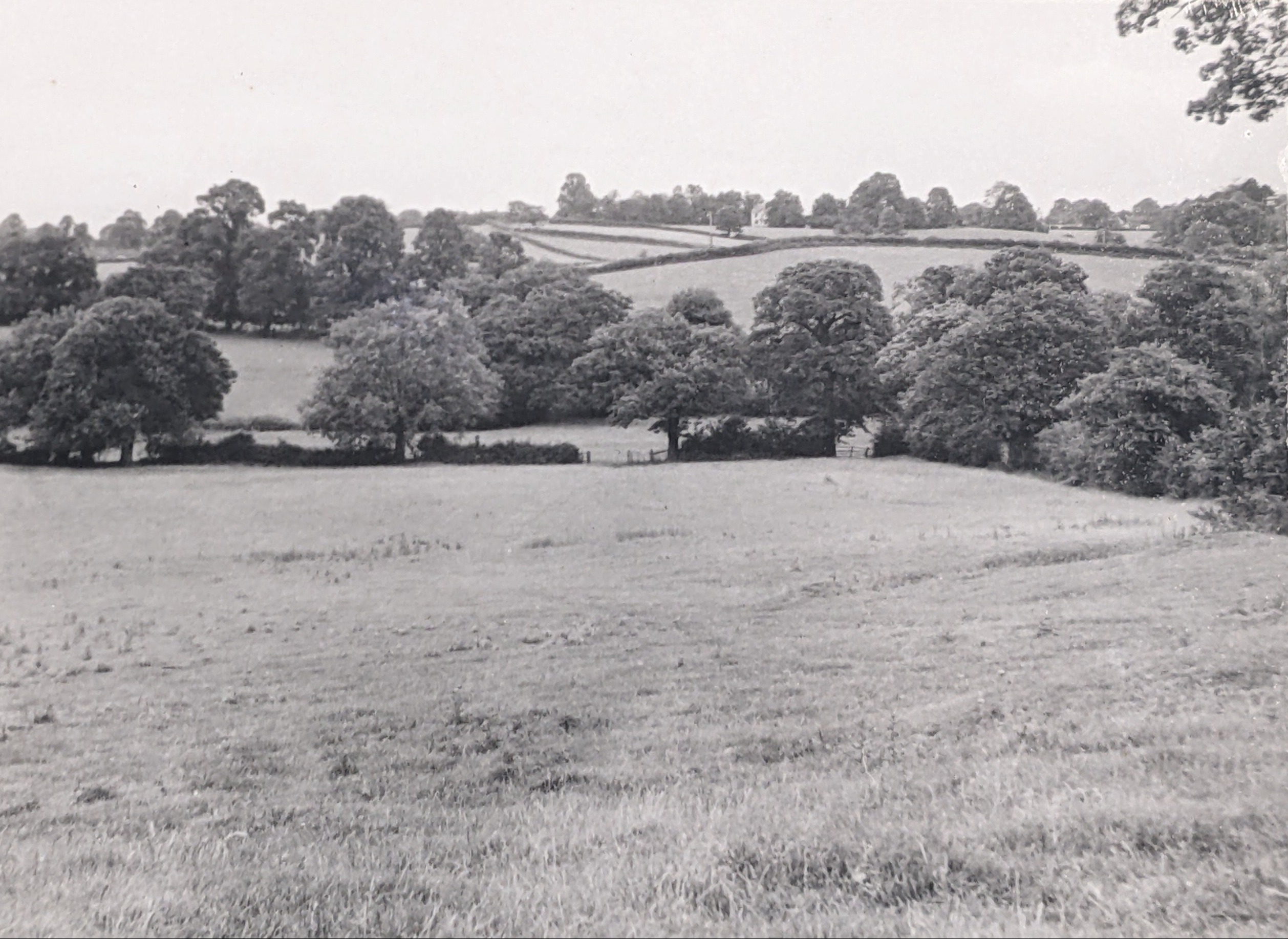
View towards Powick from Ridgeway Farm c.1960 WPS22587 © H. Cartwright
Reviewing our Worcestershire Photographic Survey (WPS) we also have images of Ridgway Farm, later pronounced Ridgeway Farm with various photographs of the farm buildings and surrounding landscape.
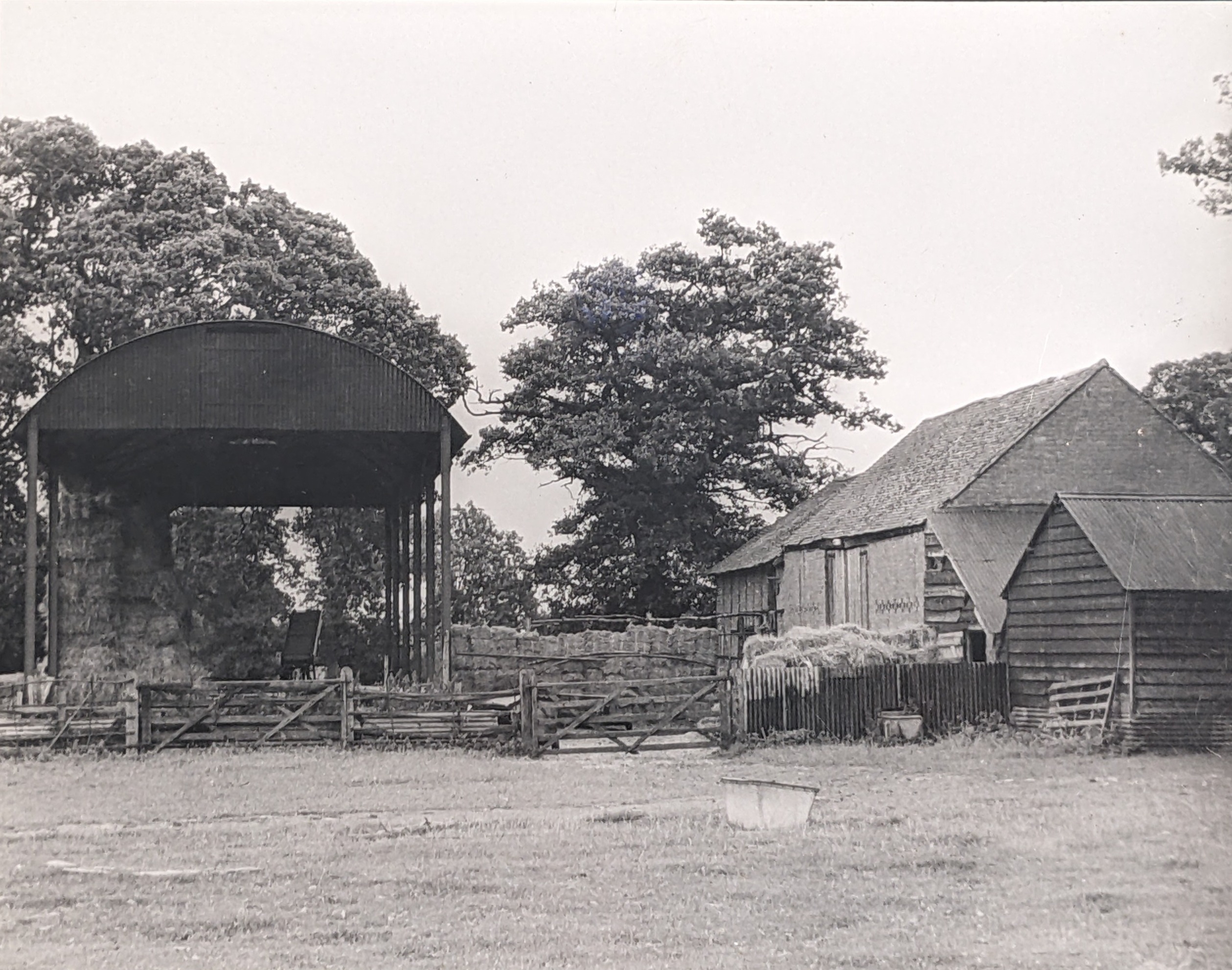
Farm Buildings, Ridgeway Farm c.1960 WPS22584 © H. Cartwright
Spring crops planted in 1946 included 8 acres of Sugar Beet. Whilst Fodder Beet is a digestible root crop used today as winter feed for cattle and sheep, often supplementing grass silage, Sugar Beet was cultivated for sugar as part of the war effort and there was a factory located in Kidderminster at the time. Kale, swede, cabbage, peas and cereal crops such as wheat and oats making up a large proportion of what was also being grown. Therefore, it demonstrates that the three farms were of a scale to provide a diverse diet to those living and working at Powick Hospital and a commitment to being as self-sufficient as they could possibly be at the time.


Post a Comment