1870s Christmas Decorations
- 23rd December 2016
In the 1870s local newspaper used to have a write up of the Christmas decorations put up locally, including the local churches. Sadly we don’t have any photos of these decorations in the archives from this period, but the descriptions help us to image them. Christmas decorations had only recently come back into fashion, along with the general increase in popularity of Christmas, being described by the reporter as a ‘recently revived art of modern culture’. That people could recall a time when decorations were not put up ties in with the theory that there was a boom in Christmas celebrations from the 1840s and 1850s, coinciding with Dicken’s Christmas stories.
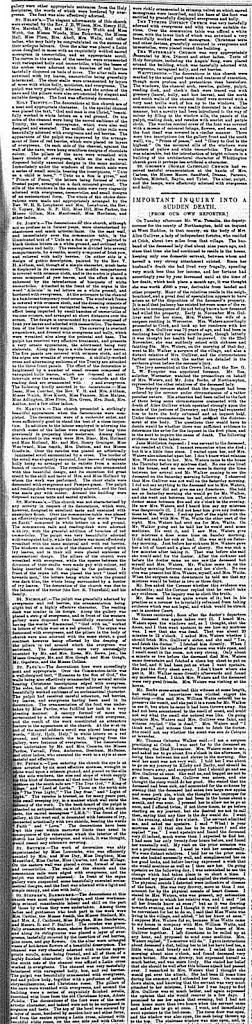
The first set of reports we include are from Berow’s Worcester Journal of 27 December 1873. The majority of decorations were combinations of flowers (including Christmas Roses) and traditional evergreens such as holly, ivy, mistletoe and yew, alongside Bible verses. Wool and cloths were also used for decorations.
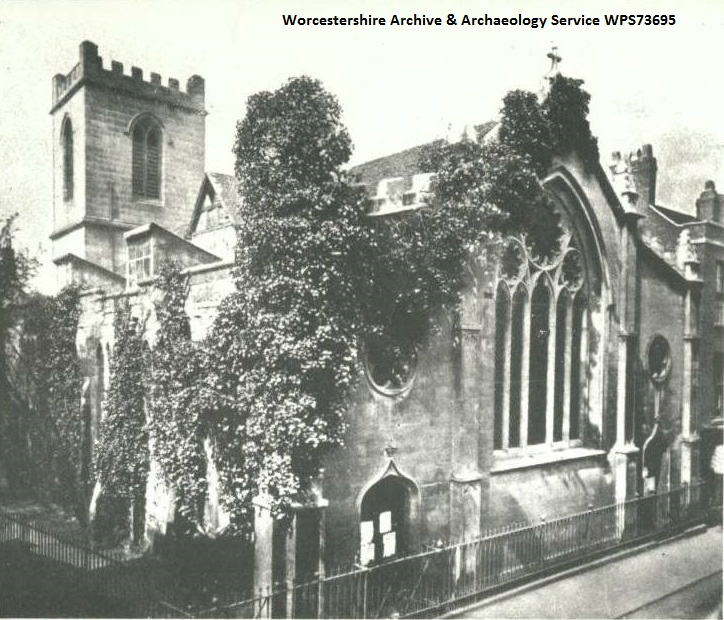 St Helen’s
At each church the reporter lists the people involved, and there appears to have been teams of dedicated women and some men at each place helping to create festive decorations. Old St Martin’s is described as being strikingly beautiful. All Saints was decorated with Christmas roses, flowers, yew and evergreens along with red and white woollen banners. Perhaps favouring ‘less is more’ a number of churches are praised for simple and tasteful decorations.

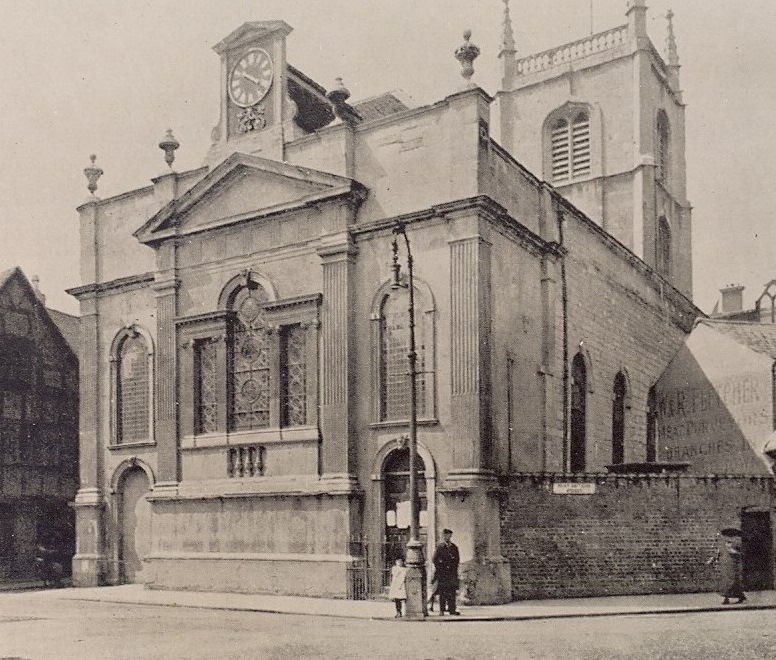 St Swithun’s
The second set are from the Worcester Herald of 1877. Decorations at each location seem to be similar. Once again the reporter is appreciative of the efforts of each church. St George’s Barbourne was described as being one of the best, with a centre piece of holly and white lilies. St Stephen’s in addition to the usual decorations and texts had verses from O Come All Ye Faithful featured. The reporter praised a number of churches for their simplicity, such as at St Nicholas where their decorations are described as plain but neat. Others appear to have struggled, with St Alban’s, a very small church, only managing simple decorations with few people to help, although the reporter is very sympathetic.

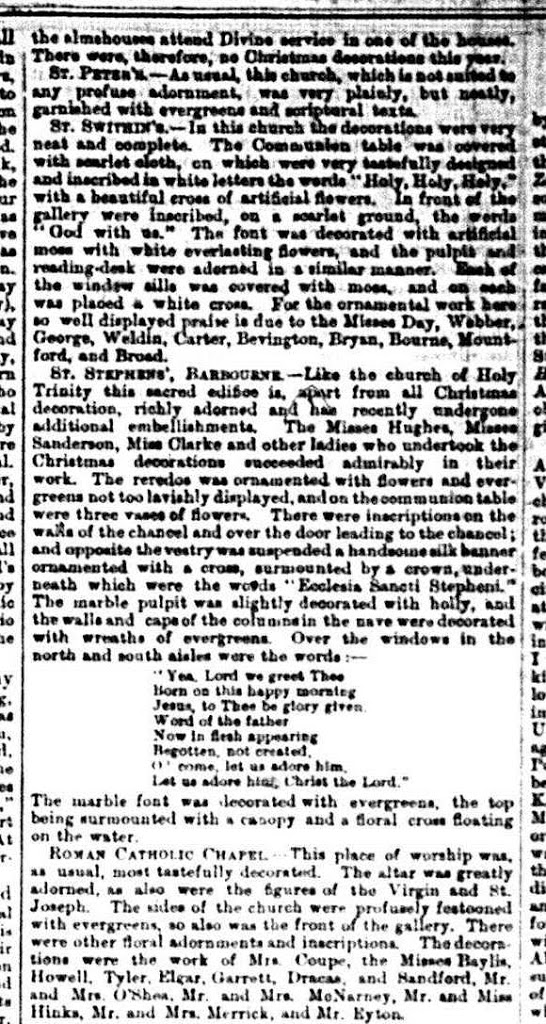
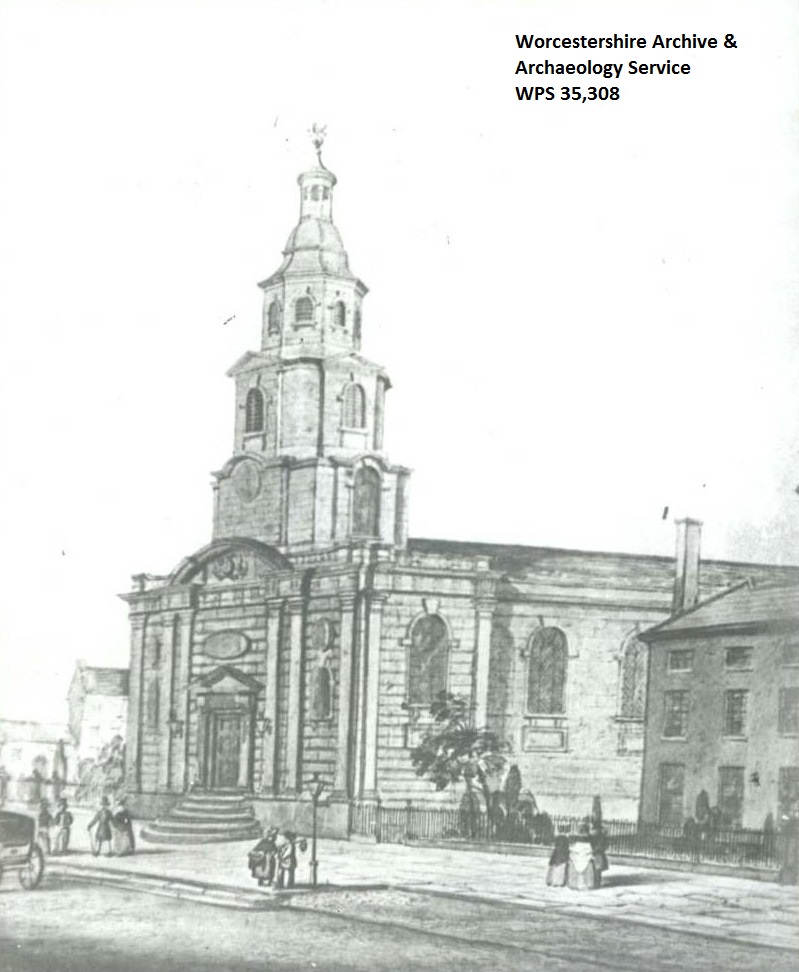 St Nicholas
300 years of Worcestershire newspapers are available on microfilm in our Self Service section on level 2 in The Hive. What will you discover?


