From Conservation Volunteer to Icon Intern at The British Museum
- 2nd June 2020
We have fantastic volunteers, contributing the equivalent of around 450 days a year. They help us is so many ways, and we try to share the many varied volunteering roles they do on our blog each year, and we appreciate all they do. However we know they get a lot out of volunteering too, which bring them back each week – meeting like-minded people, learning new skills and knowledge, tea and biscuits, contributing to project to help others, learning about local history. Lyndsay recently got in touch to say that she is now at the British Museum, after volunteering with us 4 years ago, and Rhonda asked her to say a little bit about her experience and her journey.
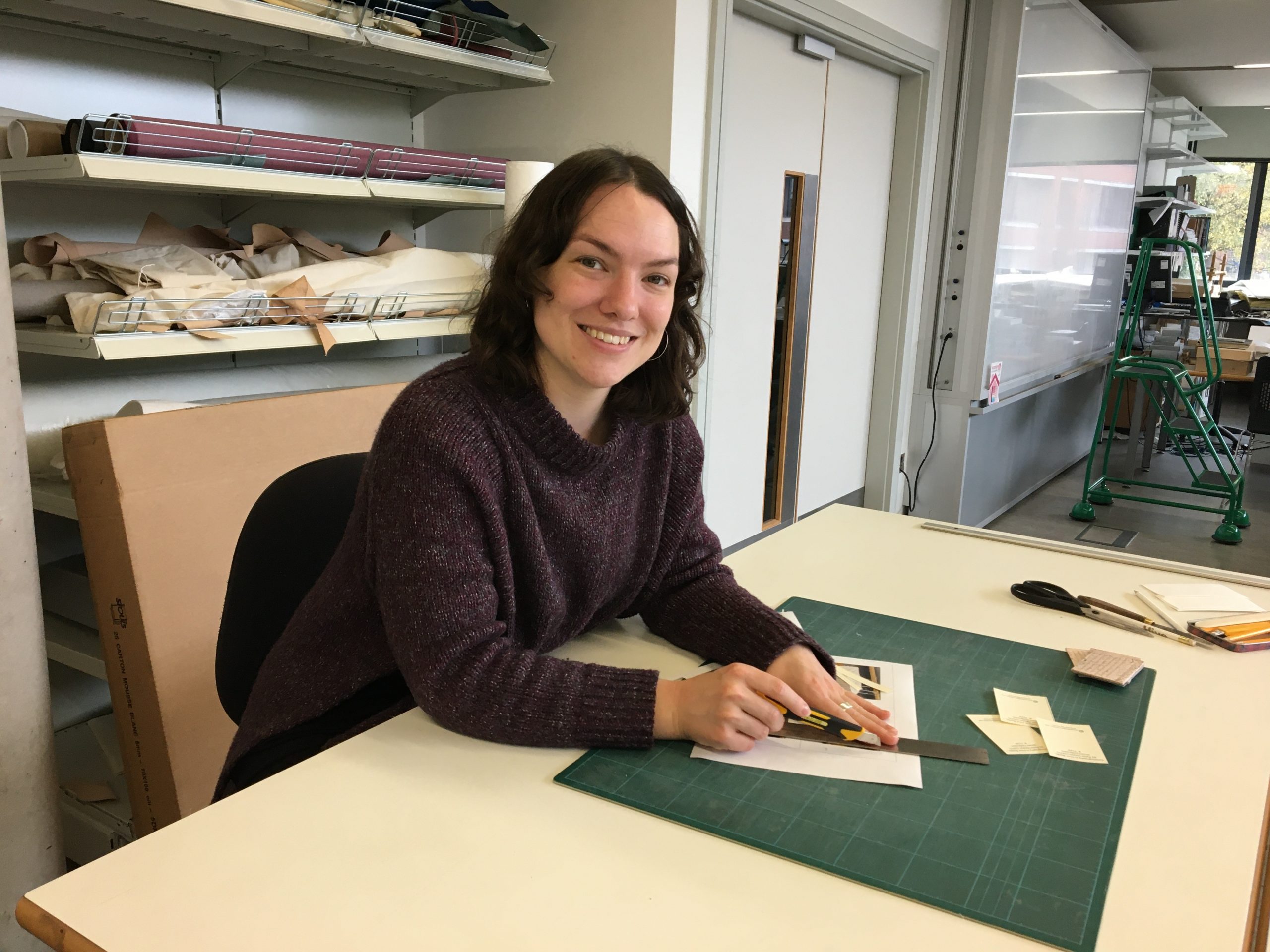
During the summer of 2016, I began considering the possibility of working in a different sector and changing my career. I felt stuck in a rut and in need of new skills in order to progress in the workplace. I knew that change was what was needed however, I soon felt overwhelmed at where to even begin, with such a task. After much thought and planning, I decided that to make a sensible decision it needed to be an informed one. So, after drawing up a list of all the places and roles that I have always thought would be of interest, I left my full-time job and embarked upon a year of employment exploration. After securing part-time work, I began by organising voluntary work placements in each of my interest areas, to investigate each option fully and see if it was the right ‘new’ path for me.
A career, I had been interested in at university but was never able to fully explore at the time, was conservation. After carrying out internet research I discovered that the County Council Archives at The Hive had a volunteer program in the Conservation Department. I contacted Conservator Rhonda Niven and after a discussion of the opportunities available I started volunteering with Rhonda once a week. At first I began with making book wraps to protect delicate and fragile books from the collection, before moving on to more complex tasks such as surface cleaning, rusting staple removal, pamphlet sewing and eventually creating book models to learn more about different binding techniques and book structures.
After a number of months and various other placement experiences I began to realise how much I enjoyed my Friday morning at The Hive. It was stimulating and varied and watching Rhonda work on studio projects, I began to grow more and more interested. As time passed I started to consider the possibility of a career in conservation further and began researching the required qualifications and skills needed. Conservation is a highly skilled job and a post-graduate qualification, typically a masters degree, is required by employers, alongside practical experience. After much investigation, and pondering, I decided to plunge head-first and applied to two university courses in the UK. To my delight I was offered a place at Northumbria University to study Conservation of Fine Art, specialising in works of art on paper.
After two years of study and several work placements later, including time spent at The Bodleian Library, Oxford, The Wellcome Library, London and The Rijksmuseum, Amsterdam, I was fortunate to get a paid Icon Internship at The British Museum, London, where I am specialising in the conservation of Old Master Prints and Drawings. However, none of this would have been possible without that first experience and the generosity of Rhonda who gave me an opportunity to explore an interest. Volunteering, for me, was not just something to do, it was a chance to see something different, explore a new area and find out a little more about what I really wanted to do. It has been an incredibly valuable experience and one I can fully recommend!


Post a Comment