True Crimes – Florrie Porter
- 23rd April 2026
With funding from the National Lottery Heritage Fund, we are having a series of free talks at The Hive on ‘True Crimes’.
Using documents found in a deposit made by West Mercia Police, our second talk focused on Florrie Porter. In 1944, Florrie’s body was discovered on the grounds of a school in Lickey End. She had been brutally stabbed, and despite numerous witnesses, including US soldiers who saw her in a Bromsgrove bar shortly before her death, the American serviceman she was last seen with was never identified. The investigation was hampered by the fact that many of those serviceman that the police wanted to speak to had been sent back to France to fight. Indeed at one point Mr Inight, who was in charge of the investigation, went to France to follow up his enquiries but to no effect.
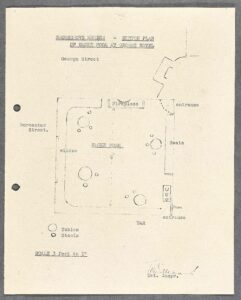
BA15154
Image courtesy of West Mercia Police
Looking at the files you get the strongest feeling of connection with Florrie herself. We have photographs of her enjoying a holiday with a friend, we have examples of her handwriting, we know of her work life and the voluntary work that she did. We get a sense of what life was like in Bromsgrove with all of those US servicemen recovering from the injuries incurred during the D day landings, all looking to forget and be merry. We can begin to understand what life was like in the town and the effect that all these US visitors must have had on the local population.
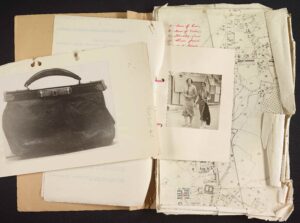
BA 15154
Image courtesy of West Mercia Police.
When planning these talks, Maggie Tohill, our Senior Archivist, was adamant that she wanted to talk about Florrie rather than the violence of the crime. She wanted the audience to think about what Florrie’s life could have been, what contributions she could have made to the world and the hole that was left in her family’s life. To achieve this, we asked our colleague at the University of Worcester, Dr Charley Barnes lecturer in Cultural Studies, to share with us her work to put the victim at the centre of the narrative.
Charley says “True crime has it merits, raising awareness of important socio-cultural issues and institutional failings, but also has its shortcomings, and one of the biggest is its treatment of victims. In a society that prioritises medical and psychological explanations of violent crime, there is a constant lean through true crime media, to “explore the mind of the killer.” This all happens to such an extent, especially through the lens of the current true crime boom, that it can become quite challenging sometimes even to remember that all crimes impact real people, real victims, outside of the perpetrator themselves.
We need to be less interested in the mind of the killer and more interested, more respectful, of the lives of their victims, and indeed, their victims’ families. This will help to move true crime beyond the realms of mere popcorn entertainment, to transform it into something that stands for something much more than remembering evil.”
To conclude our True Crime series, on 4th June we will have a talk from Paige Joy, a local historian, who has been looking at 18th century Quarter Sessions, Consistory Court papers and Churchwarden’s Presentments. She will take us on a fascinating journey, exploring the full spectrum of offences and punishments of the era — from the serious to the downright absurd.


Post a Comment