Worcestershire cricket memorabilia
- 7th August 2026
One of the interesting collections we’ve come across as part of our retroconversion project are four cricketing memorabilia books, collected by three members of the same family – Ruth Jackson, the depositor, and her mother and aunt Frances and Eleanor Bomford. We have three autograph books and a scrapbook, compiled on and off over 96 years, from 1894 to the very last item in 1990.
In this blog, we’ve simply picked a few items in this collection to publicise.
Scrapbook
The scrapbook is a Great Western Railways stationmaster’s account book that has been repurposed for storing cricket memorabilia, collected from 1894 to 1938.
Women’s Cricket
For starters, we have this newspaper cutting about women and cricket from 1924. Muriel Maxted in particular seems to have been something of a celebrity of her day, famous enough to have been filmed by British Pathé in 1922 as “Dr Grace in petticoats”!
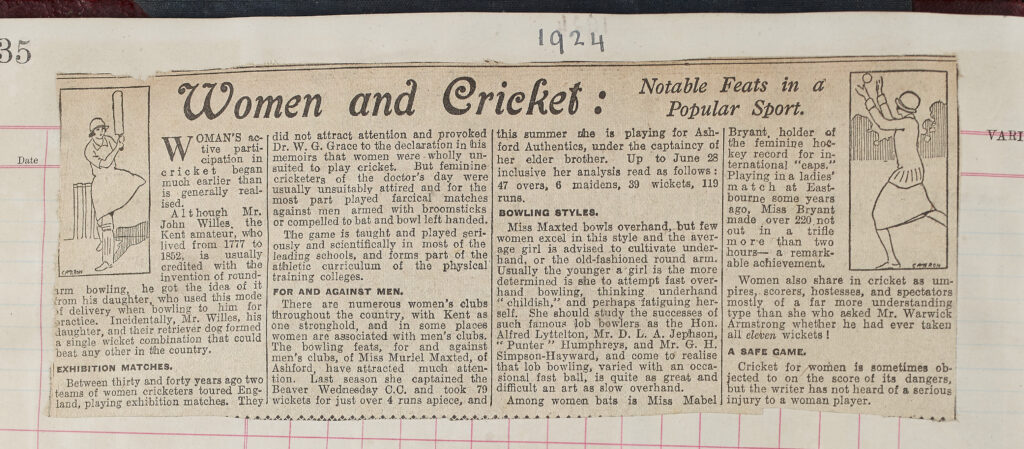
Newspaper cutting re women and cricket. BA10036 (iii)
Church Lench CC
The Bomfords were involved with their local cricket club – the Church Lench cricket club. We have the club averages for 1895:
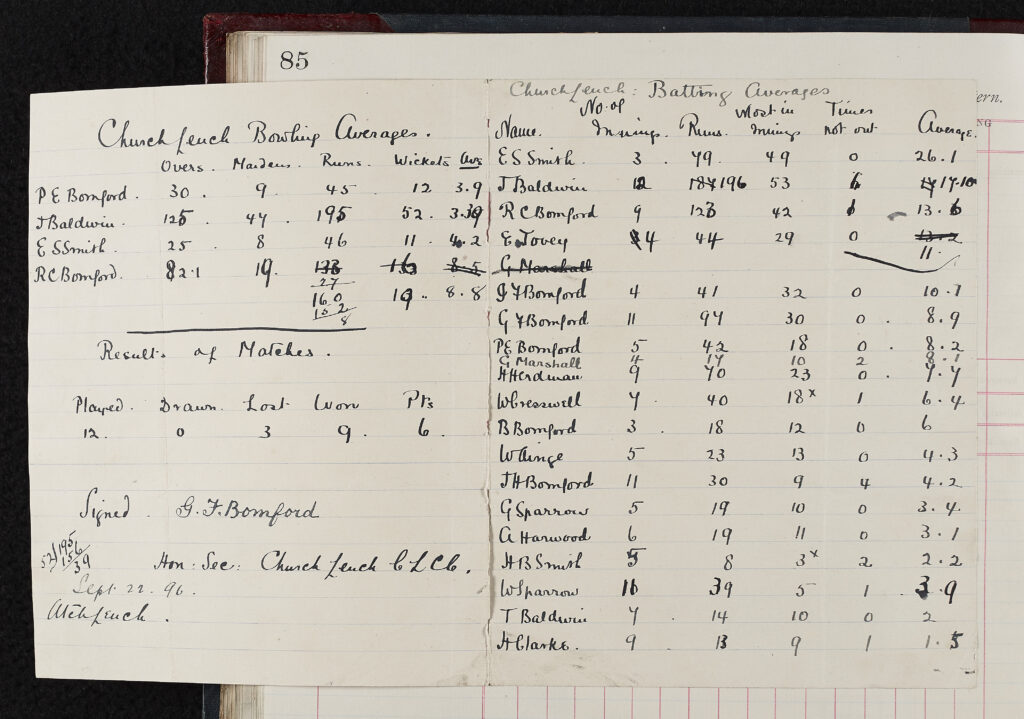
Church Lench Cricket Club bowling and batting averages, 1896. BA10036 (iii)
And also this newscutting about a club dinner. The Church Lench CC seems to have been a Bomford family tradition!
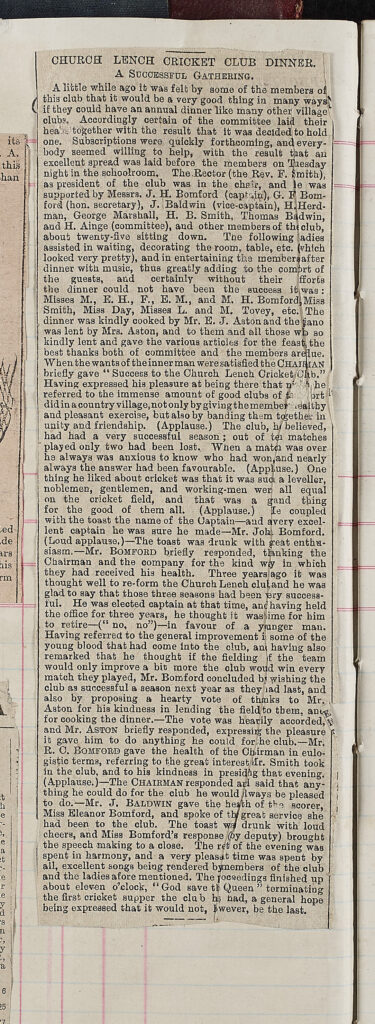
Account of Church Lench Cricket Club dinner. BA10036 (iii)
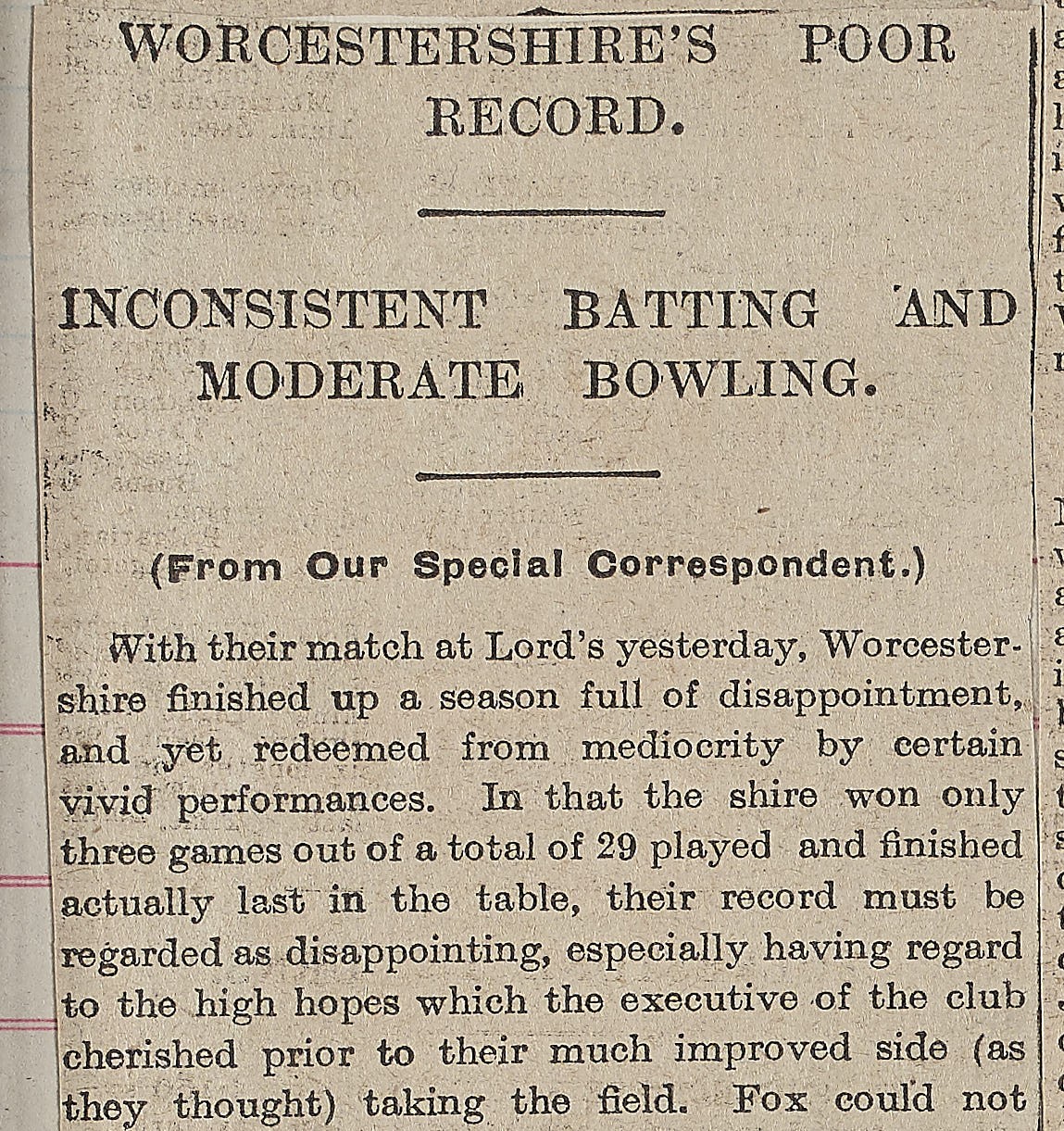
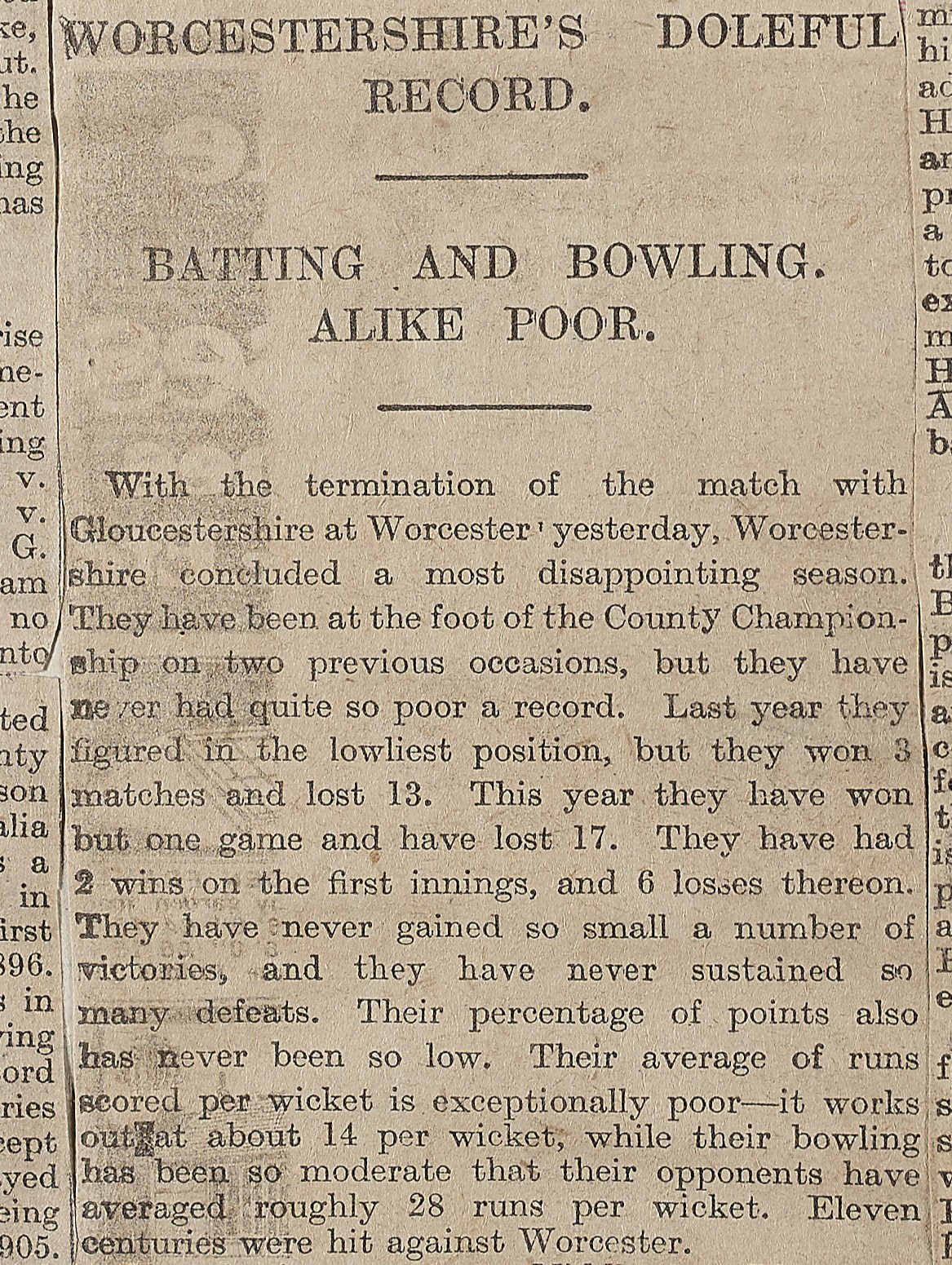
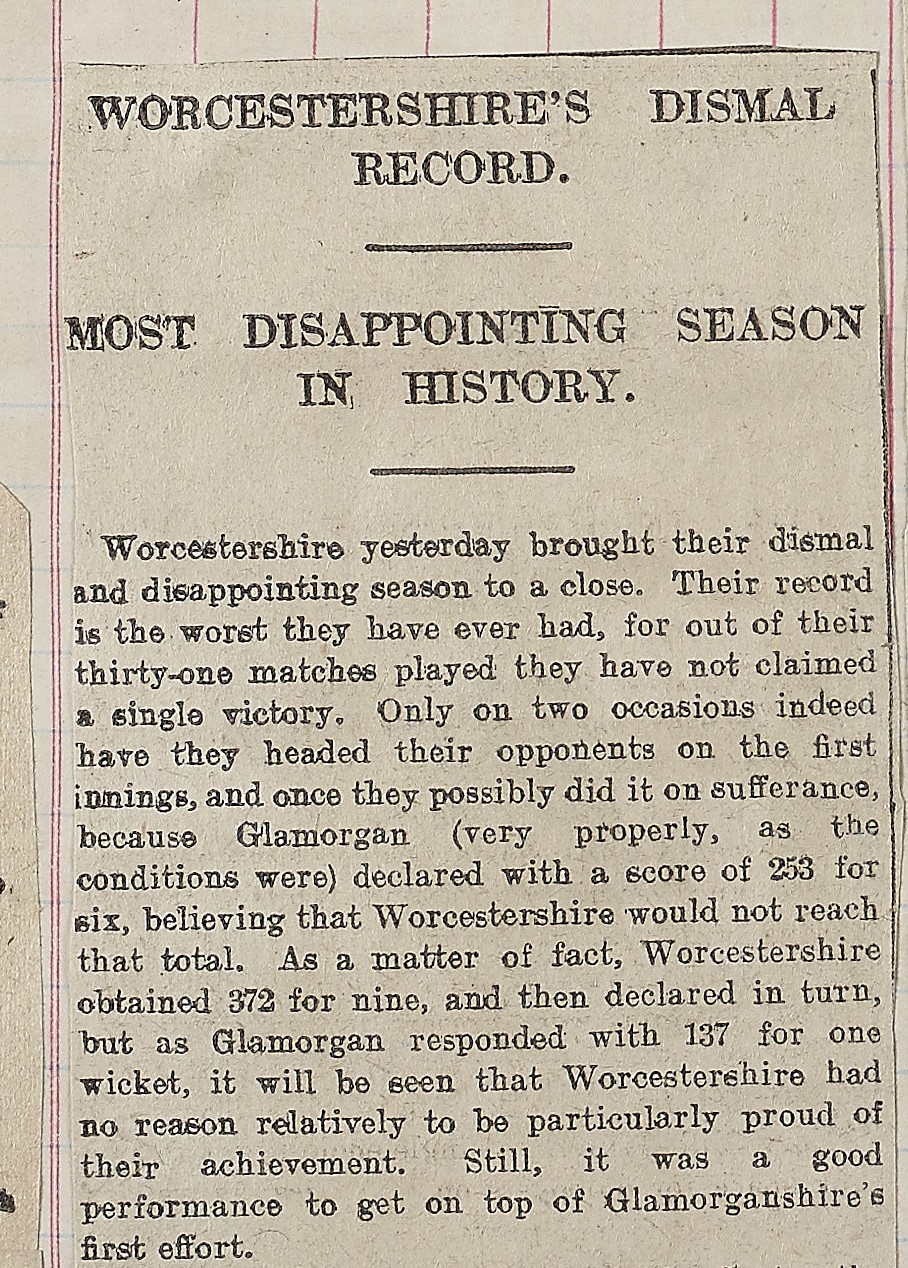
Poor…doleful…dismal!
The 1920s were not successful years for Worcestershire, which was a chronically weak team in this period. We have a whole series of newspaper cuttings from this era, looking back on another failure of a season, and expressing hope that this coming year will surely be better. Of course, this coming year somehow always manages to be worse! 1926 was “poor”, 1927 “doleful” and 1928 simply “dismal”! Worcestershire simply didn’t have the players or financial resources to compete seriously in this period, and while 1929 was back to merely “poor”, and the county would enjoy better form in the 30s and 40s, it would not be until 1964 that Worcestershire would win their first of five County Championships.
Autographs
We have three autograph books split across two collections. These were collected by Eleanor and Frances Bomford and then a more recent volume by Ruth Jackson. Eleanor and Frances were collecting from 1895 to 1904. It’s a bit of a Who’s Who of the golden age of English cricket, with a Gloucestershire focus, whereas Ruth Jackson’s collections are more recent – 1925 to 1990 – and are mostly of Worcestershire cricketers.
Grace
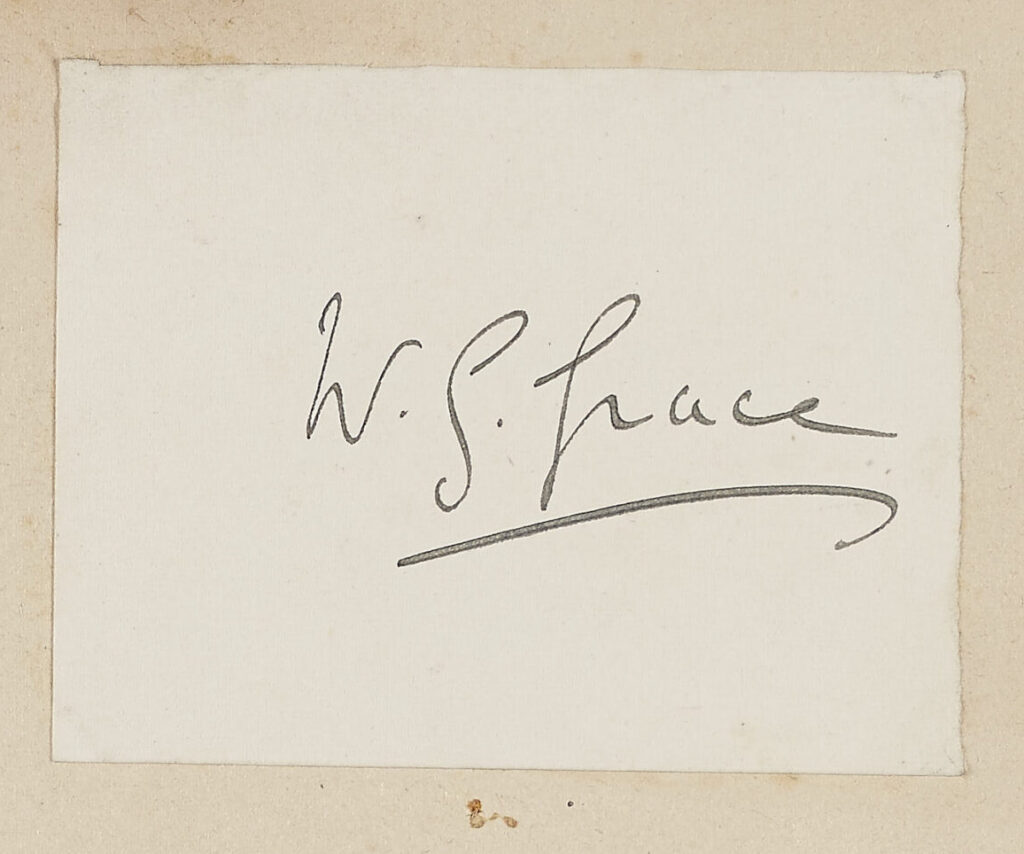
W.G. Grace’s autograph. BA10036 (i)
This is the very first autograph in these books. W.G. Grace was the leading cricketer of his day, and quite possibly the greatest and most famous to ever play the game. Known for his batting, bowling, beard and (in later years) bulk, he played for Gloucestershire for nearly 30 years, from its formation in 1870 to 1899, and in 22 Tests for England. His career took in the birth of county and Test cricket and the development of modern batting and overarm bowling techniques.
Australia 1899
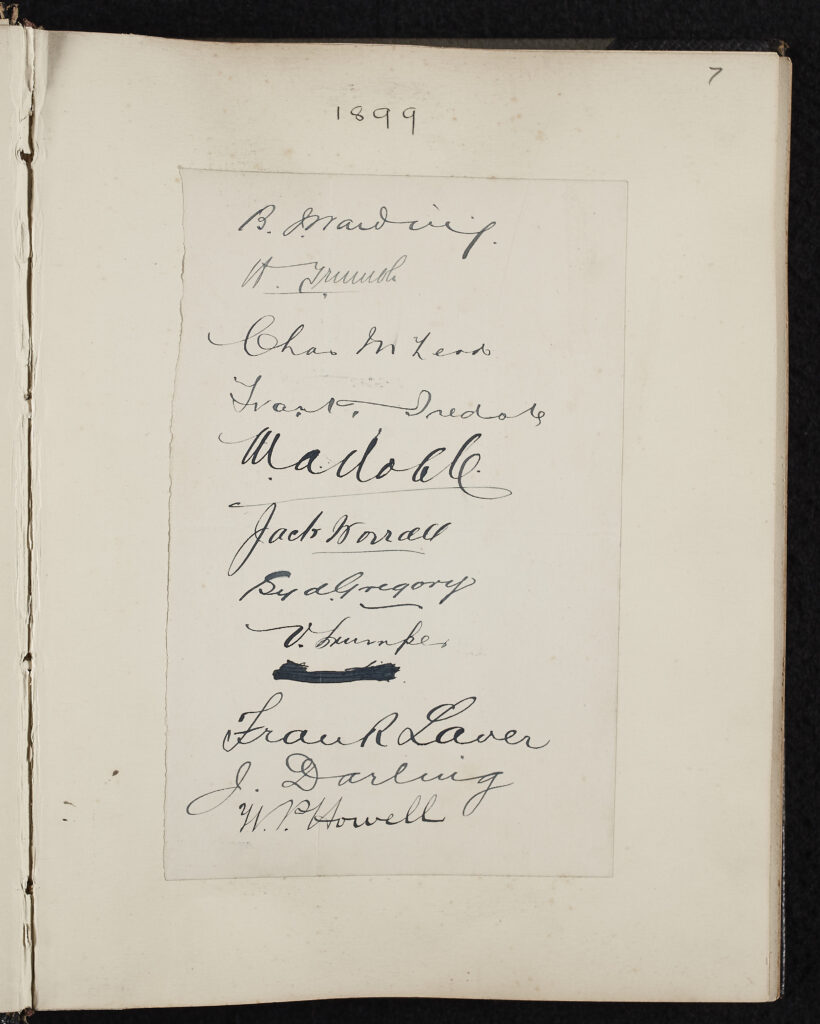
Australian 1899 touring eleven. BA10036 (ii)
These are the signatures of the 1899 Australian touring eleven, who played 35 matches over four months, including a series of five tests against England. On the 13th July Australia played against Gloucestershire, the Bomfords’ club, in Bristol, where they won by six wickets – perhaps this is when the Bomfords collected their signatures.
K.S. Ranjitsinhji
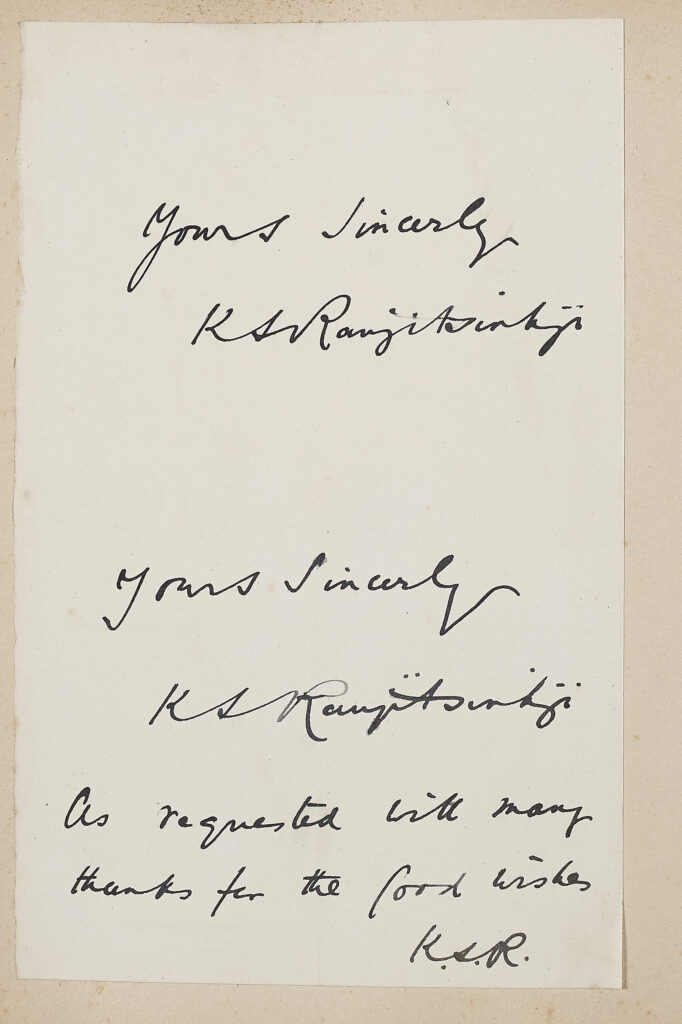
Autograph of KS Ranjitsinhji. BA10036 (i)
K.S. Ranjitsinhji was an Indian aristocrat, later Maharaja Jam Sahib – prince – of Nawanagar, one of the semi-autonomous Princely States of the British Raj. He studied at Cambridge University and spent a considerable portion of his life in England. One of very the best and certainly the most innovative batsmen of his time, he played for Cambridge University, Sussex, the short-lived London Cricket Club, and for England, appearing in 15 Test matches. After his death, the Indian first-class cricket trophy – the Ranji Trophy – was named after him as the “father of Indian cricket”.
C Sewell
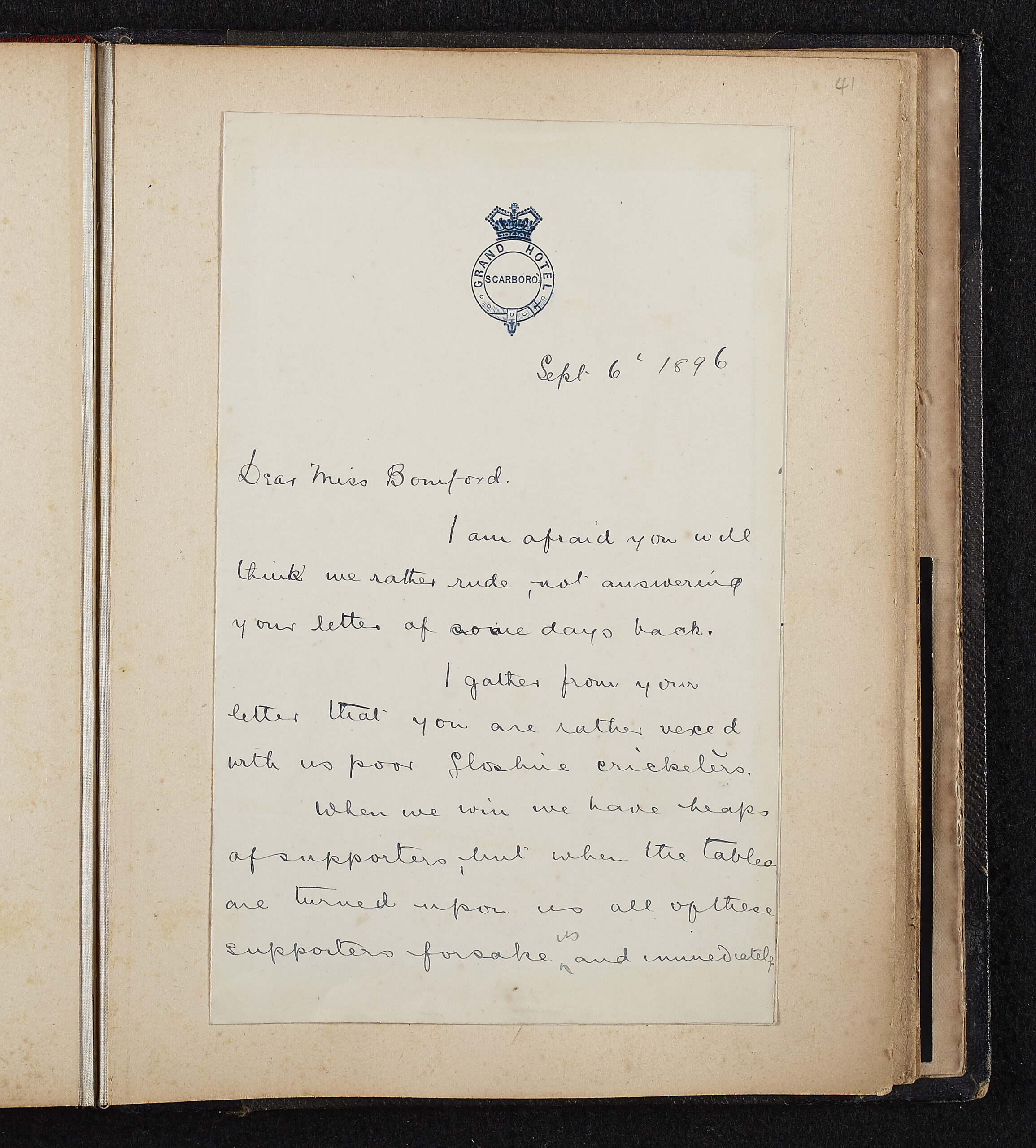
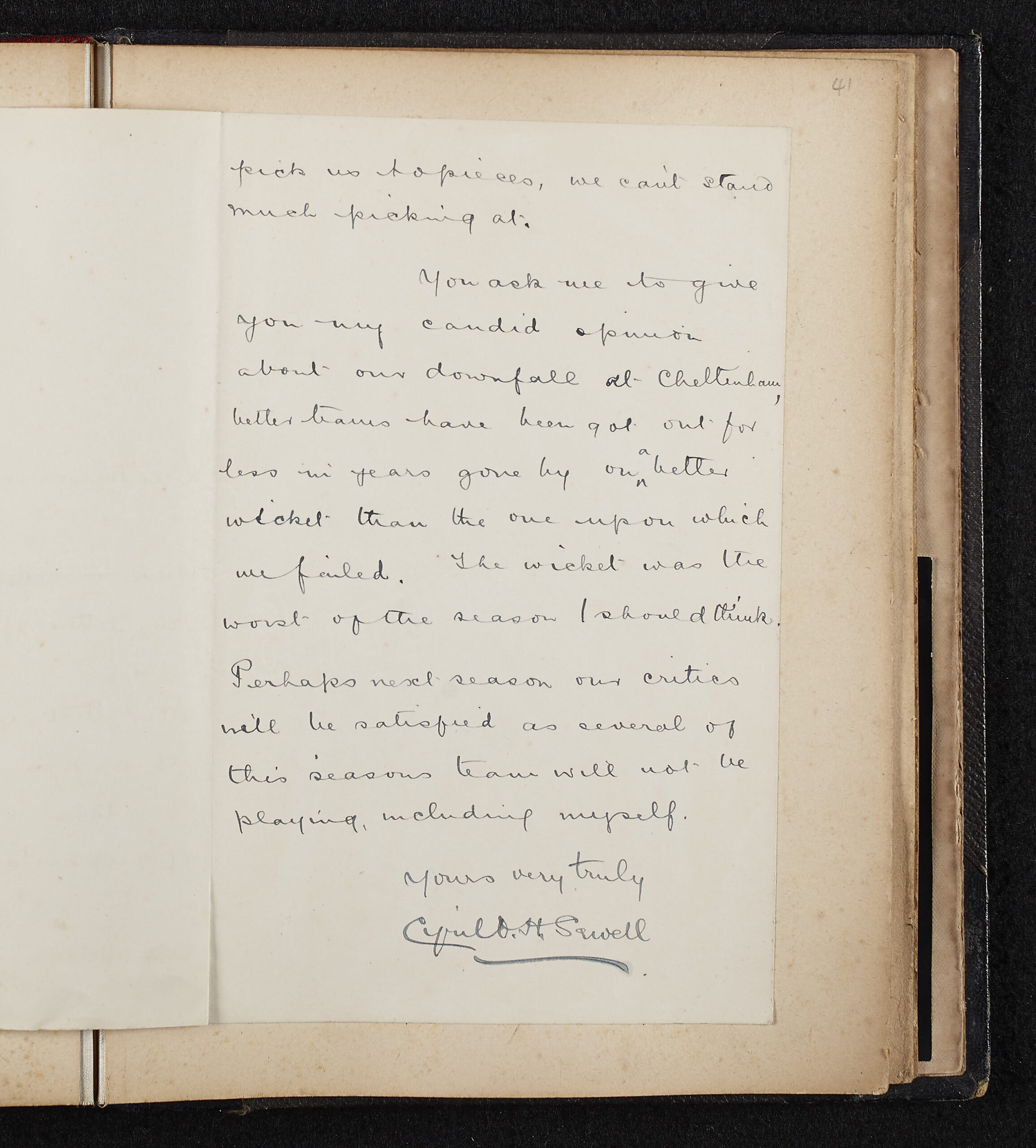
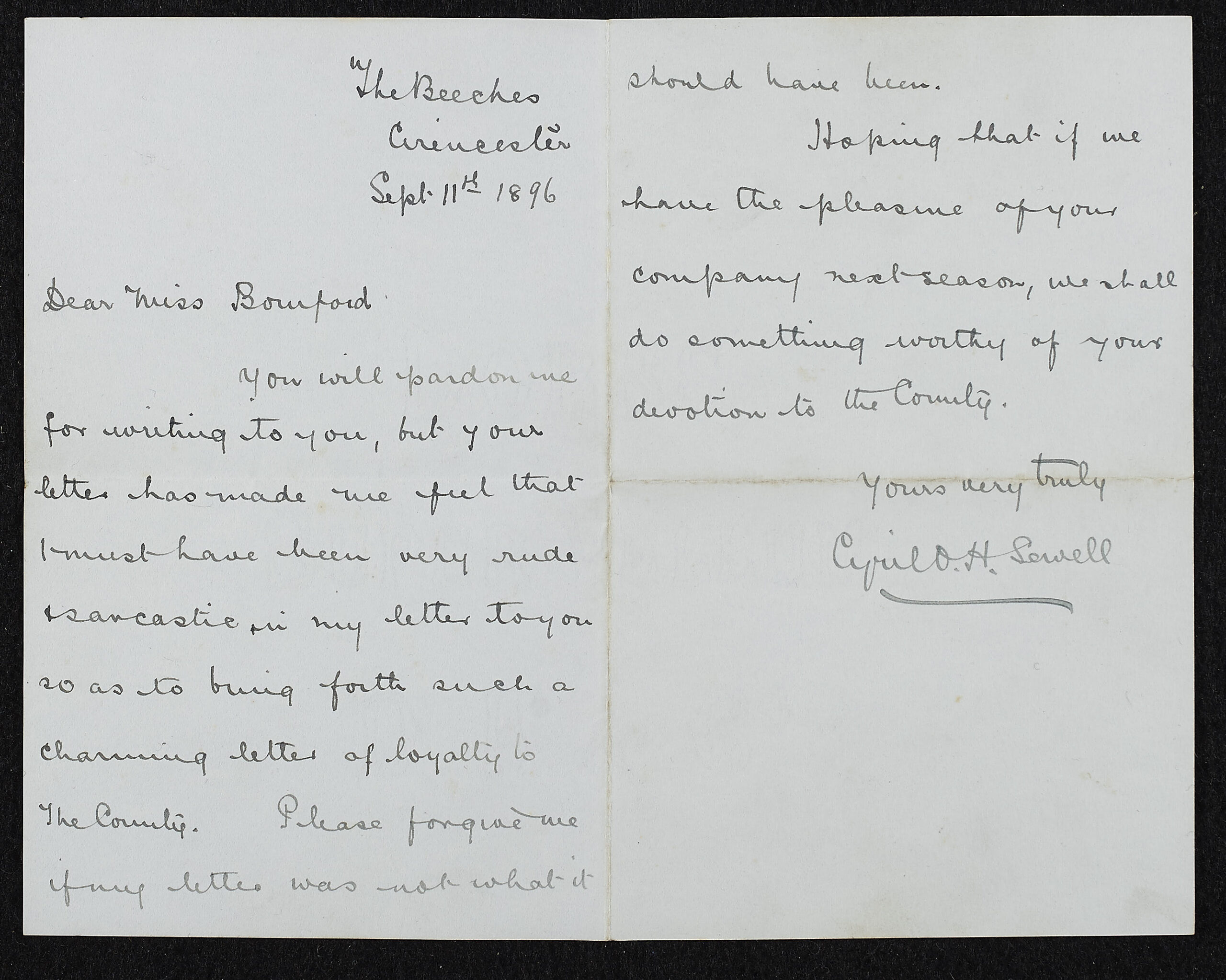
We also have this pair of letters from Cyril Sewell, a South-African born batsman who played for Gloucestershire. Gloucestershire had not had a very good season – they were 10th of 14 in the Championship, winning 5 and losing 10 – and Eleanor does not seem to have been best pleased with this. It’s a shame we only have one side of the correspondence – Eleanor had clearly touched a nerve with her first letter, and clearly thoroughly mollified him with her second.
Fostershire
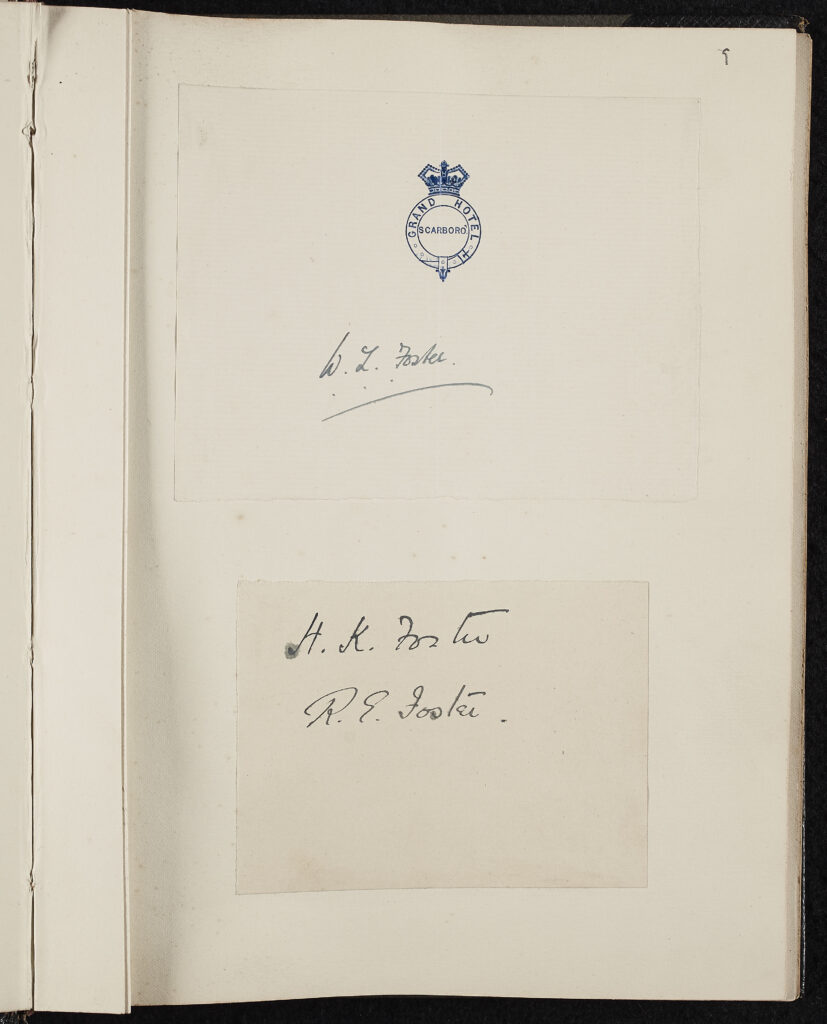
Worcestershire Fosters. BA10036 (ii)
These are the signatures of three of the Worcestershire Fosters, a clan of seven cricketing brothers, all right handed batsmen, who played for Worcestershire in the early 20th century. They were such constant presences in the side that the club was nicknamed “Fostershire”. The bottom signature here, R.E. Foster, Reginald Erskine but called “Tip”, was perhaps the best of the brothers – according to Wisden “beyond doubt the best”. He was also a skilled amateur footballer, and remains the only man to have ever captained England in both cricket and football!
Root
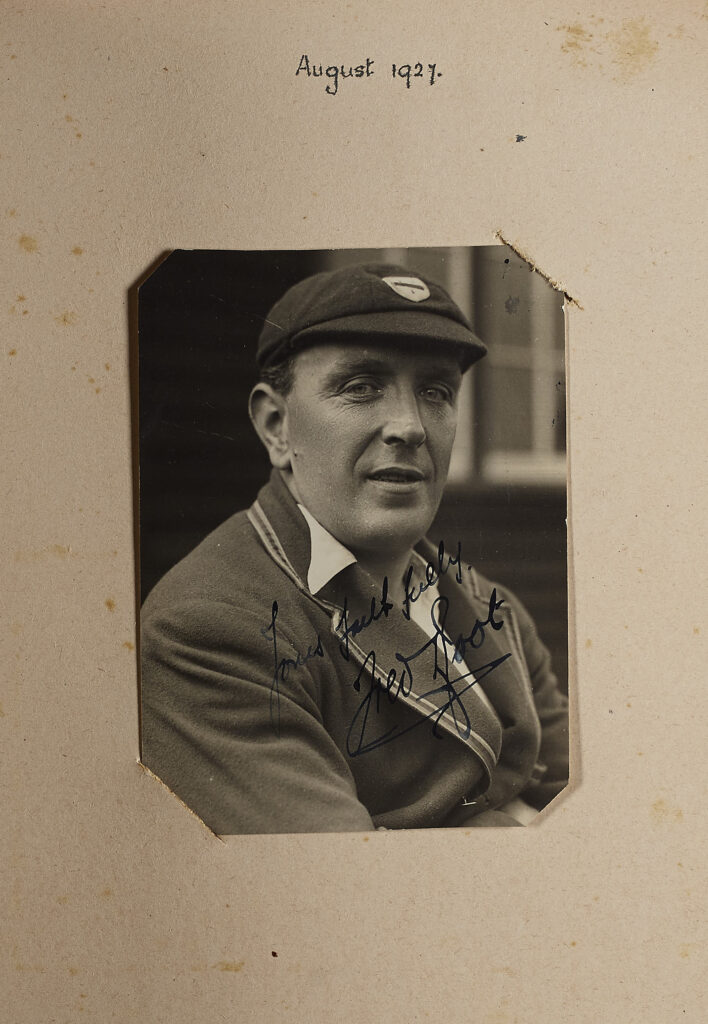
Signed photo of Fred Root. BA13866 (i)
This is a signed photo of Fred Root, a great bowler and the brightest spot in those perennially weak Worcestershire teams of the 1920s. If Root had a bad season, that was a “dire misfortune” for the county. In 1925, he achieved bowling averages of 17.21 across 219 wickets; in 1926 he dismissed seven of the touring Australian eleven for 42; in 1931 he took nine Lancashire wickets for 23.
Basil D’Oliveira
Continuing the theme of great Worcestershire players, we also have this letter from Basil d’Oliveira thanking Ms Jackson for a generous contribution to his testimonial. Born in South Africa, d’Oliveira was categorised as “Cape Coloured” – mixed race – and so moved to England to escape apartheid. A skilled all-rounder for Worcestershire and England, he appeared in 44 tests and 16 years of county cricket, including the first two of Worcestershire’s Championship seasons. Controversially, he was initially excluded from an England side for a tour of South Africa. When he was later selected as an injury replacement, the South African government refused to allow the side to tour due to its including a non-white player, leading to the cricketing boycott of apartheid South Africa.
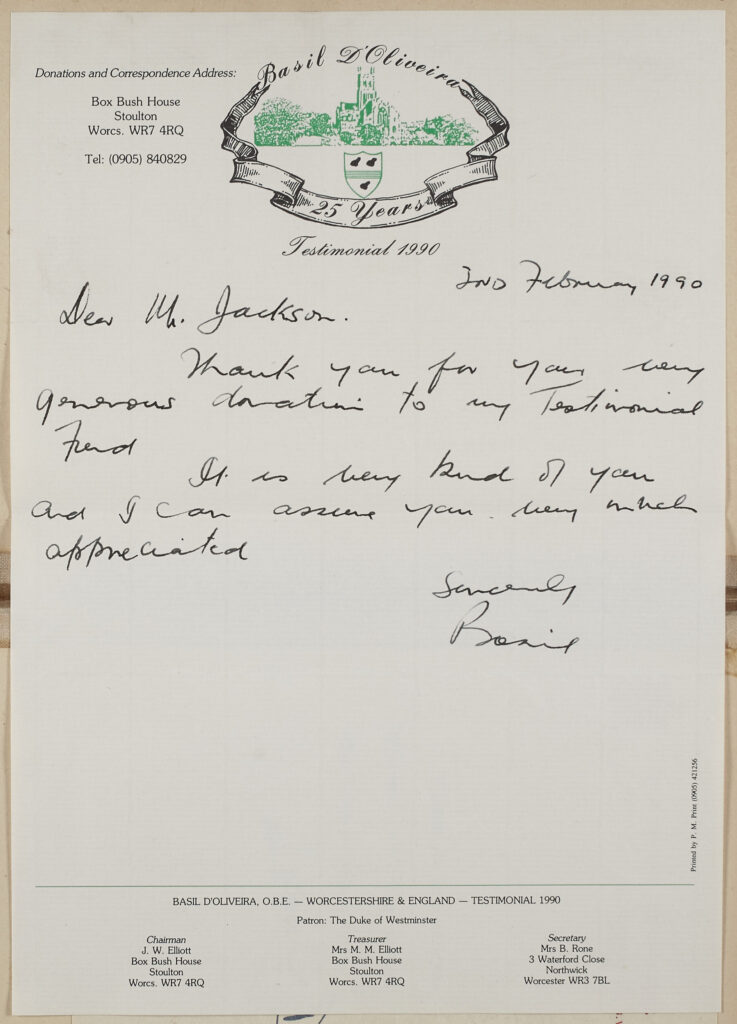
Letter from Basil d’Oliveira. BA13866 (i)
Finally, Ruth Jackson did also collect some famous non-cricketers in her autograph book. We have these autographs by Stanley Matthews, the Blackpool/Stoke City/England winger, winner of the first Ballon d’Or in 1956 at the sprightly age of 41, favoured over Alfredo di Stefano, alongside Stirling Moss, the famous racing driver. They’re joined here by Peter May, who was a cricketer – a leading batsman for Surrey and England.
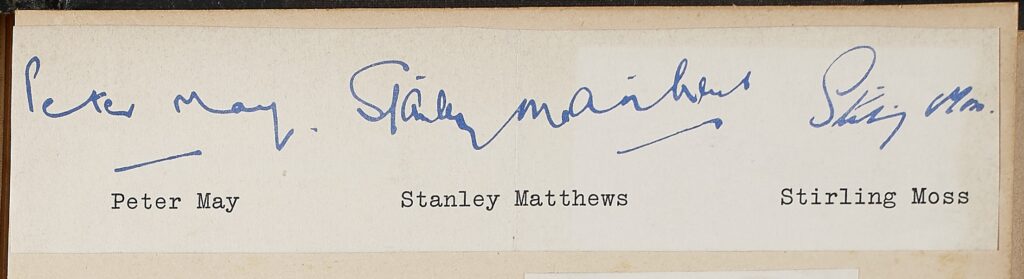
Autographs of May/Matthews/Moss. BA13866 (i)
We also have this note offering thanks for a contribution to a King George Jubilee Trust, signed “Edward R”, which must of course be Edward VIII. It’s an interesting question – a king naturally signs a lot of things, but even so, how much can one man sign in 11 months?
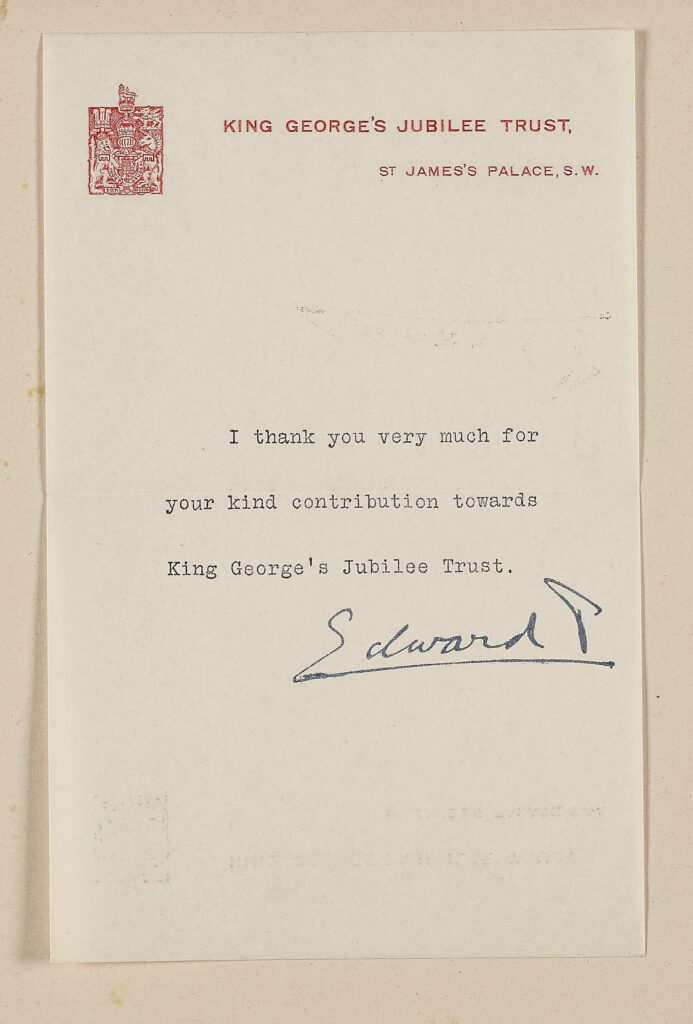
Signed letter from King Edward VIII. BA13866 (i)
Conclusion
This is an interesting collection that’s full of fun little bits and pieces of cricketing history, and these books hold many other things that are worth a look. If you’d like to explore these collections further, then they can be viewed, primarily as microfilm surrogates, at the Hive.


Post a Comment