Handel, Espionage and Gardens – Royal Accounts in the archive
- 17th October 2026
One of the collections we’ve uncovered as part of our ongoing retroconversion project is this deposit of royal accounts, BA2252. These are an interesting and substantial collection of royal household papers, which you might not have expected would be held here in Worcester.
What’s in the collection?
This collection was created and kept by a man called Caspar Frederick Henning.
Henning was an official of the Privy Purse – the department responsible for controlling the king’s own personal moneys. He served through the reigns of three kings and one queen – Charles II, William III, Anne and George I – and eventually rose to the position of Keeper of the Privy Purse, the head of the department.
The collection runs to circa 850 items across 7 boxes, about three quarters of which are account books, accounts, correspondence and various other miscellaneous papers of Henning. Finally, the remainder are various papers of the Martyn and Amphlett families of Worcestershire, into which Henning had married. This collection was passed down through the Amphlett family, and came to us in 1958.
Copy of Orders for the Government of the King’s Bedchamber and Privy Lodgings
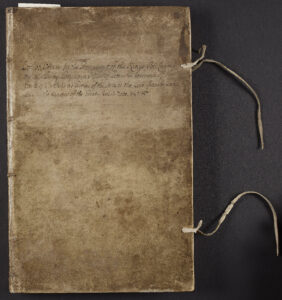
Groom of the Stole’s order and warrant book. BA2252/2
This volume was kept on behalf of William Bentinck, the Earl of Portland, one of William III’s favourites, and Henning’s patron. As Groom of the Stole, Bentinck was responsible for the management of the royal private quarters. This was a powerful position – the Groom of the Stole both had and could control intimate access to the king.
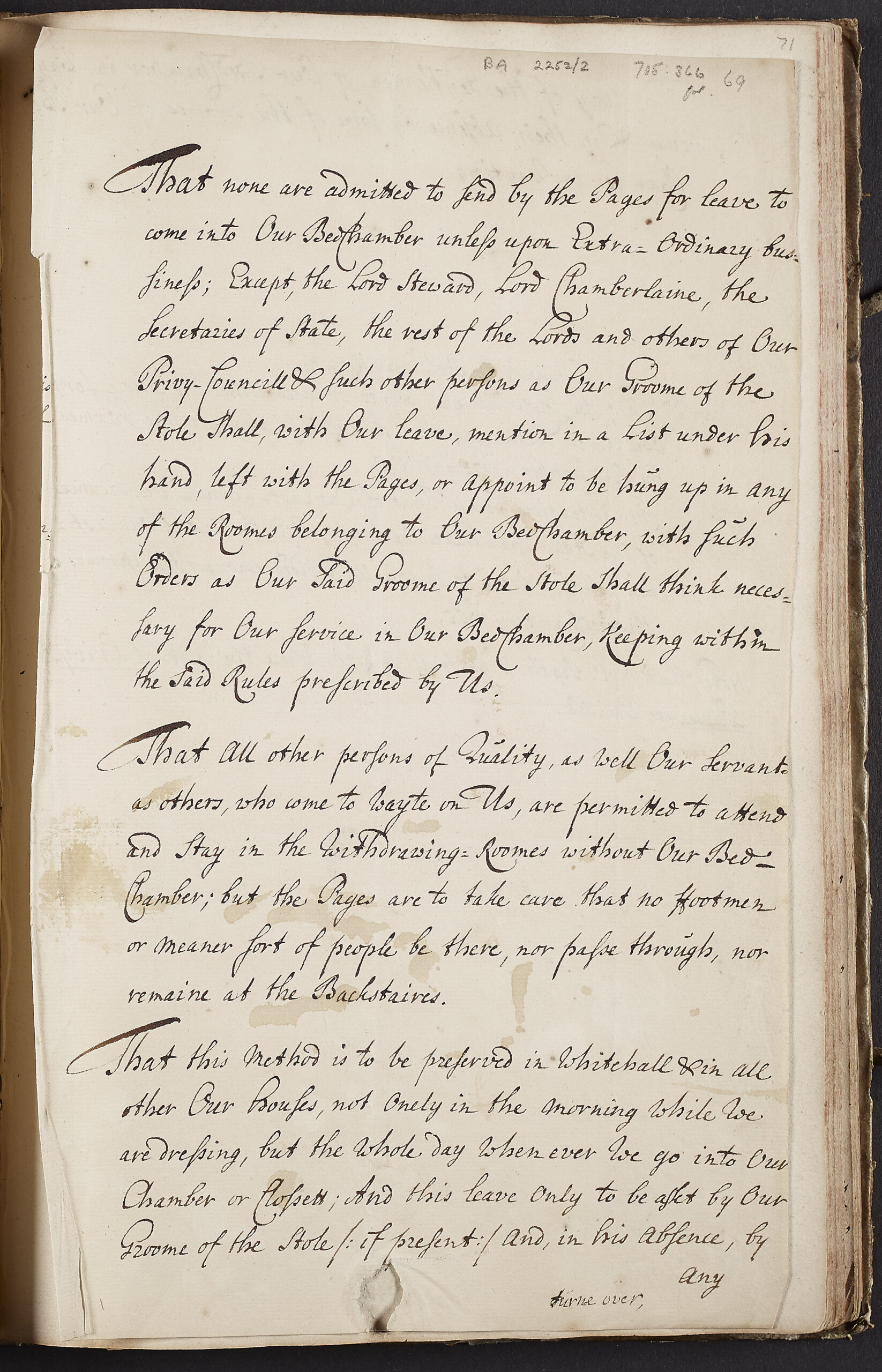
This volume contains a copy of The Orders for the Government of the Royal Bedchambers, the rules which set out who was and was not allowed to enter the King’s private quarters. Only a select group of people are allowed to enter the royal bedroom, including Secretaries of State and Privy Councillors. “Persons of Quality” were permitted to enter the “Withdrawing-Roomes”, but not “footmen or meaner sort of people”, who were to remain at the “backstaire”.
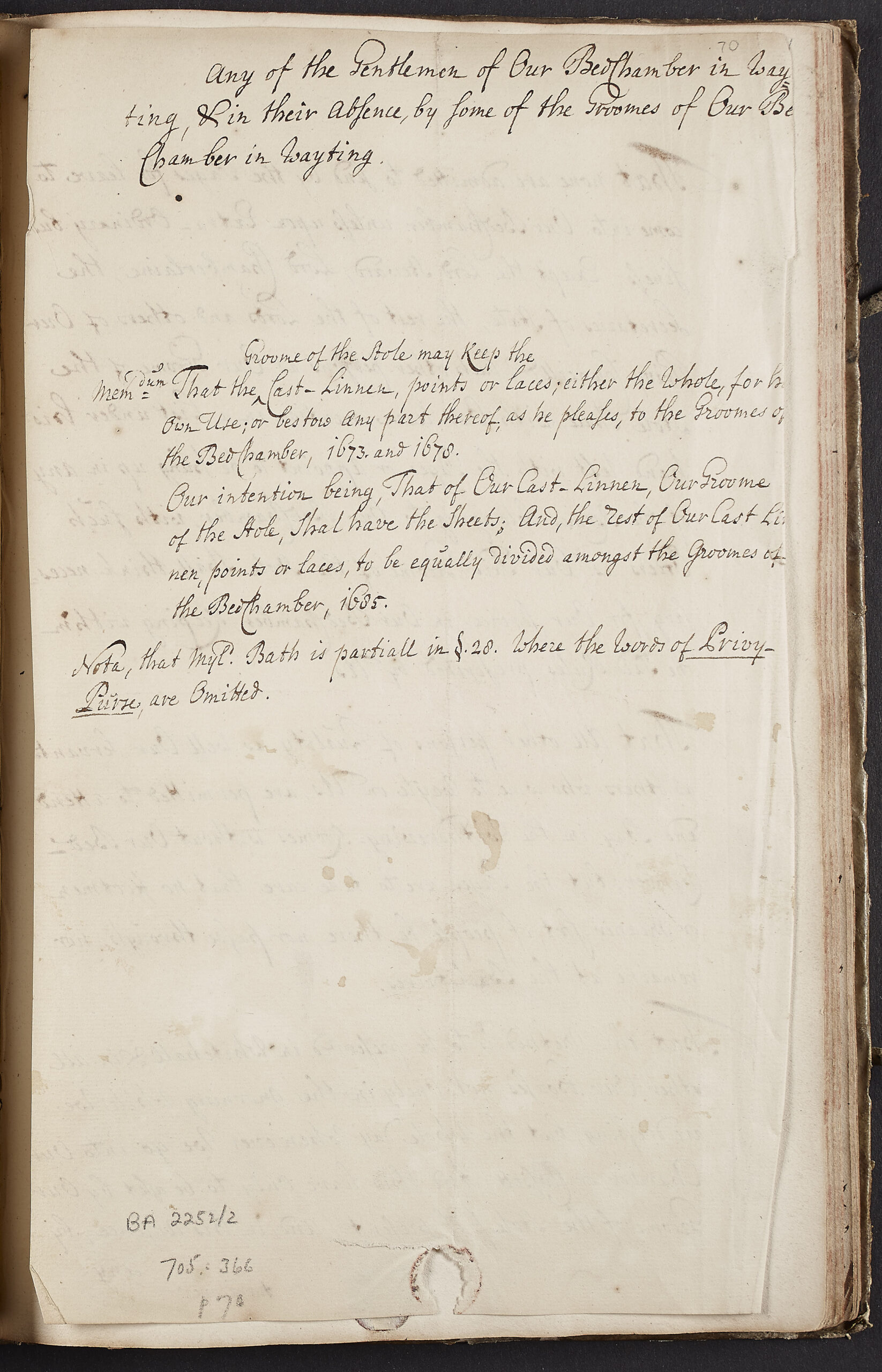
Also in this volume are orders for supplies for the royal bedchamber. For instance, in 1689 “There is stolen of ye body-Linnen of his Majesties Royall Person, four day-shirts, six night-shirts, five hand-kerchiefs laced, one Combering-Cloath laced, one shaving-Cloath laced & two Capps laced”
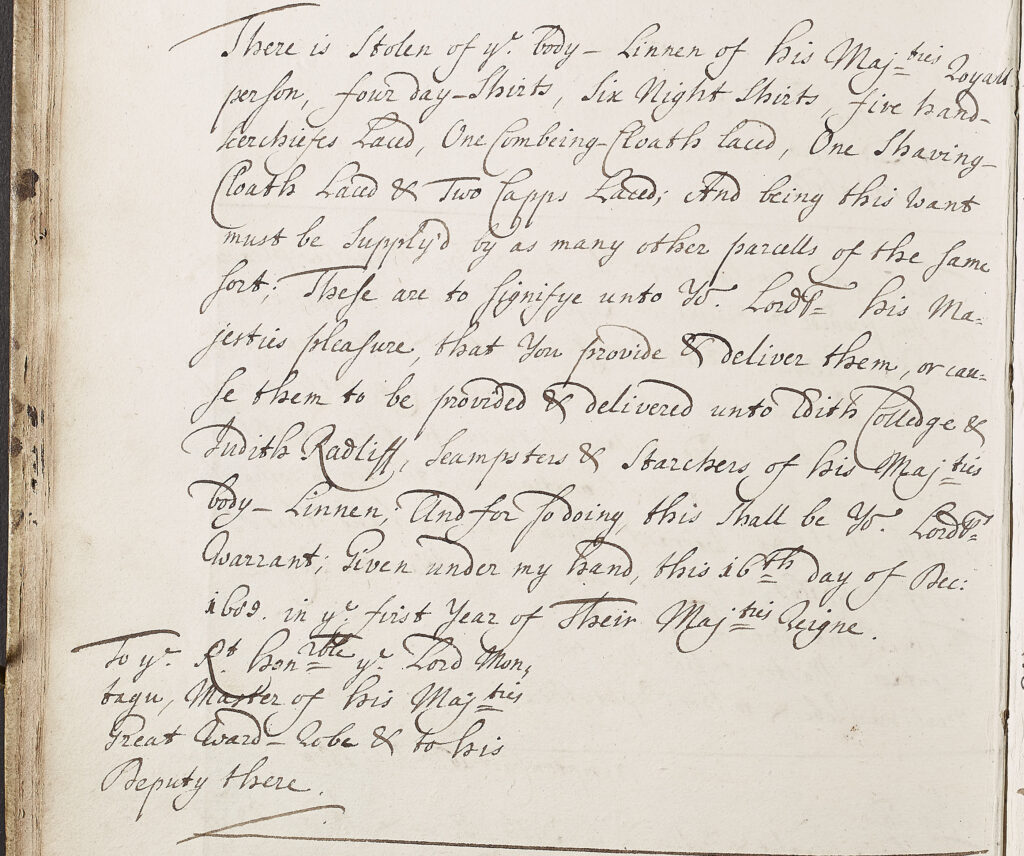
From the Groom of the Stole’s order and warrant book. BA2252/2
Replacements for the King’s pilfered undies were to be delivered unto “Edith Colledge and Judith Radcliff, Seampsters and Starchers of his Majesties body-Linnen”.
An Accompt of Moneys received and paid upon the new Contract of the Gardens
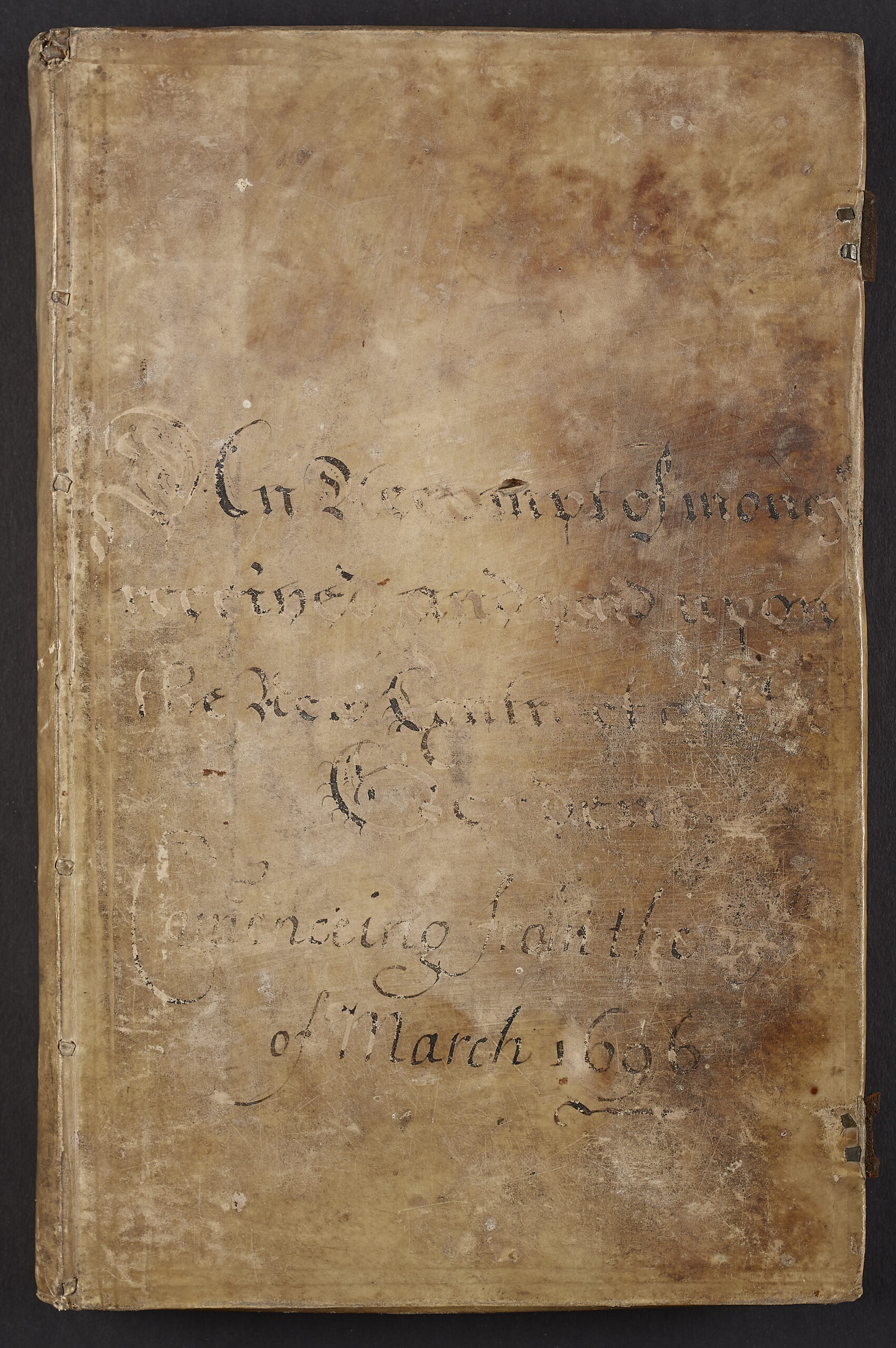
Cover of the Royal Garden Accounts. BA2252/2
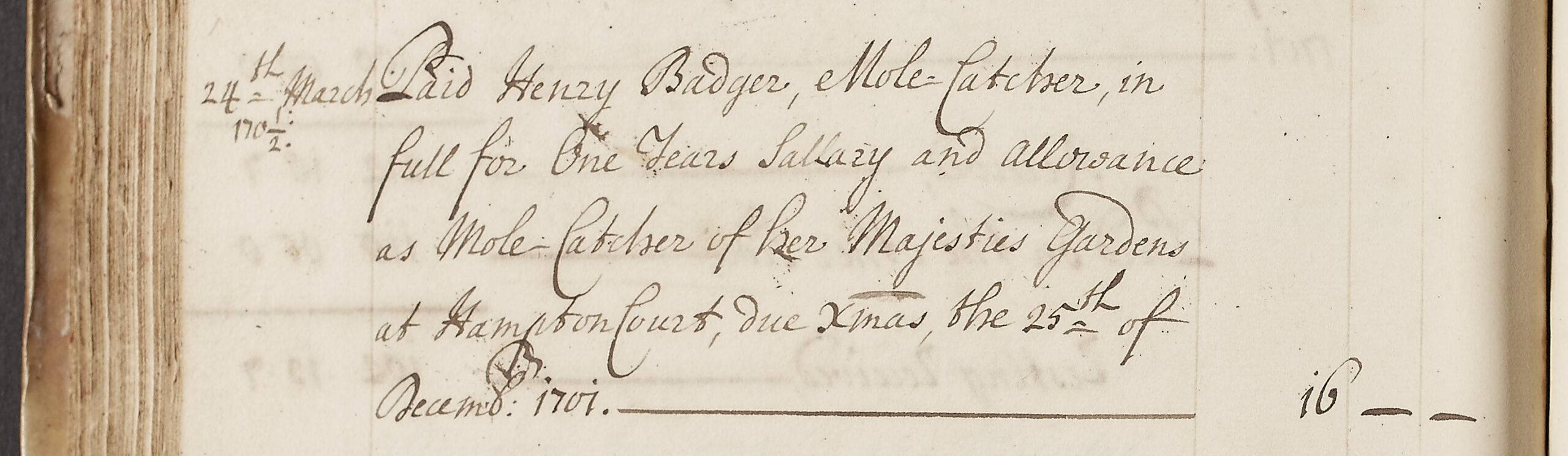
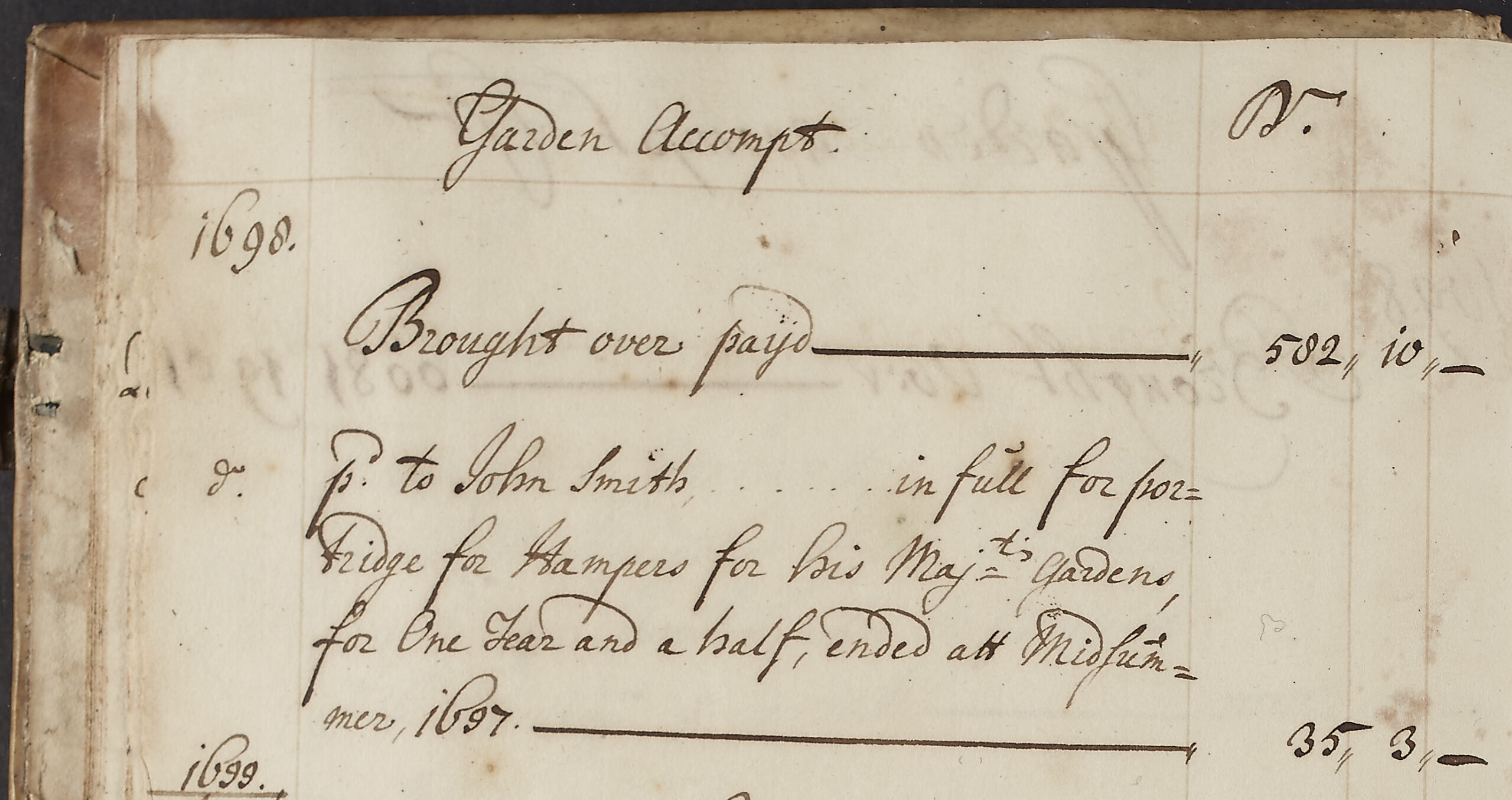
Henning held several positions within the royal administration, and one of them was Paymaster of the Royal Gardens. This volume captures hundreds of payments made to workers and suppliers between 1696 and 1702.
For instance, Henning records payments of:
- £35 3s to “John Smith” in 1699 for a year and a half’s “Porridge for Hampers for his Majesties Gardens”
- £10 to “Mr Kemp, upon accompt for Earthern Potts”
- £16 in 1702 to “Henry Badger…Mole-Catcher of her Majesties Gardens at Hampton Court”

Privy Purse Accompts
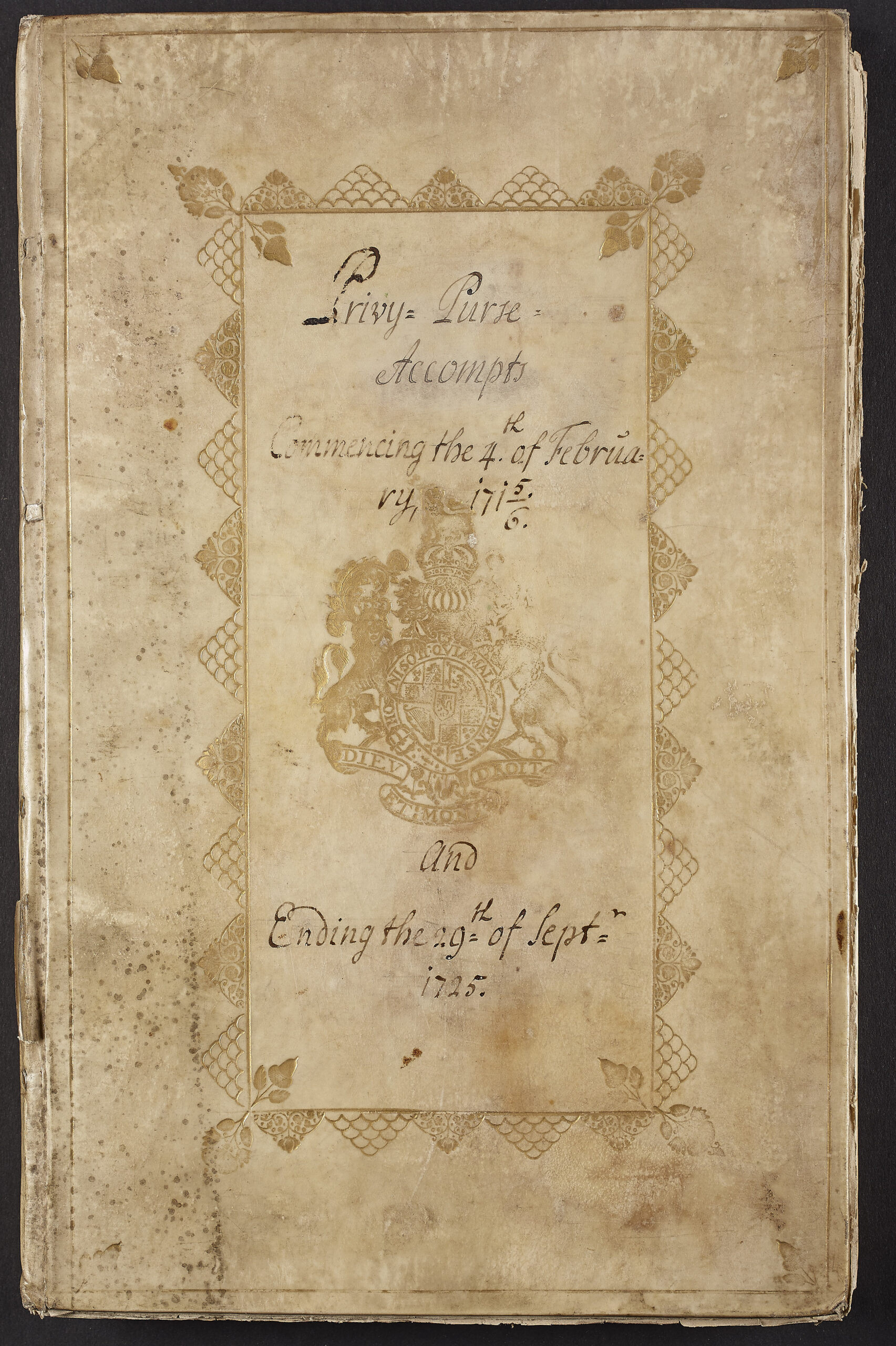
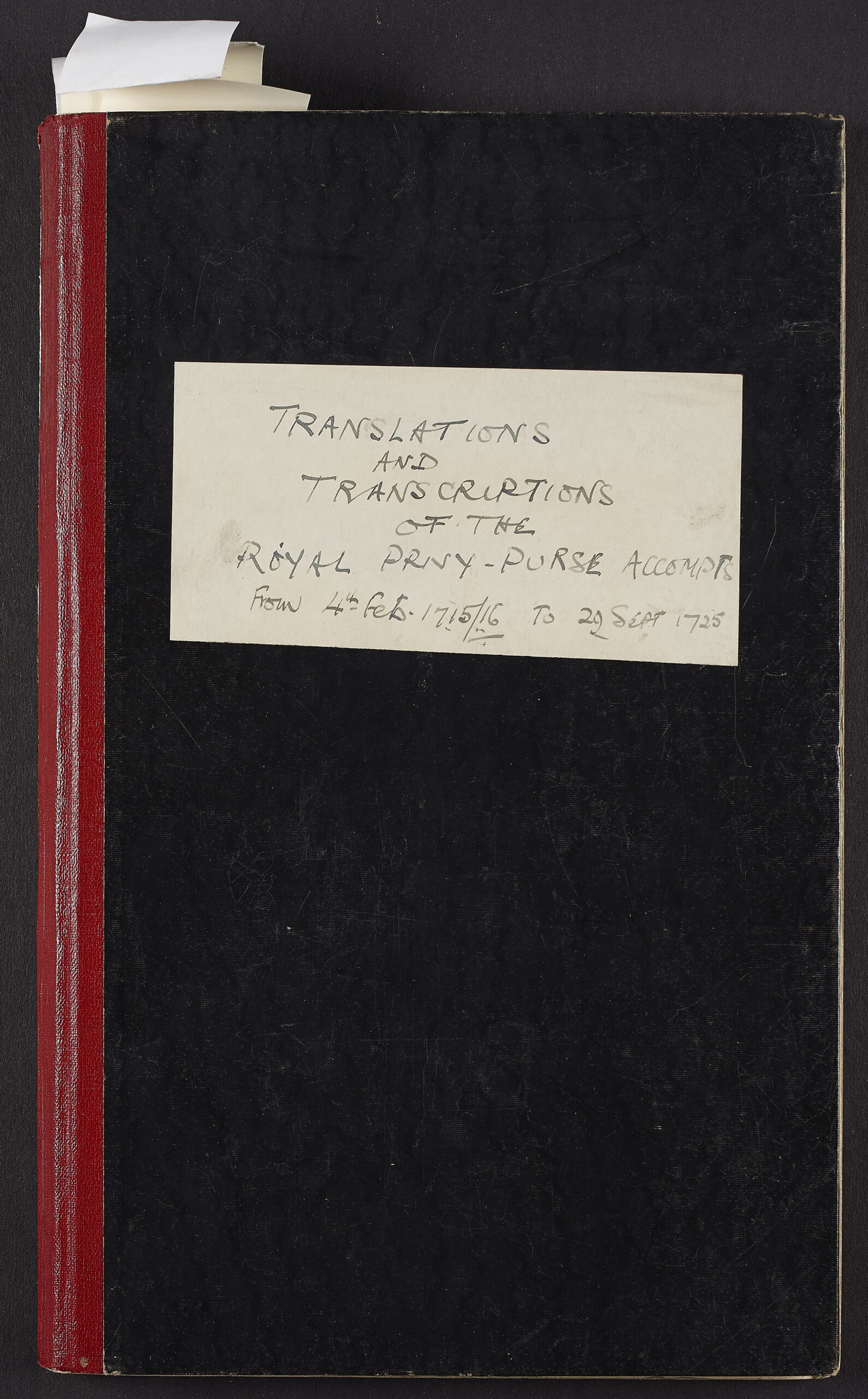
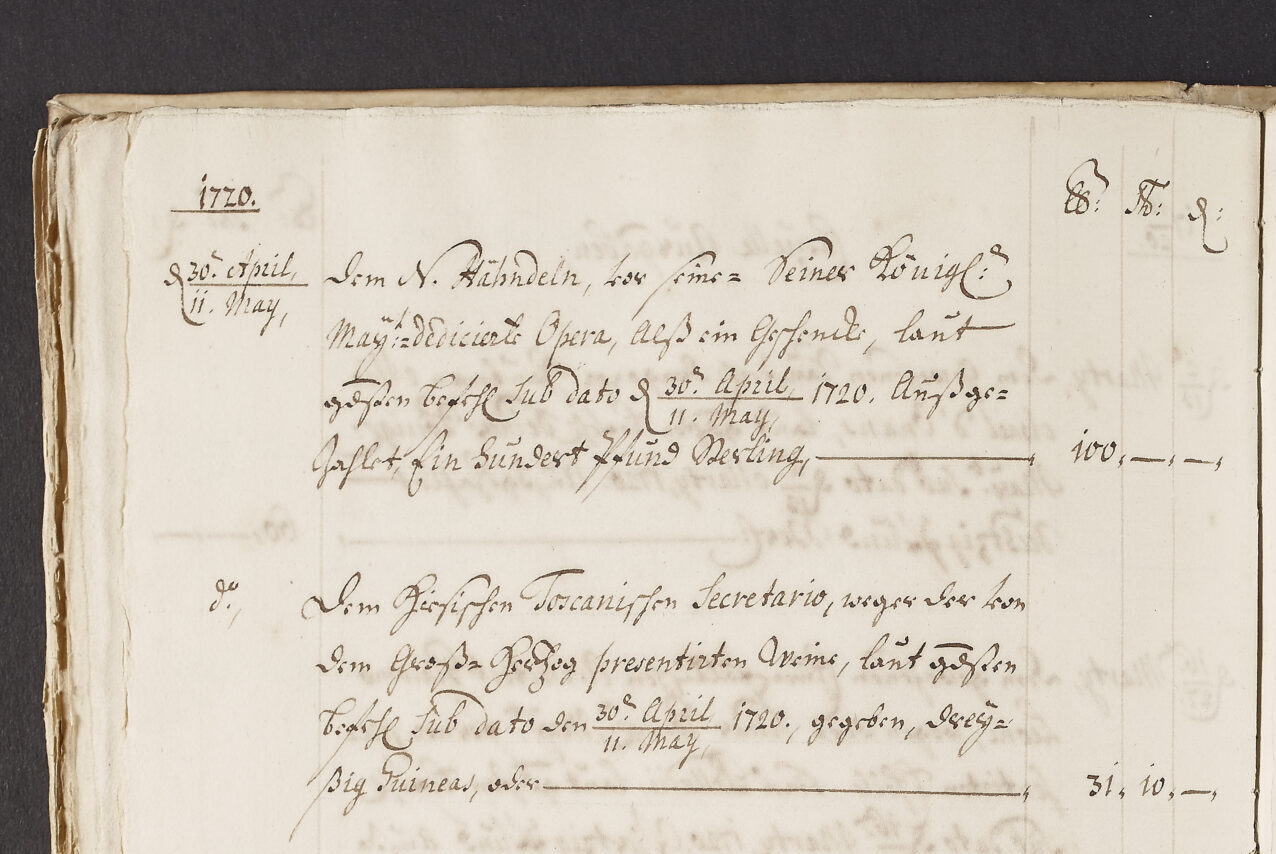
This volume tracks the “Pocket Money” – the personal spending money – of King George I, who Henning served as Keeper of the Privy Purse. George never learnt to speak English, and so these accounts are in German. Helpfully, there is a volume of translations in this collection.
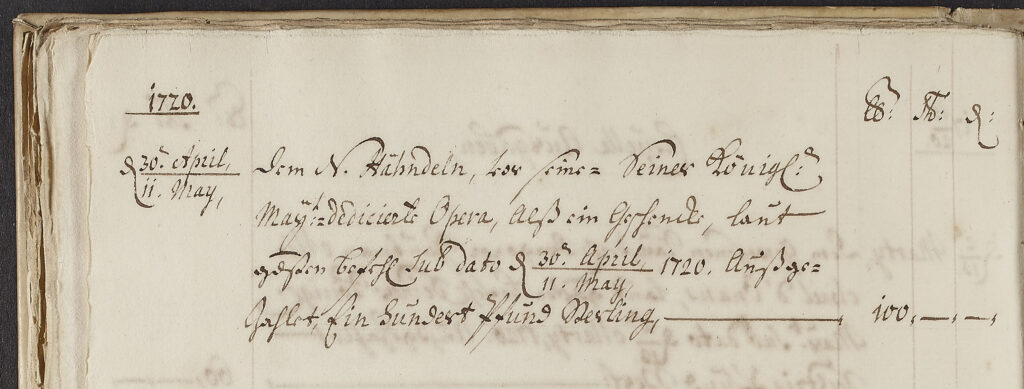
A payment for a Handel Opera – From Privy Purse Accompts, BA2252/2
An example is this payment made to Handel. In 1720, an “H Hähndel” received £100 as a present for his opera dedicated to the king. The opera in question was probably Radamisto, which was premiered in London on 27 April 1720, an occasion for which King George was present.
Espionage!
Henning wasn’t just a bookkeeper. The Earl of Portland, a powerful favourite of William III, was his patron, and Henning seems a trusted royal servant more generally, even involved in espionage!
This letter was sent to Henning from a man called John Glover. Glover had clearly fallen out of royal favour – he’d ended up in France, possibly because of the Glorious Revolution – and is trying to prevail on Henning to intervene on his behalf, offering information regarding a purported French invasion and to do further espionage for the King. The problem for Glover is that the king clearly does not trust him – “I cannot but admire his Majesties prudence, in not being too Credulous”. Glover goes on to promise to share any more information he can uncover, and includes a recipe for invisible ink to ensure secrecy!
![Handwritten text in black ink on paper, with dark red/brown wax seal. Letter from [John Glover] to Caspar Frederick Henning, discussing Glover's hoped for reconciliation with the King [William III] and a purported French plan to attack England. Final line is the first part of a recipe for invisible ink.](https://www.explorethepast.co.uk/wp-content/uploads/2026/10/BA2252_1-scaled-e1792145243590.jpg)
![Handwritten text in black ink on paper. Letter from [John Glover] to Caspar Frederick Henning second page. Includes a recipe for invisible ink.](https://www.explorethepast.co.uk/wp-content/uploads/2026/10/BA2252_2-scaled-e1792145278565.jpg)
Multilingual collection
Taking a step back to view the collection as a whole, I think one thing that’s worth stressing is the multilingual character of this collection.
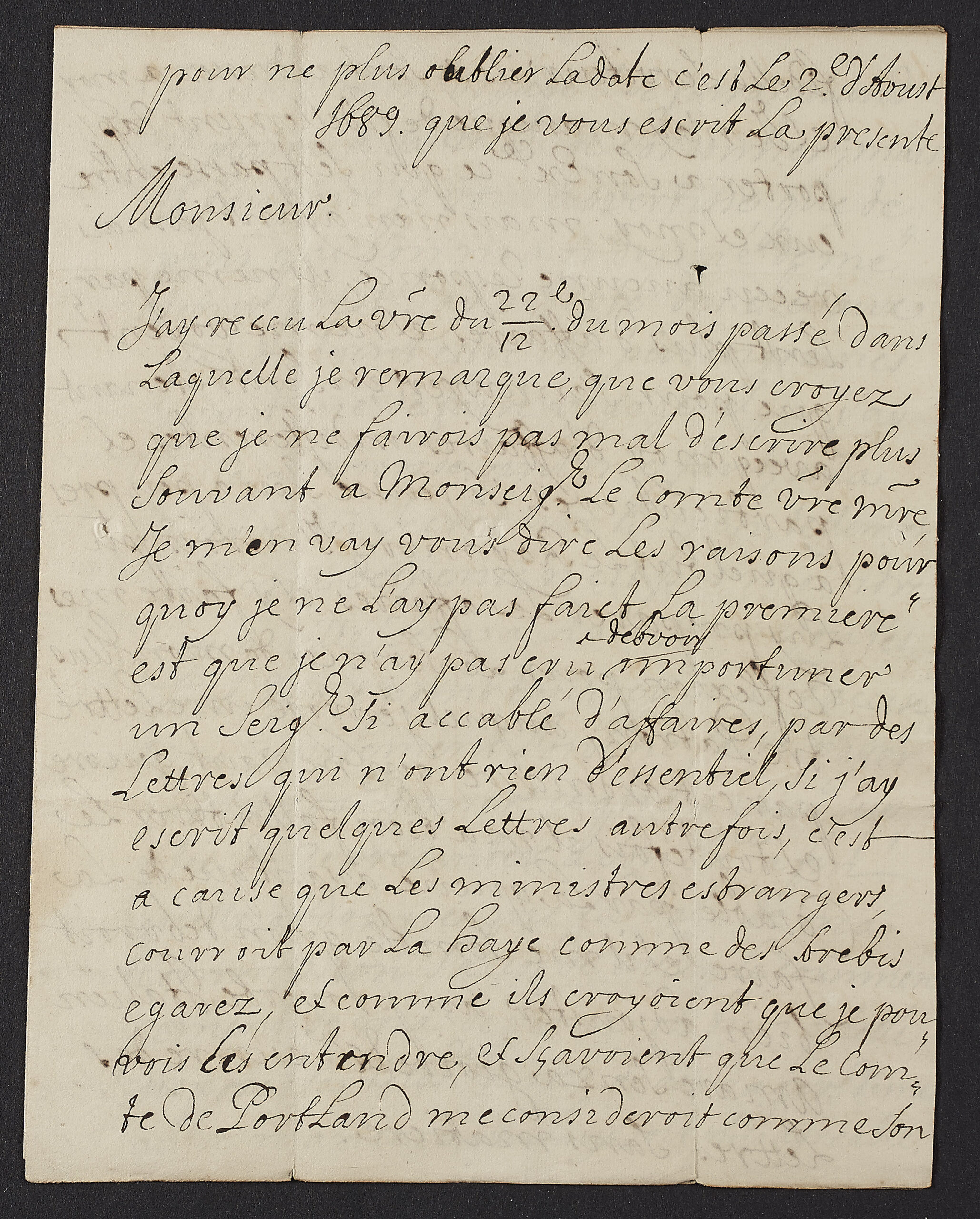
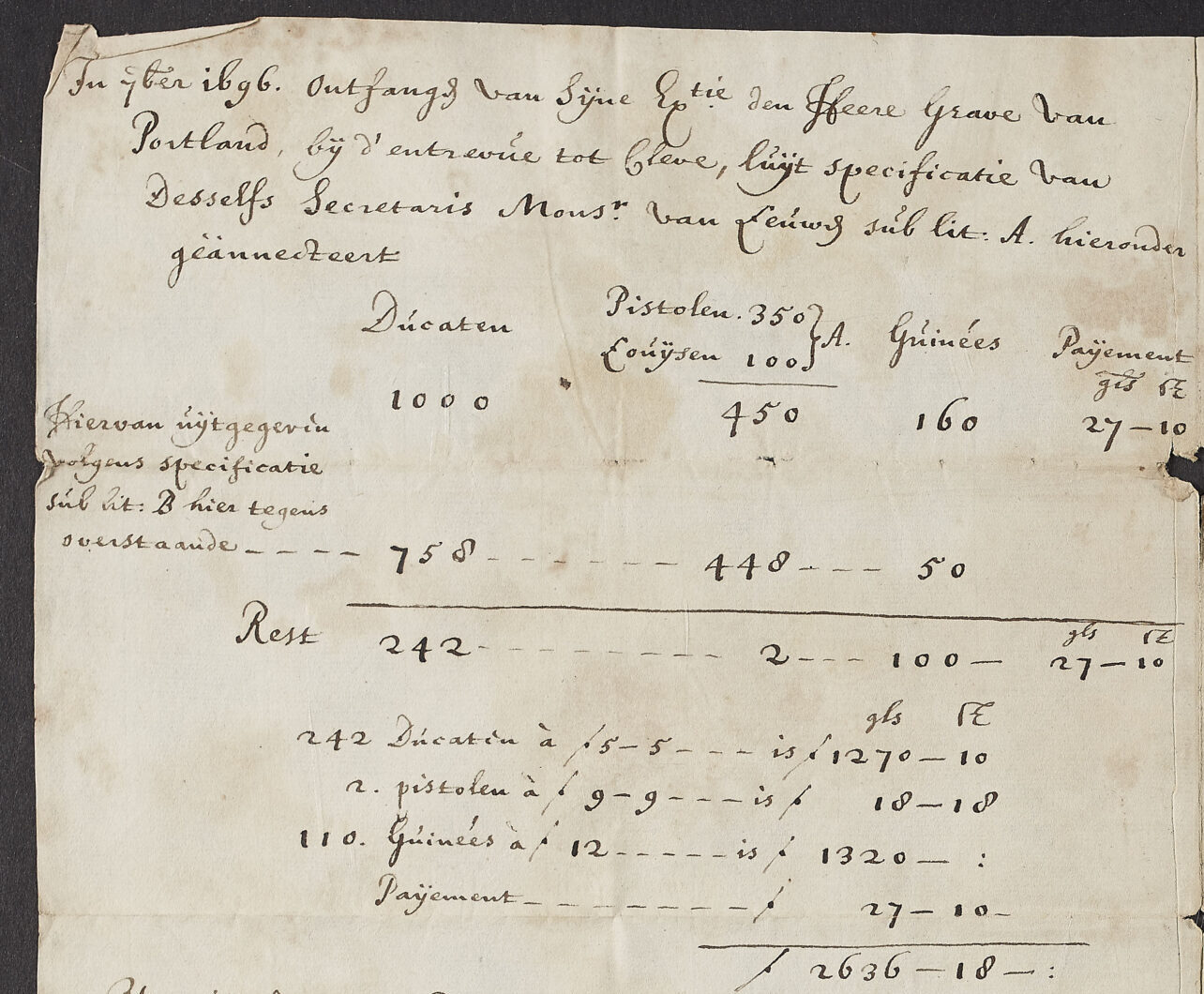
This collection contains French, Dutch and German items, as well as English. Perhaps that’s unsurprising – William III and George I were Dutch and Hanoverian respectively, French was still the language of polite society and diplomacy, and royal favourites were often European, such as Bentinck or indeed Henning himself.
As I mentioned above, we do have a translation of the German accounts in this collection, which is an interesting item in and of itself. It contains annotations by the Rev. W Sterry-Cooper, a local antiquarian, but the translation work was done 1940-1941 by a “Dr Berger”, a Czechoslovak war refugee. Unfortunately, we don’t have Dr Berger’s first name, and I couldn’t find a mention of him in the papers of Sterry-Cooper we have here at the Hive.
Conclusion
I hope I’ve conveyed something of the character of this collection. There are many more things I could have picked out from this collection, like the petition from the Queen’s servants for better pay, or the record of royal New Year’s Day presents paid to servants, or the compensation receipt of King Charles’ “Spaniell-Keeper”.
If you’d like to have a look yourself, why not come and consult this collection at the Hive?


Post a Comment