Travel and Adventure in the Sandys Archive
- 23rd November 2026
What one family’s collection tells us about travel over four centuries
Travel today differs from travel in the past. Historically, only the rich took overseas trips, with aristocratic families embarking on lengthy journeys across Europe and around the world. The Sandys family of Ombersley were one such family.
Their archive, currently being catalogued, is a treasure trove of records in which travel emerges as a recurring theme. Closely connected to Ombersley Court – the family seat from 1614 – the Sandys story is one of local, national and global significance. One family member was a leading figure in the Virginia Company – an English trading company chartered by James I to colonise the east coast of America – while another embarked on the Grand Tour of Europe. Later generations served as diplomats and soldiers.
In this blog for Explore Your Archive Focus Week, we explore some of the travel related records and stories hidden within this extraordinary collection.
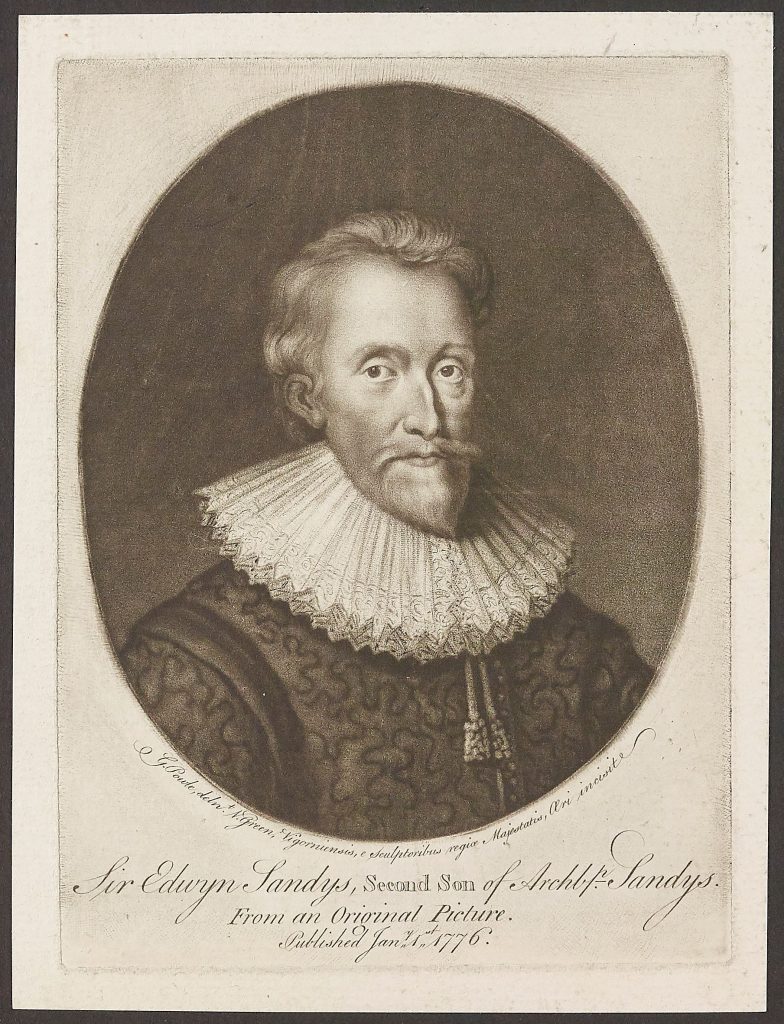
Copy of an engraving of Sir Edwin Sandys, 1776 – Reference: 899:156 WPS14087
The Sandys and the Virginia Company
Born in 1561, Sir Edwin Sandys (1561-1629) was a politician and “colonial entrepreneur”. He joined the Virginia Company soon after it was founded, becoming Treasurer in 1619. A position he held until King James barred him from re-election, reportedly saying ‘choose the Devil if you will, but not Sir Edwin Sandys’
Though he never traveled to Virginia himself, Edwin sent several settlers there. He was one of the charterers of the Mayflower – his negotiations with the Leyden Puritans resulting in the journey of the Pilgrim Fathers to America.
It seems the Sandys involvement with the Company was a family affair. Edwin’s brother George (1578-1644) – a traveller and poet – spent several years in Virginia as an agent there. Another brother, Thomas Sandys (1569-1644) was one of the first to colonise Jamestown.
A grand tour of Europe
Five generations later, Samuel 1st Baron Sandys (1695-1770) left university to undertake the Grand Tour. A kind of 18th century gap year, the Tour saw wealthy young Brits visit Europe’s finest cities in search of education and adventure.
Samuel travelled with his servant Thomas Cooke whose cash accounts for 1715 give us a clue as to the route he took – via Rotterdam in the Netherlands, then to Rome the following Spring and on to Naples. ‘Tom’s’ accounts list ducats, carlins and grains – historic currencies typically used in these regions.
A family abroad
In the 19th century, overseas travel formed an important part of Sandys family life. Lord Marcus Hill (1798-1863), later 3rd Baron Sandys, left behind a lively collection of letters from his time as a diplomat. Sent to his mother and sisters from Spain, France, Austria, Italy, Portugal and Brazil, they tell the story of a man more widely traveled than any previous holder of the Sandys title.
The journals of Marcus’s sisters, Charlotte and Mary, recall lengthy continental tours of Europe taken with their mother – often to visit their brothers, almost all of whom lived overseas. Mary’s travel journals document one such trip – from Surrey through France to Rome and Naples. They include a remarkable collection of watercolour paintings, drawings and engravings belonging to the period, and it’s likely several are originals by her. One shows the San Carol Theatre in Naples, where it’s likely the family attended the opera.
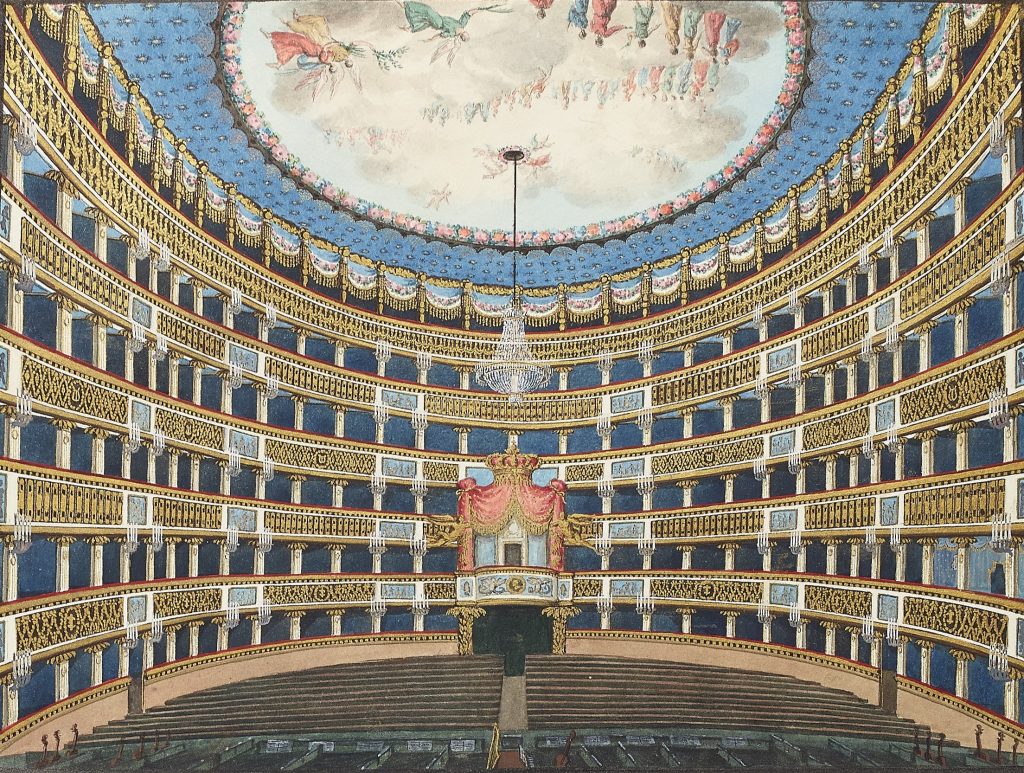
A painting of the opera house in Naples likely by Lady Mary Hill, 1823-1824 – Reference: 705:56 BA16936/29/8
Campaigns, conflict and cameras
Several of the Sandys traveled as part of their military service. From the Battle of Waterloo to the Indian Rebellion of 1857, their letters and diaries paint vivid pictures of the chaos and camaraderie of war.
Arthur Blundell George Sandys Hill (1837-1923) served in the Rifle Brigade and later with the famed Camel Corps – a military unit where soldiers traveled on camels led by local guides. He brought home two albums of photographs and a journal from his time in India.
Together, they document his life while on duty, beginning with his battalion’s arrival in Calcutta. In one entry he recalls the looting of objects from the Kaiser Bagh Palace of the King of Oudh. His photographs date from the mid-19th century. Taken during his time with the Rifle Brigade, they appear to be a mix of images he collected and those taken on the move by a fellow officer and amateur photographer.
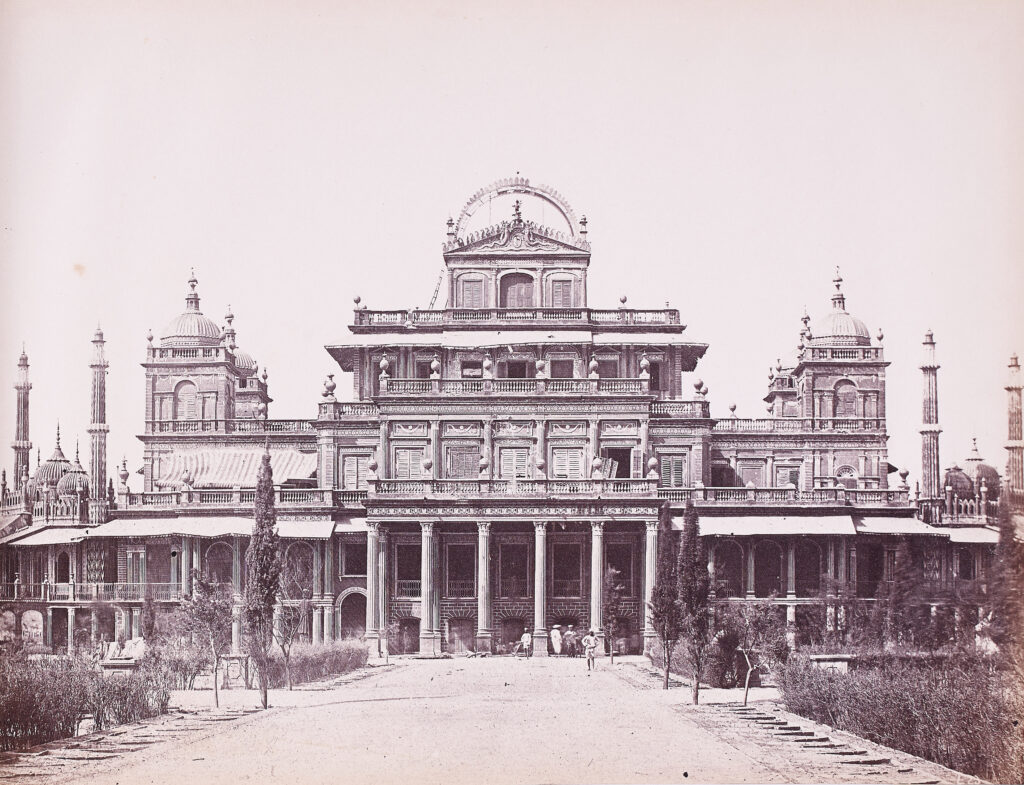
Kaiser Bagh Palace, 19th cent – Reference: 705:56 BA16936/50/12
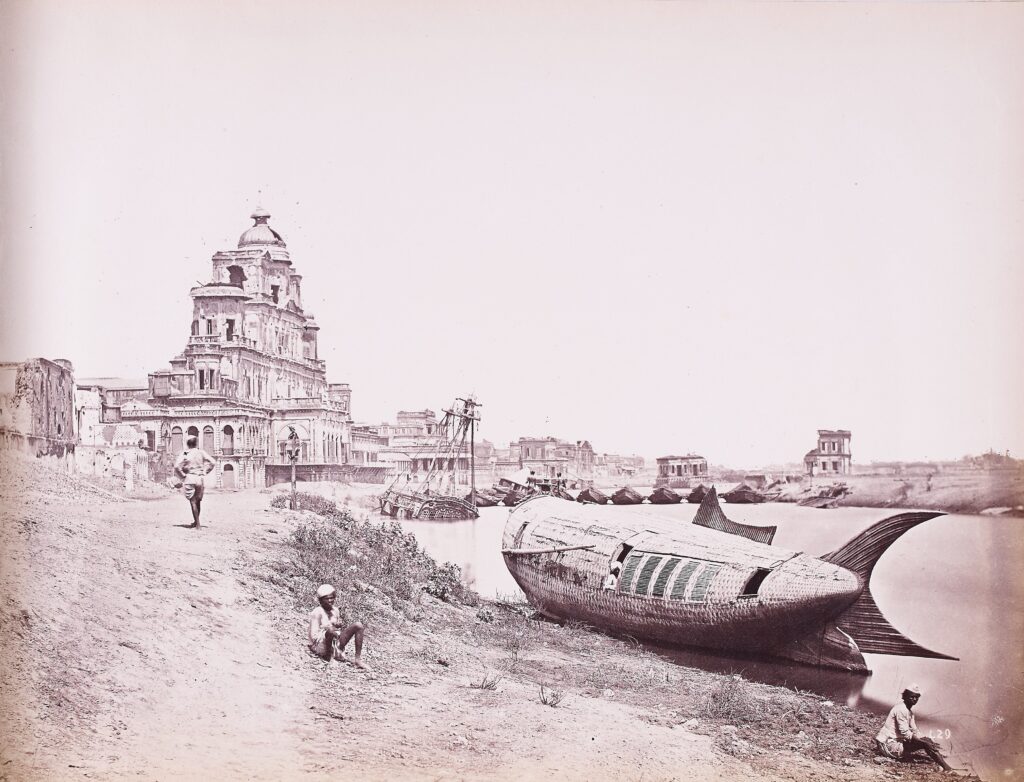
Lucknow after the siege photographed by Felice Beato, Gomti River, 19th cent – Reference: 705:56 BA16936/50/12
From the American colonies and continental Europe to India and beyond, the Sandys left behind records that document their journeys in gripping detail. Together, they tell of a well-traveled family whose interests and influence extended far beyond Ombersley.


Post a Comment