Maria Buckle née Martin – Art and Observation in the 19th century
- 26th November 2026
Worcestershire Archive and Archaeology Service (WAAS) is currently engaged with a retroconversion project to convert paper catalogues into digital copies. WAAS has been cataloguing its collections since it came into being in 1947. Initially, we catalogued on paper, but now we use a digital cataloguing database called Axiell™ CALM. Currently around 47% our collections are available through CALM. The remainder of our collections are only catalogued on paper. We hope to meet a target of 70% of our catalogues available digitally and online during 2027. Subsequently we have come across many fascinating deposits held in our archive.
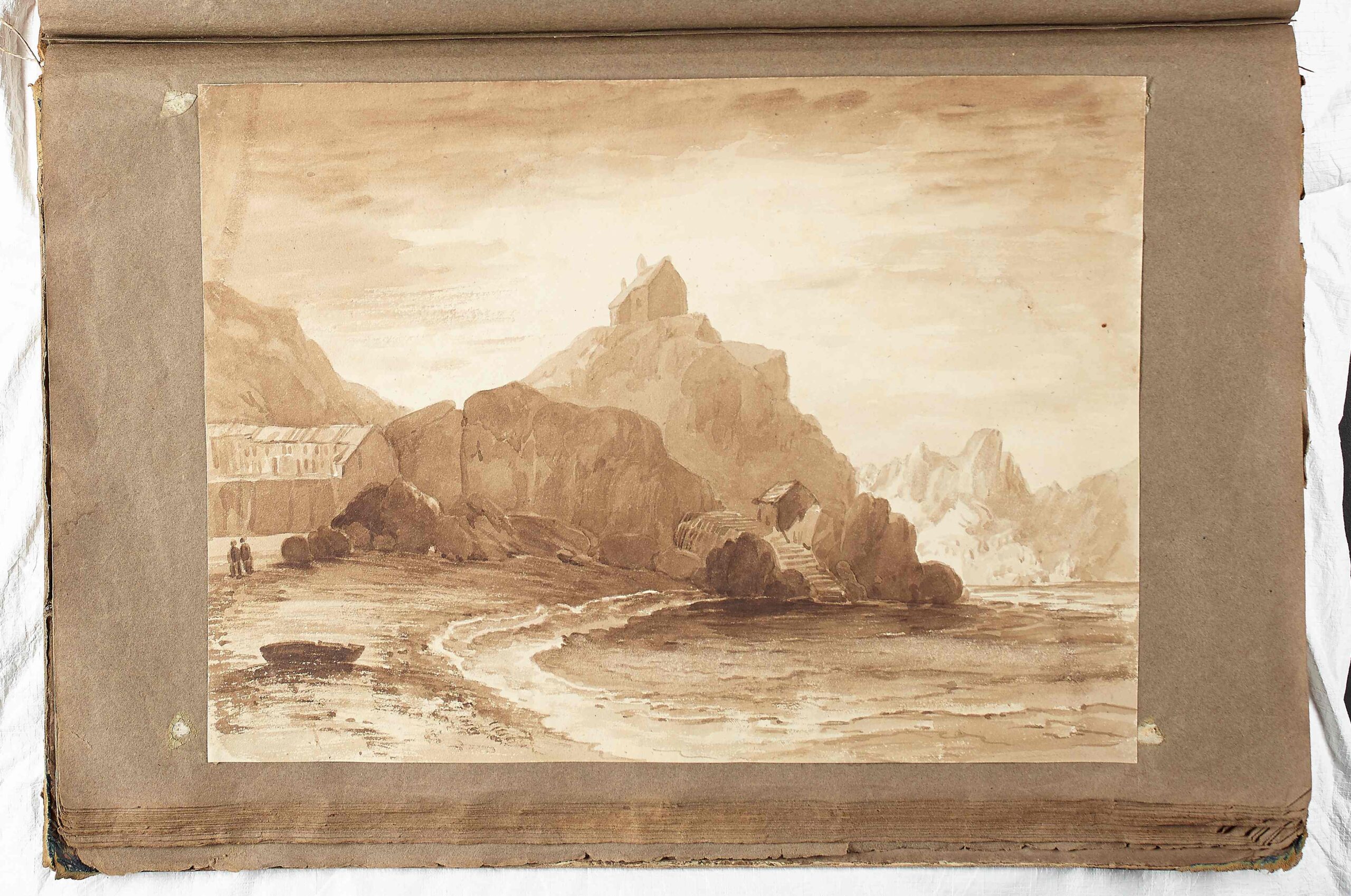
Sepia watercolour of Lantern Hill, Ilfracombe made by Maria Buckle née Martin from the Buckle collection of sketches and watercolours c.1830s at Finding No: 899:1563 BA14788
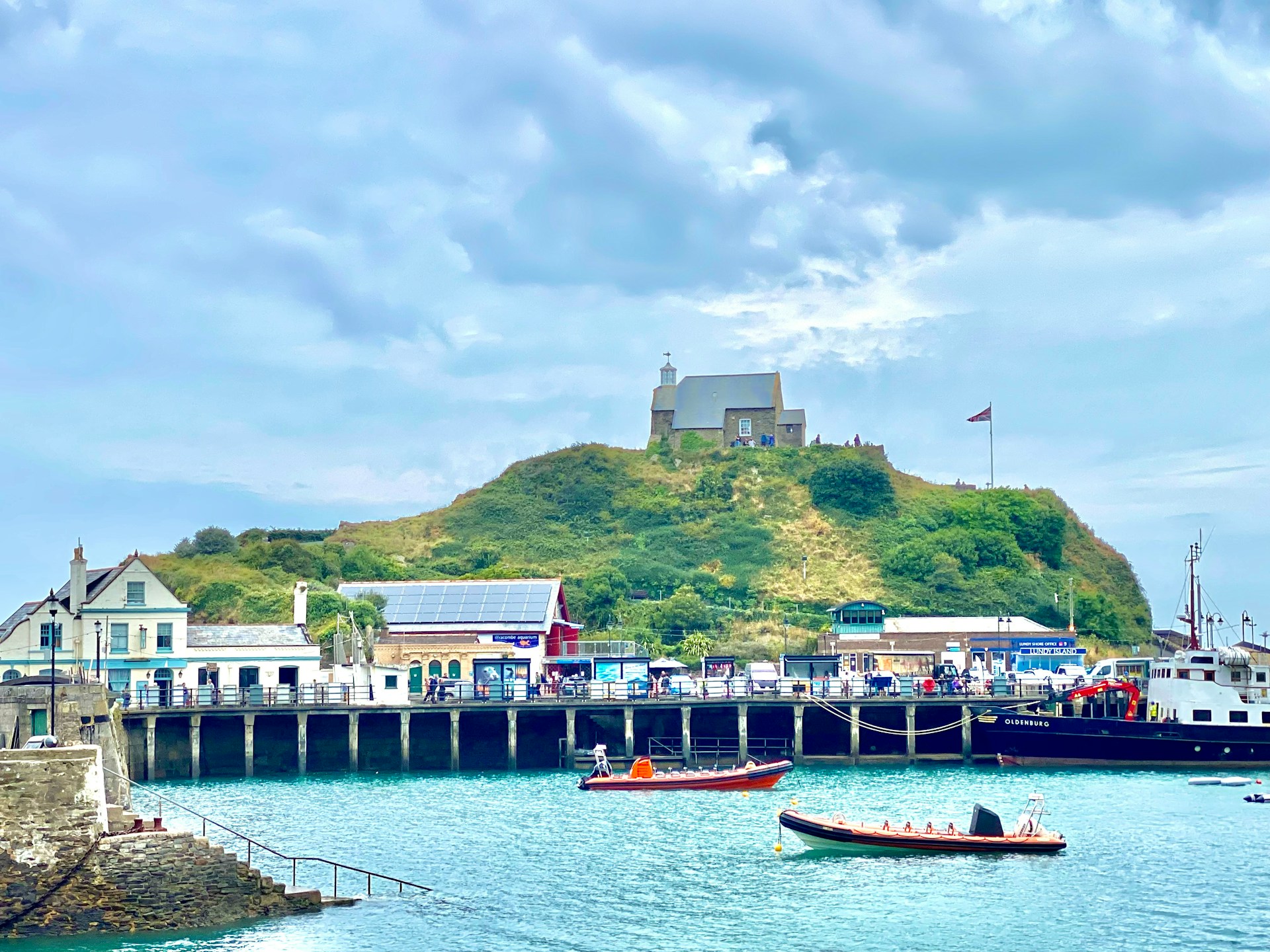
Lantern Hill, c. 20th century © Ian Branch Available at Unsplash
One such deposit which we wanted to highlight for #EYACraft is the stunning Buckle collection of sketches and watercolours made by Maria Martin (1795-1877) later Maria Buckle following her marriage to William Hill Buckle of Chacely. Maria was born in 1795. The sketches are held at b899:749 BA14929 and watercolours at 899:1563 BA14788. The sketches were once part of the Worcester City Library and the latter transferred from the Canterbury College for Creative Arts.
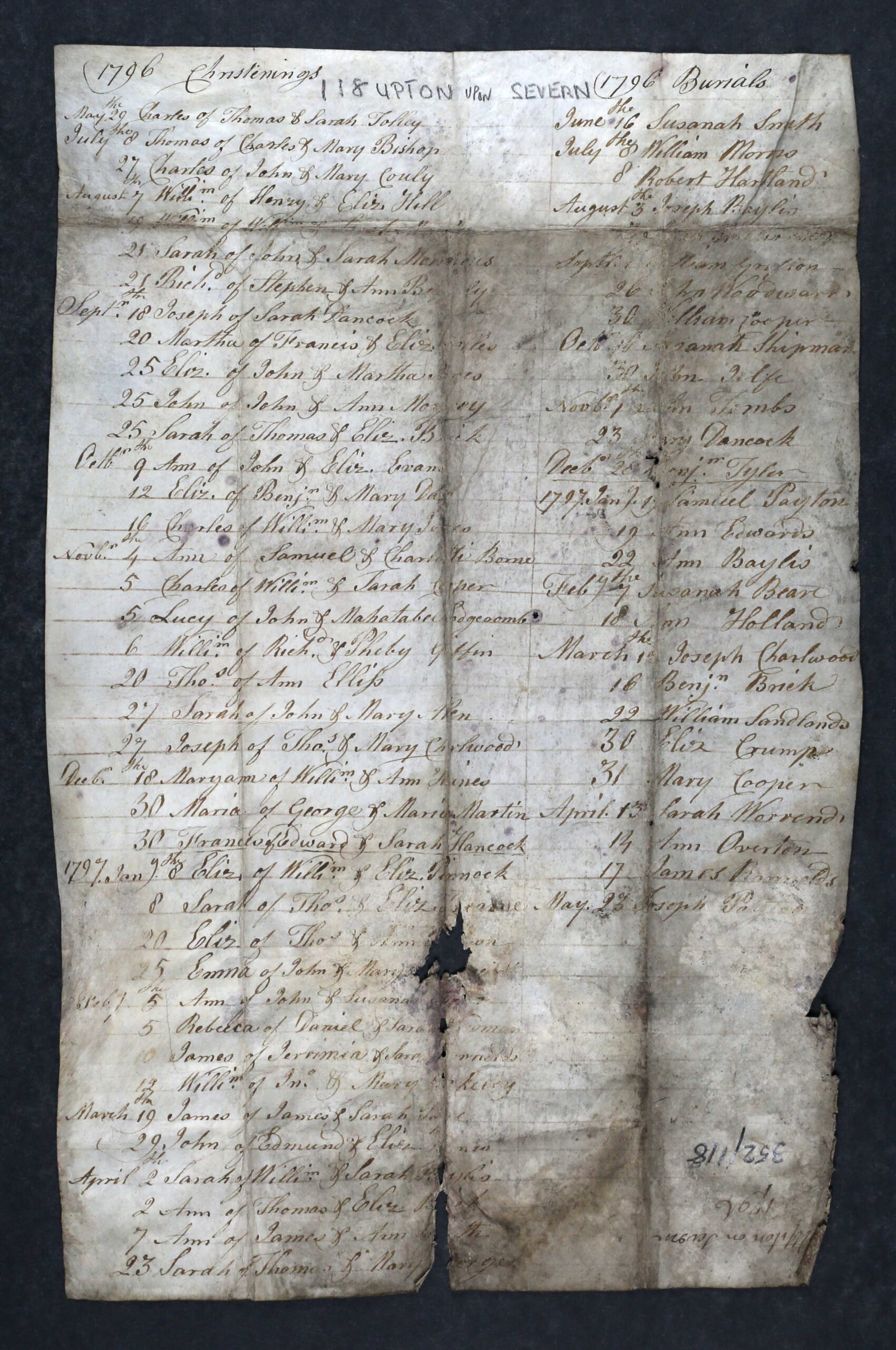
Maria Martin’s Baptism entry dated 30th December 1796 recorded in the Bishops’ Transcripts of Baptisms and Burials for Upton-upon-Severn for the year 1796
Maria appears to have been baptised in Upton-upon-Severn on 30th December 1796. The family moved to Stinchcombe in Gloucestershire where their son Walter was baptised and by 1871 they lived in Clifton near Bristol where William Buckle became a superintendent of customs collectors, and where they had at least 2 further daughters. A Pedigree of the Buckle family of Chaceley, Gloucestershire can be found at 899:247 BA2167 for more information about the family. Maria has also beautifully painted Chaceley Court, which may be connected directly with the Buckle family which is on Folio 23 of ‘Old Houses’ and is reproduced below.
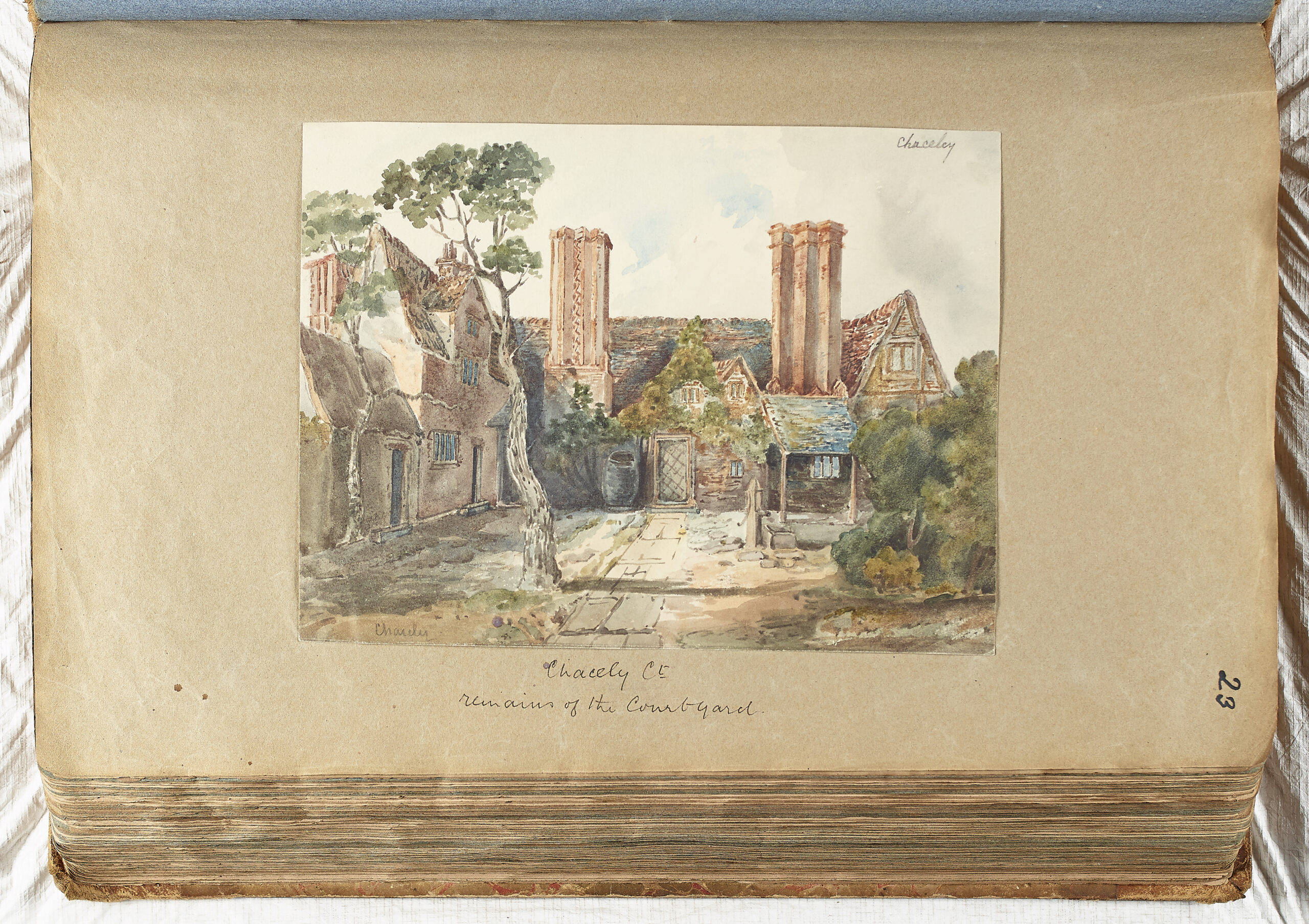
Watercolour of Chaceley Court – remains of the Courtyard made by Maria Buckle née Martin from the Buckle collection of ‘Old Houses’ – a volume of 260 sketches made during the period 1808-1822 at Finding No: b899:749 BA14929/23
The book plate, style of drawings and handwriting confirmed that the watercolours, mainly of North Devon scenes was a companion volume to the scrapbook of sketches by Maria Buckle née Martin which was already held at WAAS of ‘Old Houses’. As local historian E.A.B. Barnard explains in Vol XV of the Transactions of Worcestershire Archaeological Society in 1938 that ‘Old Houses’ was deposited by descendent Mrs. Martin Buckle and contains many historic buildings:
‘some of which—at least in our district—have now completely disappeared, and others have been greatly altered in aspect’.
An example is that of The Abbey House, Malvern, once part of Great Malvern Priory which was pulled down in the 19th century (despite attempts to sell if for £3000 to the Parish at the time) and replaced by the current The Abbey Hotel.
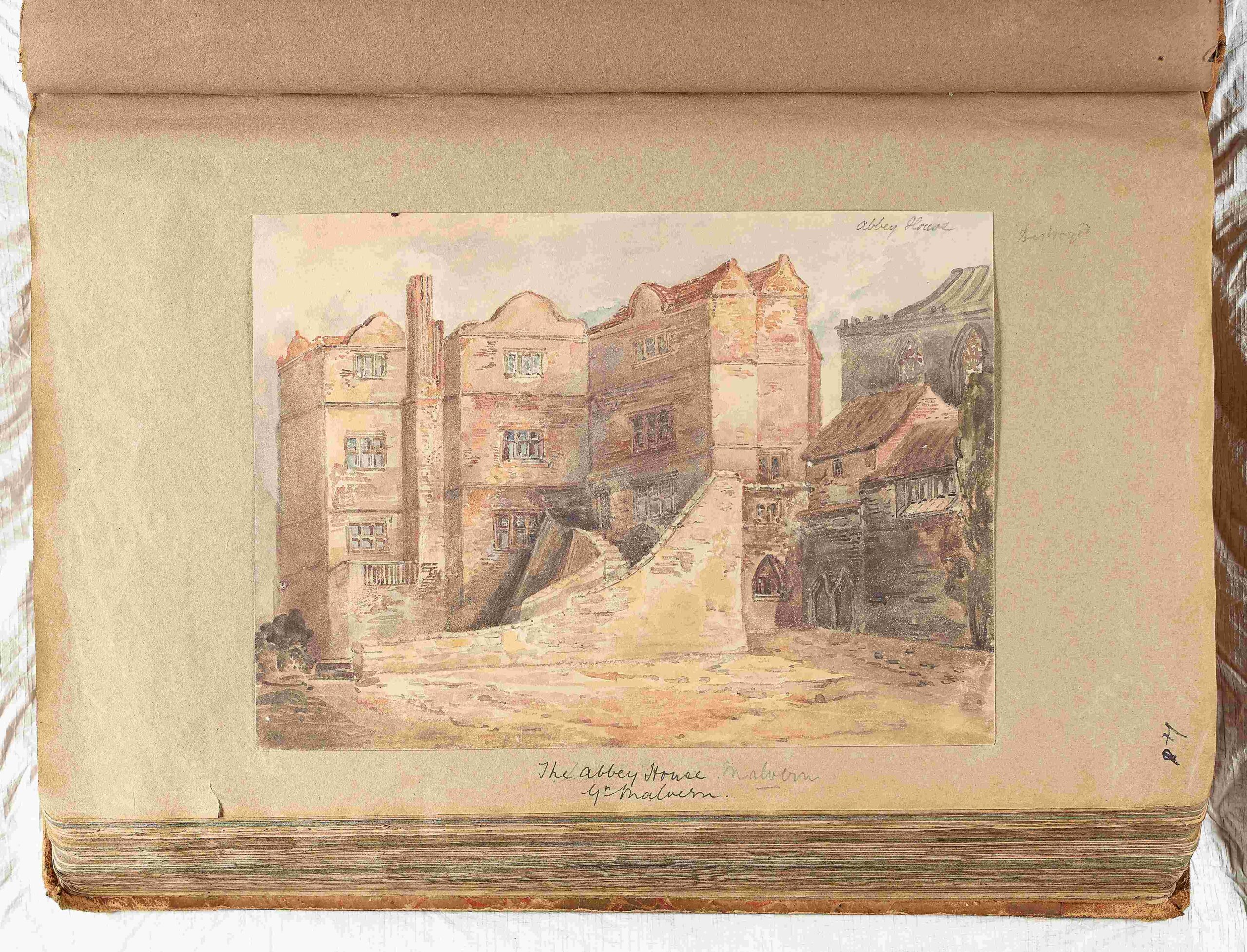
Watercolour of the Abbey House made by Maria Buckle née Martin from the Buckle collection of ‘Old Houses’ – a volume of 260 sketches made during the period 1808-1822 at Finding No: b899:749 BA14929/40
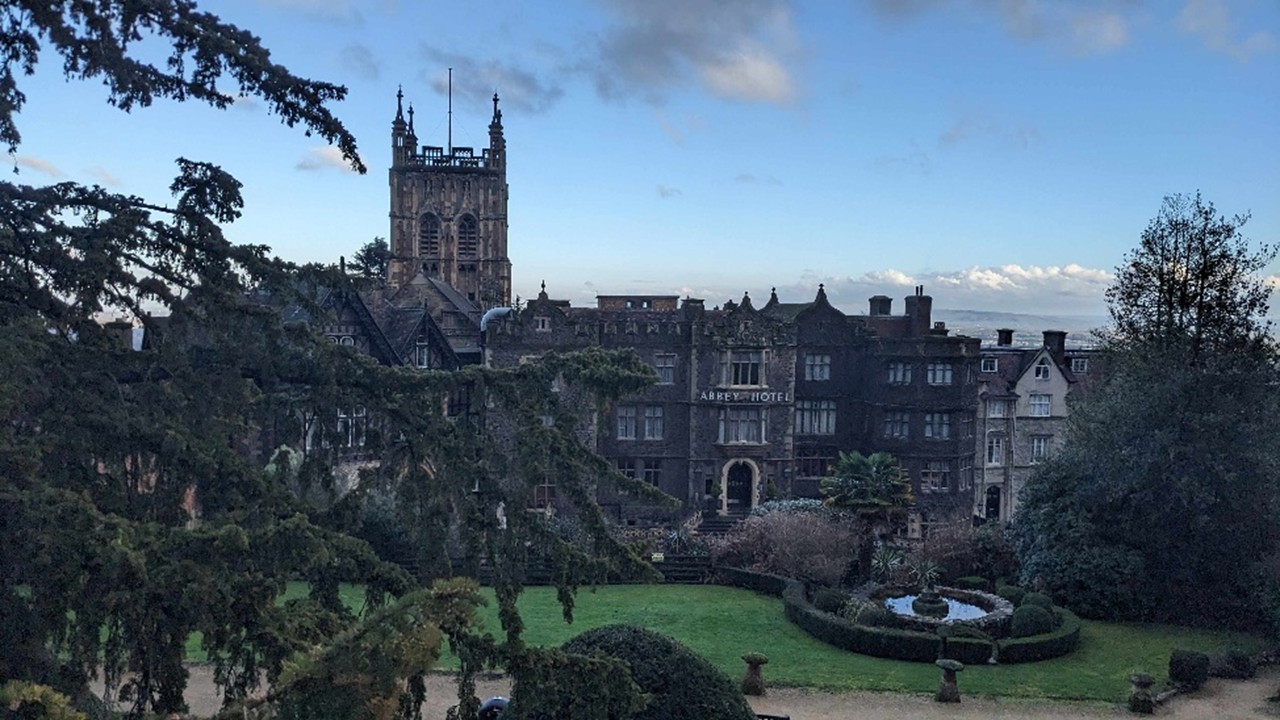
The Abbey Hotel which was built on the site of The Abbey House, demolished in 1848-1849. Present Day © Anthony Roach
E.A.B. Barnard in the 1938 Volume of the Transactions reproduces a letter that is held within the pages of the volume of ‘Old Houses’ which is written to a ‘Dear Mr. Foster’, the unknown recipient by an Edward Archer, who had been lent the scrapbook of sketches who was the former proprietor of the Foley Arms Hotel and whose father, William Archer had built the subsequent Abbey Hotel. William Archer had petitioned to sell The Abbey House to the Parish, but as Edward explains in his letter:
‘The Rev. Dyson strongly supported the purchase, but the vicar of that day, the Rev. [John] Wright, opposed…[…]… that the old house was taken down has always been a matter of great regret to us…’
Edward Archer also says of Maria Buckle née Martin’s work that:
‘I have never looked through a book of amateur sketches with so much interest and pleasure as through the one you have been kind enough to lend …[…]… I, judging from the colouring and many of the compositions, think Miss Martin must have been a pupil of David Cox…[…]… Look at the Prestbury drawing, how strong and good ; and for composition that of Hartlebury Palace. The pencil drawing of Tewkesbury is singularly good.’
The composition, form and accuracy of execution of the sketches and paintings tell us that Maria was a talented artist whose use of pencil, ink, colour and monochromatic watercolour in sepia provide an important cultural record of Worcestershire buildings now demolished alongside those extant and much altered.
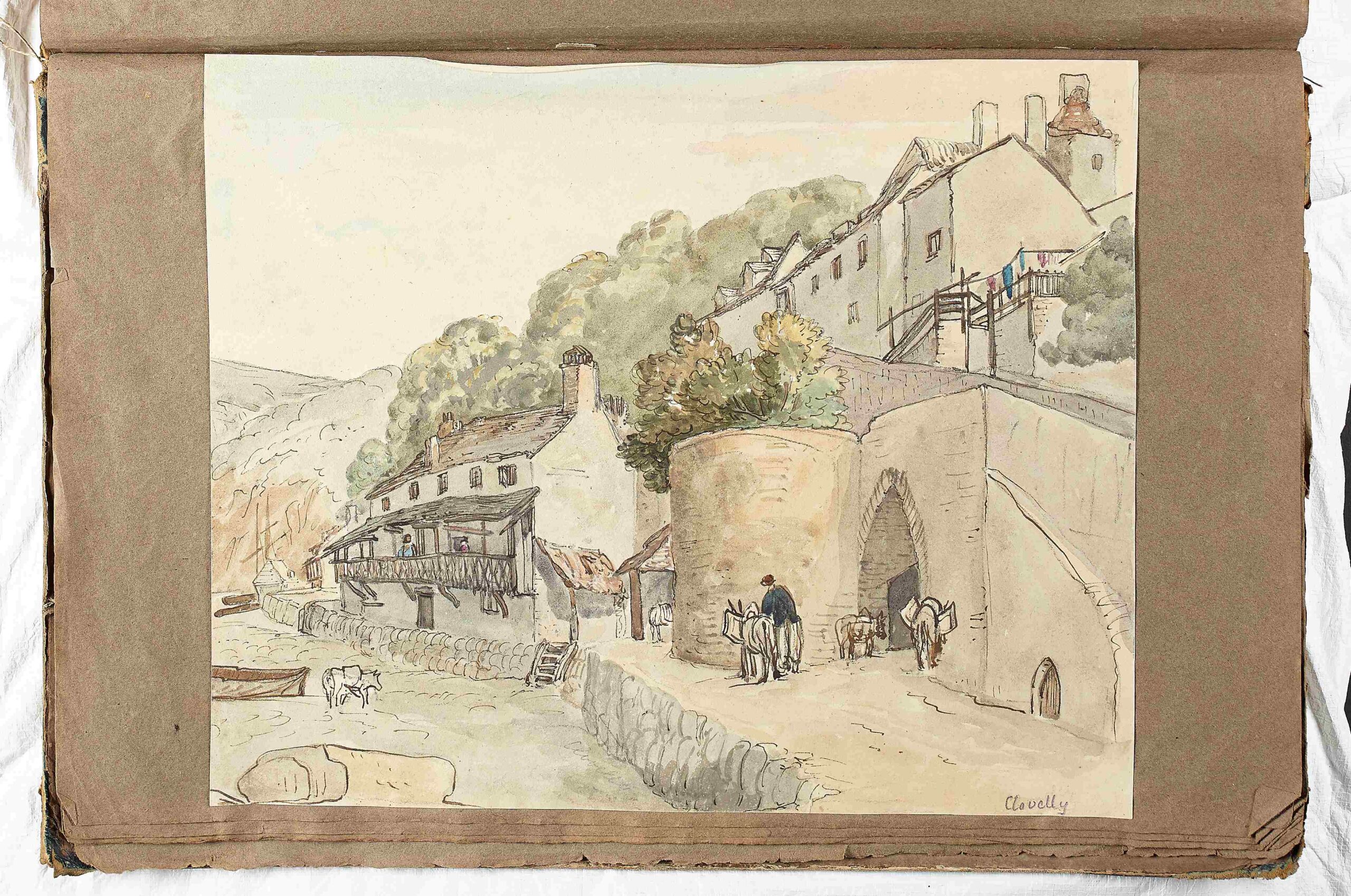
Ink and watercolour of Clovelly, North Devon made by Maria Buckle née Martin from the Buckle collection of sketches and watercolours c.1830s at Finding No: 899:1563 BA14788
Maria also appears to have spent quite some time in North Devon (perhaps on holiday or visits to friends or family) particularly around the villages of Ilfracombe, Lynton and Lynmouth and Clovelly and paints the dramatic coastline of Watermouth Bay and nearby Watermouth Castle in exceptional detail.
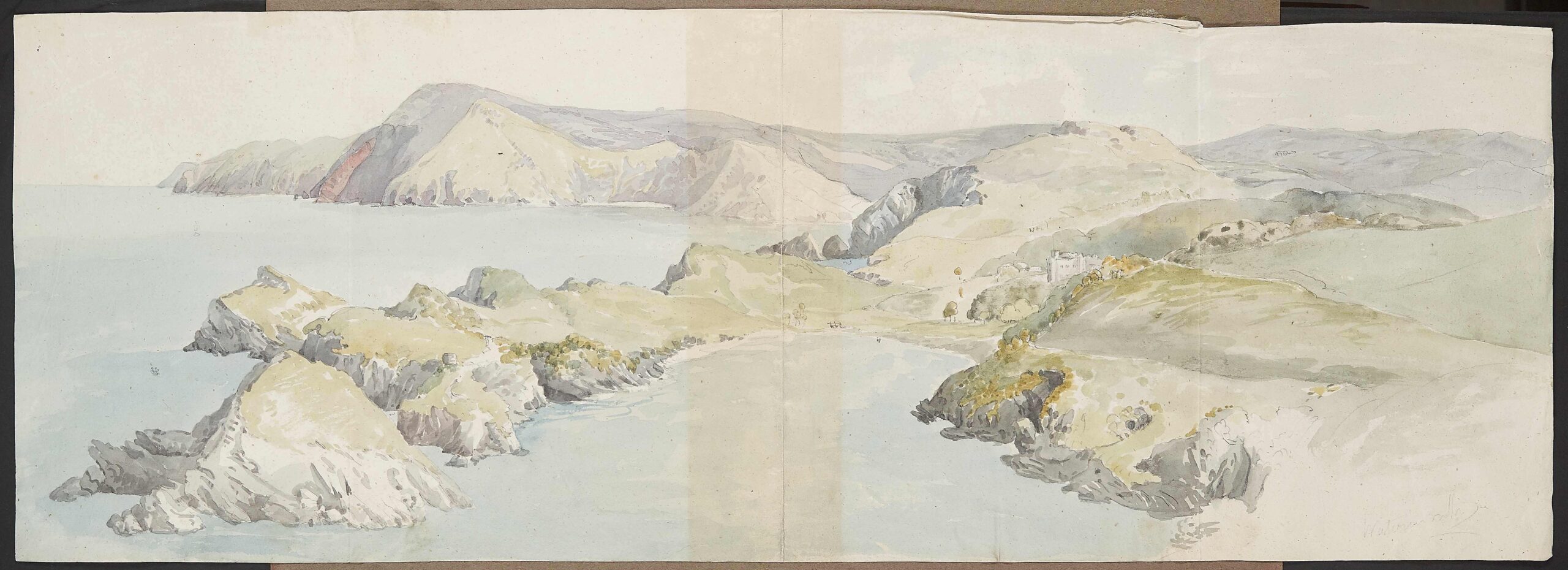
Watercolour of Watermouth Cove and Castle, Ilfracombe made by Maria Buckle née Martin from the Buckle collection of sketches and watercolours c.1830s at Finding No: 899:1563 BA14788
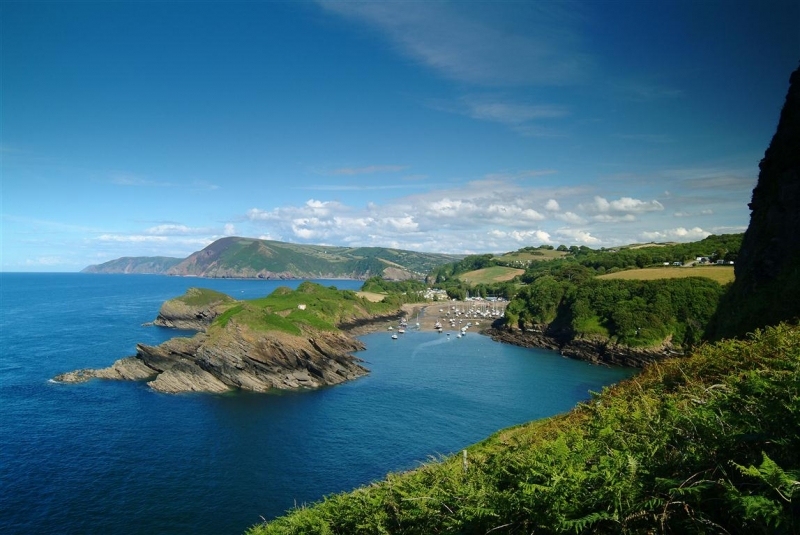
Watermouth Cove c.21st century © Neville Stanikk Reproduced with kind permission by the North Devon Coast National Landscape
Maria expertly sketches the craggy, rocky strewn landscape of The Valley of Rocks – a kilometre from Lynton (labelled as nearby Lynmouth).
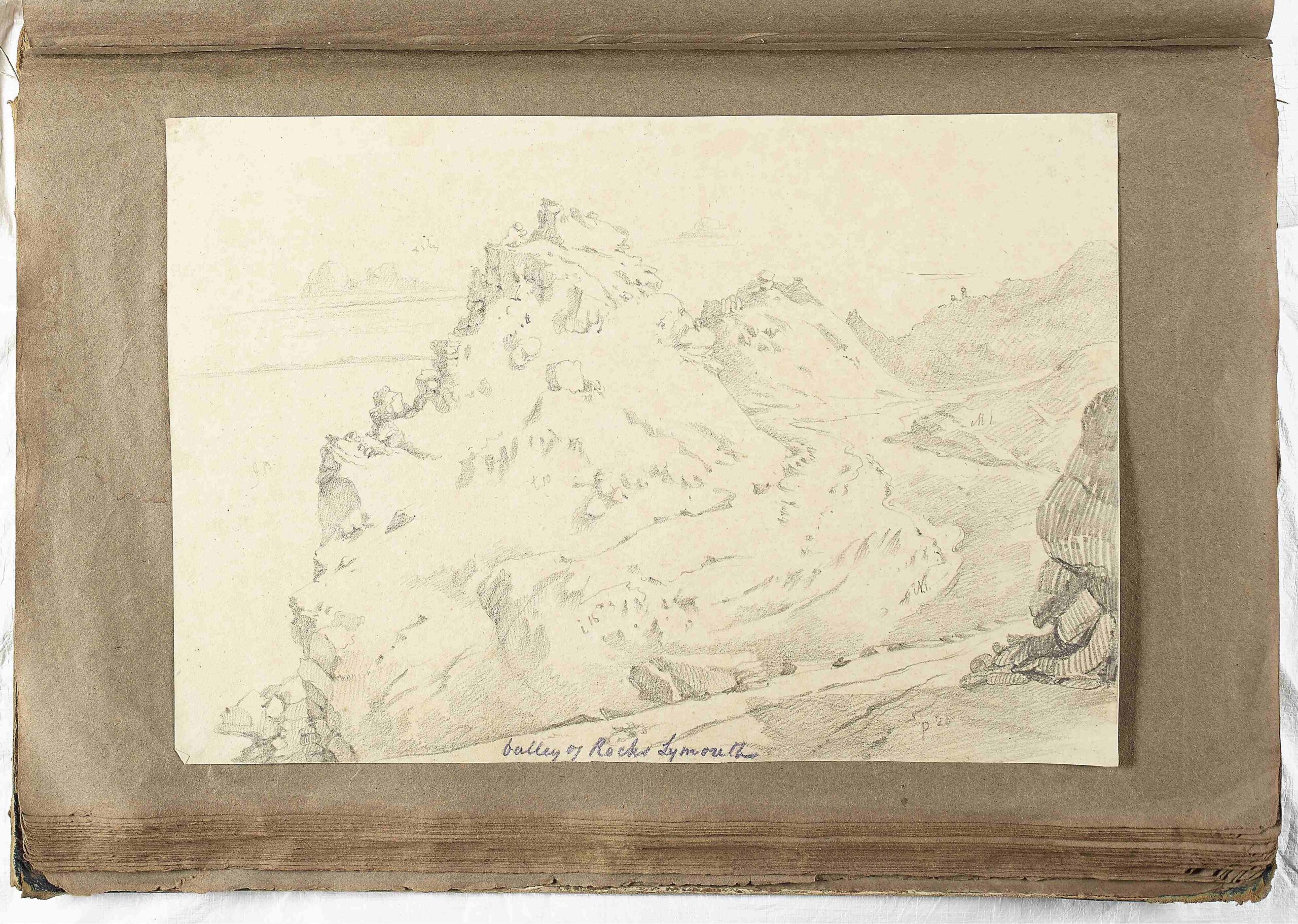
Pencil sketch of The Valley of Rocks made by Maria Buckle née Martin from the Buckle collection of sketches and watercolours c.1830s at Finding No: 899:1563 BA14788
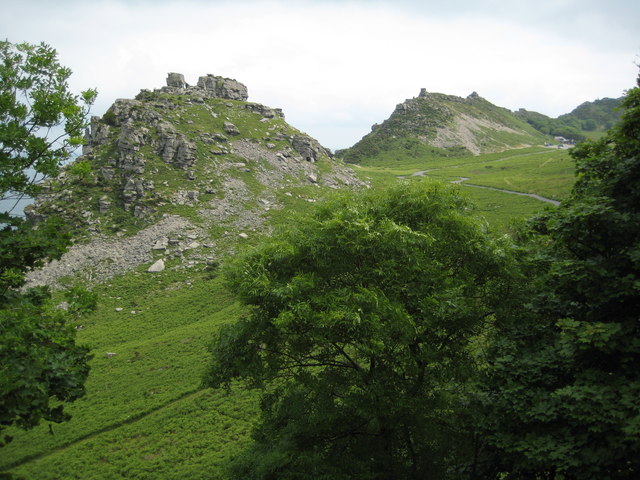
The Valley of Rocks c.20th century © Philip Halling CC BY-SA 2.0
She also beautifully sketches and paints Briary Cave, not far from Watermouth which still looks identical to recent photographs taken by photographer Dave Green.
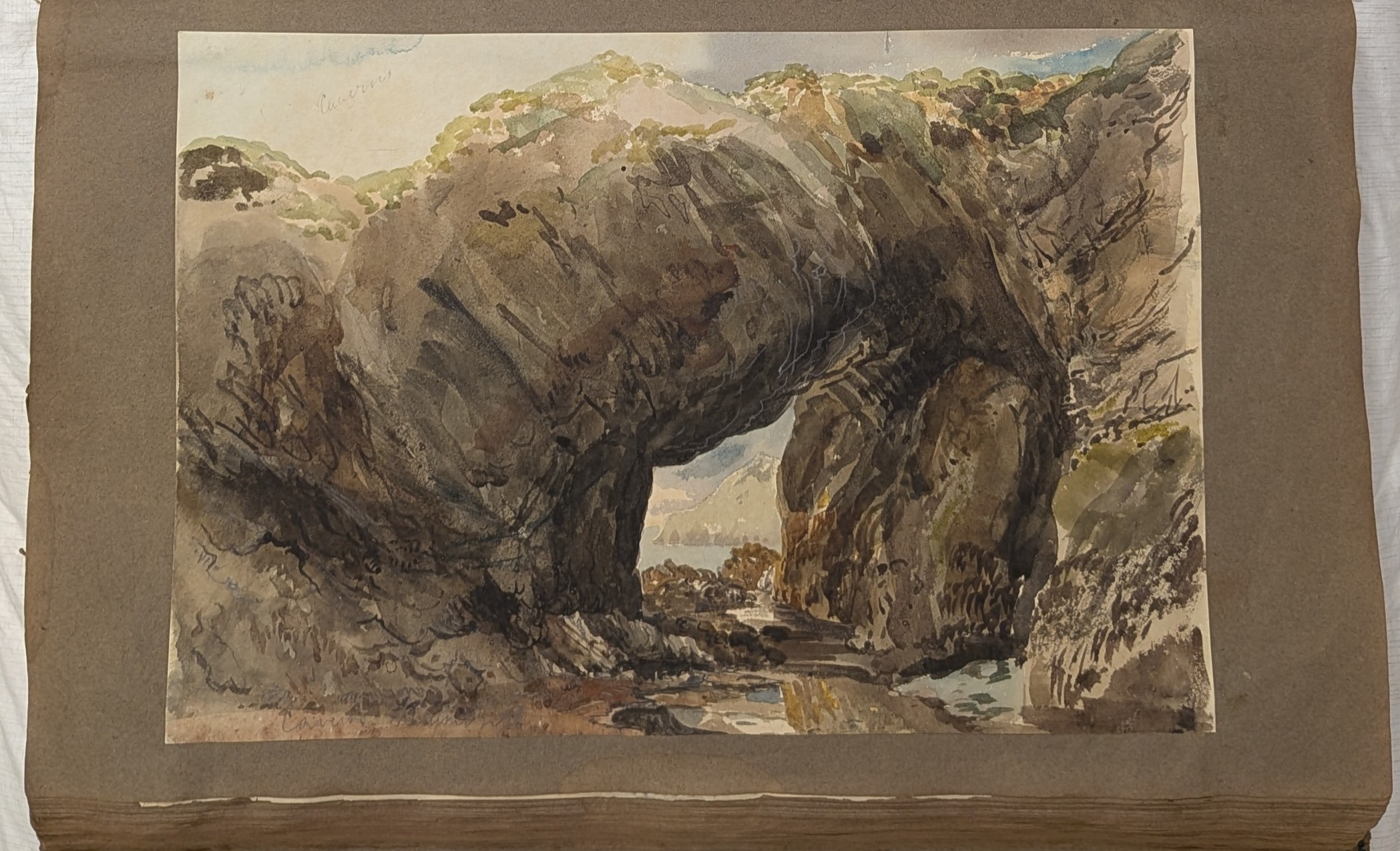
Watercolour of Briary Cave near Watermouth Cove, North Devon, made by Maria Buckle née Martin from the Buckle collection of sketches and watercolours c.1830s at Finding No: 899:1563 BA14788
Maria’s talent is not just confined to watercolours either as she reproduces a fascinating but unfinished pencil and ink plan of Ilfracombe, colour coding key areas of the town and labelling streets, lanes and notable buildings.
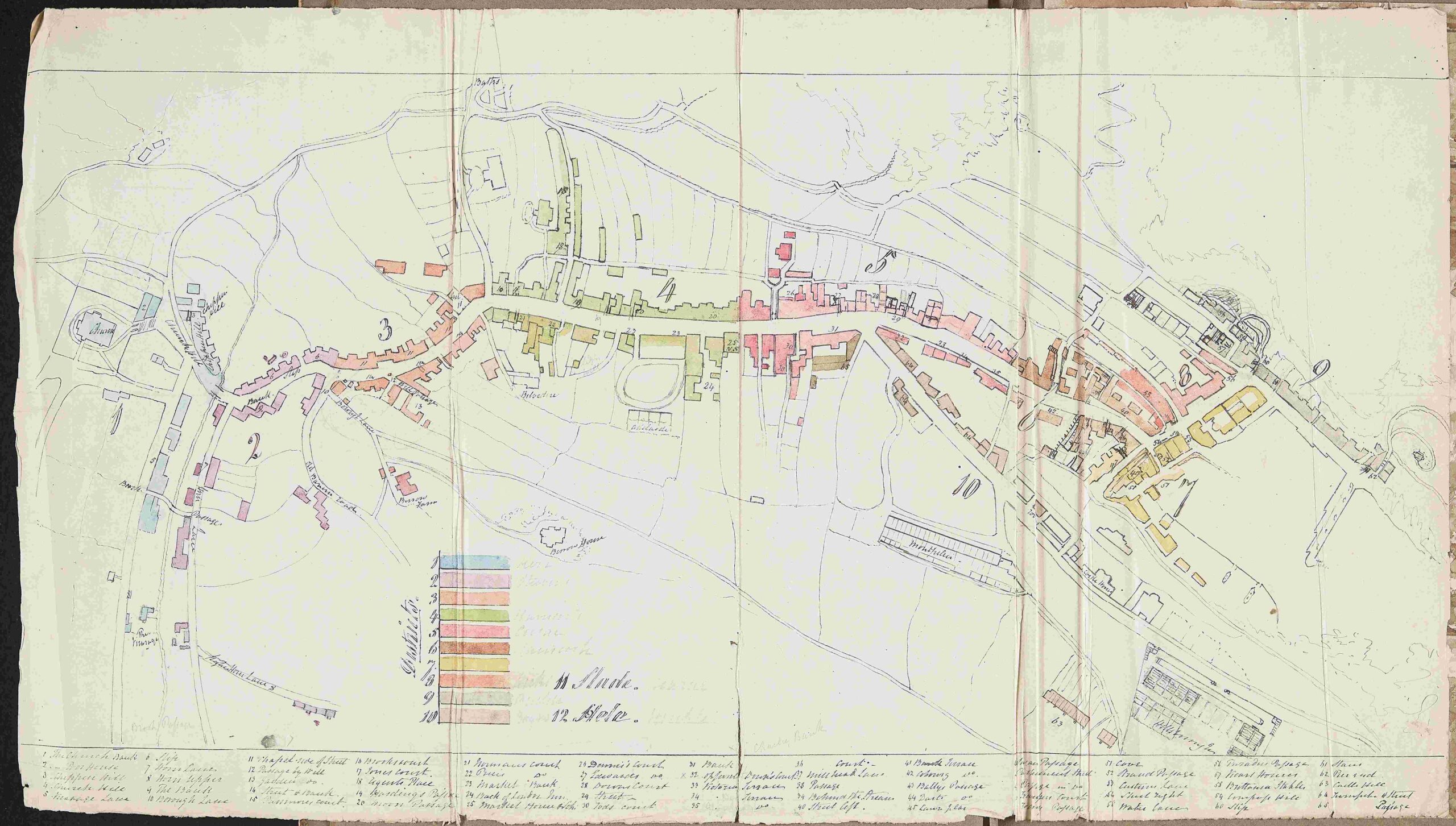
A pencil and ink town plan of Ilfracombe made by Maria Buckle née Martin from the Buckle collection of sketches and watercolours c.1830s at Finding No: 899:1563 BA14788
All these examples demonstrate Maria’s use of form, colour and her ability to replicate her observations of landscape accurately alongside producing stylised works of woodland, houses and coastal scenes. The images also convey activities of local people including shipping and industry alongside historical changes that have taken place since the 1830’s.
Maria Buckle’s art is not just beautiful to look at it but leaves behind a valuable visual record of Worcestershire and North Devon during the early to mid-19th century for the purposes of social history, building and landscape change.
The author would like to acknowledge the work of both colleagues Sarah Dentith and Lee Jackson in producing this blog.
Please note all efforts have been taken to identify copyright owners, we apologise for any inadvertent infringement and invite the copyright owners to make contact where necessary.


Post a Comment